












































The Endhó Dam: One of the World’s Least Known Sacrifice Zones
It’s well past time to end sacrifice zones, including the area that has been treated as “Mexico’s toilet bowl” for decades.
Last week, about halfway down the New York Times’ Monday morning newsletter, there was a video titled “Living Next to Mexico’s Toxic Reservoir.” I watched it, appalled not only by the dangerous conditions described in the video and accompanying article, but also by the fact that I had never heard of this enormous environmental justice disaster. I worried that if I—someone who inevitably spends some part of everyday thinking about environmental injustices—was previously unaware that over 20,000 people have been forced to live around a toxic reservoir for approximately five decades, then it was unlikely that these communities had been receiving much, if any, attention and support from environmental organizations outside of the region. It turns out that, unfortunately, my concern was well-founded. In 2023, Judges for the Society of Environmental Journalists’ 22nd Annual Awards for Reporting on the Environment awarded “Los Olvidados de Hidalgo” [English transcript here]—a N+ Focus feature story about the Endhó Dam—third place, in part because of how “shockingly unknown” the story was.
The Endhó Dam was built in the 1950s as a freshwater reservoir, and for about 20 years, it served as such. There was plenty of clean water to irrigate the crops in the otherwise arid Mezquital Valley, and the dam provided locals with an enjoyable and clean natural environment. In the 1970s, however, as the population of Mexico City continued to grow, federal officials decided to begin diverting the capital’s storm runoff and wastewater into the dam. This means that for the past 50 years, all of the wastewater from a metropolitan area of around 20 million people has been dumped into the Endhó Dam. Every year, the dam receives around 326 million cubic meters of largely untreated wastewater—that’s enough wastewater to fill over 130,000 Olympic-sized swimming pools. Approximately 60% of the wastewater does pass through a treatment plant, but before the treated water can make it to the reservoir, it mixes with discharge and waste from a nearby oil refinery, thermopower plant, and the rest of the massive industrial corridor that surrounds the dam. The result is an environmental and public health nightmare, referred to by locals as “Mexico’s toilet bowl,” and “the world’s largest cesspool.”
Yury Uribe, a lifelong resident of the region and activist with El Movimiento Social por la Tierra, has been organizing her community in an attempt to get the Mexican government to recognize the Endhó Dam as an environmental emergency, but through no fault of her own, she has seen little success. Although the area was declared an ecological restoration zone in 2024, the declaration did not allocate any funding to cleaning up the area. Accordingly, Endhó Dam residents continue to suffer from seemingly endless environmental and health problems. Cancer rates in the area tripled between 2007–2018, and today,
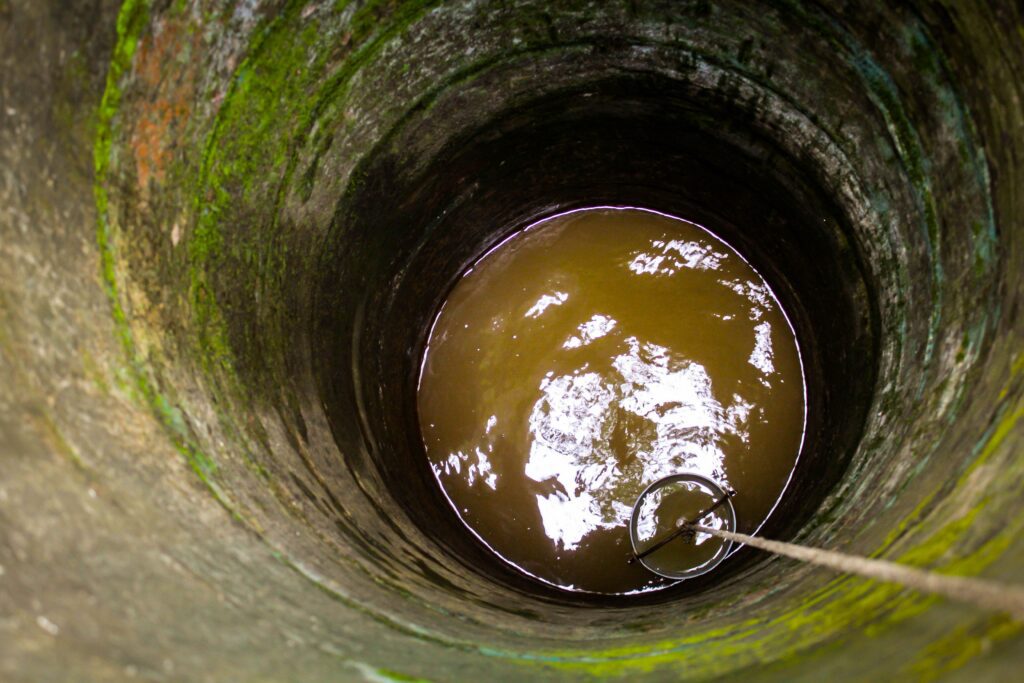
communities surrounding the dam report rates of cancer and kidney failures that are sometimes double the national average; the dam contaminates the surrounding towns’ wells—the main source of drinking water for those towns’ residents; and the hyacinth that grows on top of the dam has become a breeding ground for mosquitos, endangering locals’ livestock and forcing residents to “lock themselves inside” every evening. Emiliano Rodríguez Mega, a long-time science reporter covering Latin America and the NYT reporter who covered this story, said that even he “had never quite seen something like the Endhó Dam.”
The big question that normally follows learning about an injustice like this is, “how is this allowed to happen?” Unfortunately, the answer this time is the same as it almost always is: some communities—low-income, marginalized communities—are seen as expendable. As explained by the legendary environmental justice advocates Dr. Robert Bullard and Beverly Wright, the people and communities who are viewed as being expendable suffer from having “the wrong complexion for protection.”
Areas like the Endhó Dam are often referred to as “sacrifice zones” because “the health and safety of people in these communities is being effectively sacrificed for the economic gains and prosperity of others.” In this instance, the low-income farming communities living around the dam (a substantial percentage of whom are Indigenous, primarily from the Otomí Nation) are being sacrificed to protect Mexico City from flooding and to keep the profitable agricultural area surrounding the Tula River rich with nutrients. Similar cases of environmental injustice and racism exist around the world: the risk of cancer to the primarily Black residents of “Cancer Alley” in Louisiana is over 50 times higher than the national average; 95% of children in Kabwe, Zambia, largely from poor families, have dangerously elevated levels of lead in their blood caused by the nearby lead mining; nearly every Aamjiwnaang First Nation household living in Canada’s “Chemical Valley” suffers from high rates of miscarriages, asthma, and cancer. The examples, unfortunately, abound. Recognizing that these areas “illustrat[e] egregious human rights violations, particularly of poor, vulnerable and marginalized communities,” former United Nations Special Rapporteur on Human Rights and the Environment, David Boyd, described sacrifice zones as “the worst imaginable dereliction of a State’s obligation to respect, protect, and fulfil[l] the right to a clean, healthy and sustainable environment.”
How do we finally rid the world of a system in which, as Naomi Klein put it in This Changes Everything, “poisoning [whole subsets of humanity] in the name of progress [is] somehow acceptable”? Like most things worth doing, it’s somewhat complicated. But as the Climate Justice Alliance—an alliance of over 100 frontline communities in the climate justice movement—has noted, it is critically necessary not only because everyone has a right to drink clean water and breathe clean air, but also because “[o]ur society cannot build a more just and healthy economy if communities continue to be seen as expendable.” Eliminating sacrifice zones can be distilled into a three-stage process: (1) prioritize protecting the communities living in sacrifice zones from further harm; (2) allocate resources to repairing the harm that has already been done and passing strong regulations; and (3) invest in the communities that have historically been viewed as expendable, and ensure that they have power over their own futures. Let’s get to work.


About Tiffany

Tiffany Deguzman (she/her) is the 2025-2027 Shapiro Fellow in Environmental Law and Policy at UCLA School of Law, where her work will focus on sustainable agriculture, wa…
READ more
Reader Comments