



















































Pollution & Health
Our Powerful ‘Eye in the Sky’ Just Multiplied

The Drain is a roundup of environmental and climate news from Legal Planet.
Next month, scientists and diplomats from all over the world will arrive in Antalya, Türkiye for the UN climate conference known as COP31. The host country wants to make global progress on reducing planet-warming methane from landfills, which could be a big deal. So, UCLA’s STOP Methane used satellite data to create a Top …
Continue reading “Our Powerful ‘Eye in the Sky’ Just Multiplied”
CONTINUE READINGUCLA Law Clinics File Brief in the “Mecheros” Case

UCLA’s Human Rights Litigation Clinic and Environmental Law Clinic represent experts in a long-running case that seeks to stop harmful gas flaring in Ecuador.
Guest Contributors Incia Haider and Enrique Garcia are J.D. candidates of UCLA School of Law, ‘27. This month, the Human Rights Litigation Clinic and the Frank G. Wells Environmental Law Clinic at UCLA School of Law filed an amicus brief with the Constitutional Court of Ecuador on behalf of a group of law professors and international legal scholars: our own Kate Mackintosh of UCLA Law, …
Continue reading “UCLA Law Clinics File Brief in the “Mecheros” Case”
CONTINUE READINGGood News from Turkmenistan! Bad News from the UN

The Drain is a roundup of environmental and climate news from Legal Planet.
It was the best of times, it was the worst of times — this week, like most weeks. The UN Environment Programme’s new report, “Limiting Overshoot: Navigating exceedance of 1.5°C and pathways toward return” was simultaneously big news and yet met with stony silence in many quarters of the media. The report narrates what it …
Continue reading “Good News from Turkmenistan! Bad News from the UN”
CONTINUE READINGTroubled Waters
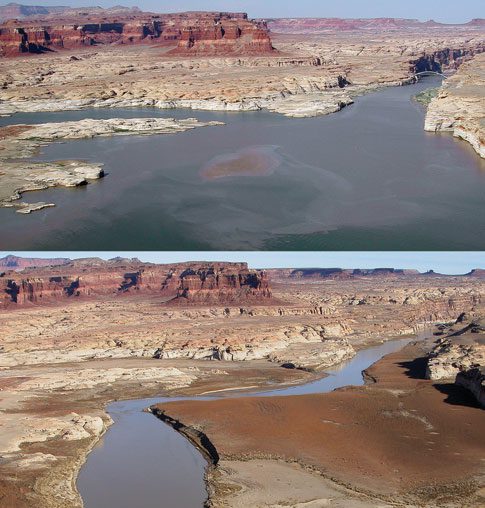
We’re seeing increasing signs of a malfunctioning US water system.
Water problems are popping up all over. Literally so, in at least one case. In the Permian basin, geysers of toxic wastewater are erupting. The water was pumped underground as part of the basin’s massive fracking operations. Fracking produces five or six barrels of wastewater for every barrel of oil. High pressure underground is pushing wastewater into oil and gas basins as well as threatening drinking water aquifers. We’ve been taking our ability to obtain water and manage discharges for granted, just as we tend to take plumbing for granted except when it starts leaking or breaking down. It appears that our neglect is beginning to catch up with us.
CONTINUE READINGUCLA Law Clinic Files Brief Supporting DC’s Clean Buildings Act in DC Circuit
Energy law experts explain local governments’ longstanding primary authority over local gas distribution and use.
Last Friday, UCLA’s Frank G. Wells Environmental Law Clinic filed a DC Circuit brief in support of the District of Columbia’s Clean Buildings Act on behalf of 11 leading energy and environmental law professors: UCLA’s own William Boyd, Lincoln Davies at the University of Utah, Dan Farber and Sharon Jacobs at UC Berkeley, Alexandra Klass …
Continue reading “UCLA Law Clinic Files Brief Supporting DC’s Clean Buildings Act in DC Circuit”
CONTINUE READINGThe Sting in the Tail of the Clean Air Act

Weakening restrictions on polluters can trigger different restrictions.
Some of Trump’s most important anti-environmental moves involve unleashing air polluters. There’s a problem with this strategy, however. Doing so raises air pollution levels, which can bring states into collision with other Clean Air Act (CAA) requirements. Thus, the effect could be much tighter restrictions on other sources to compensate for looser standards on some. Worse, this effect isn’t limited to the most directly affected states. They may turn around and demand that upwind states reduce their own emissions to help the downstream states meet federal standards. Even when this isn’t true, and where the state that suffers may be Democratic-leaning and thus of no concern to Trump, there could be economic repercussions in other states.
Two notable examples of this problem involve coal generators and vehicle regulation. The first example involves coal. Trump has exempted coal-fired power plants from pollution limits to allow them to remain open longer. According to E&E News, “Air pollution from coal-fired power plants spiked in 2025, a striking reversal of long-term progress in air quality as the Trump administration boosted coal use. The emission increases were among the largest in at least a quarter-century, on a percentage basis, as the bulk of about 210 power plants registered increased sulfur dioxide and nitrogen oxide emissions,” Power plant sulfur-dioxide emissions were up 18% and nitrogen oxides were up 12%. This is contrary to a strong long-term declining trend.
The second example involves vehicle emissions. Under the CAA, state laws regulating vehicle emissions are generally preempted, but California can apply for a preemption waiver if it needs stricter regulations, and other states can piggyback on California’s standards. California’s ability to seek a waiver has been more limited since, at Trump’s instigation, Congress overturned EPA’s approval of several California waiver requests. The Trump Administration has independently taken the view that California can’t require manufacturers to sell more EVs as a way to meet standards. Although Republicans were mostly targeting California’s standards for greenhouse gases, they have also hampered California’s ability to get waivers for smog and particulates.
The problem arises because stopping a state from regulating some polluters may legally require it to tighten other regulations. Under CAA section 110, states must have state implementation plans that will achieve national air quality standards set by EPA. If one type of source pollutes more, other sources must offset the increased pollution by polluting less. Other CAA provisions put the screws on states that exceed the national standards. As a result, if the Feds exempt one source of nitrogen oxides (perhaps by repealing California waiver), states that had adopted the California standard will need to tighten regulations of other sources. Thus, exempting nitrogen oxides from trucks or cars, or from coal power plants, might require stricter controls on other sources such as natural gas power plants. Moreover, if a state is unable to achieve the national air quality standard, the so-called “Good Neighbor” provision allows it to demand emission reductions from upwind states.
In other words, exempting some sources increases the regulatory burden on others. The exemption may even increase the total regulatory burden, if pollution from those other sources is more expensive to control than pollution from the exempted sources. Here’s why.
CONTINUE READINGA Trump Rollback Hits a Roadblock
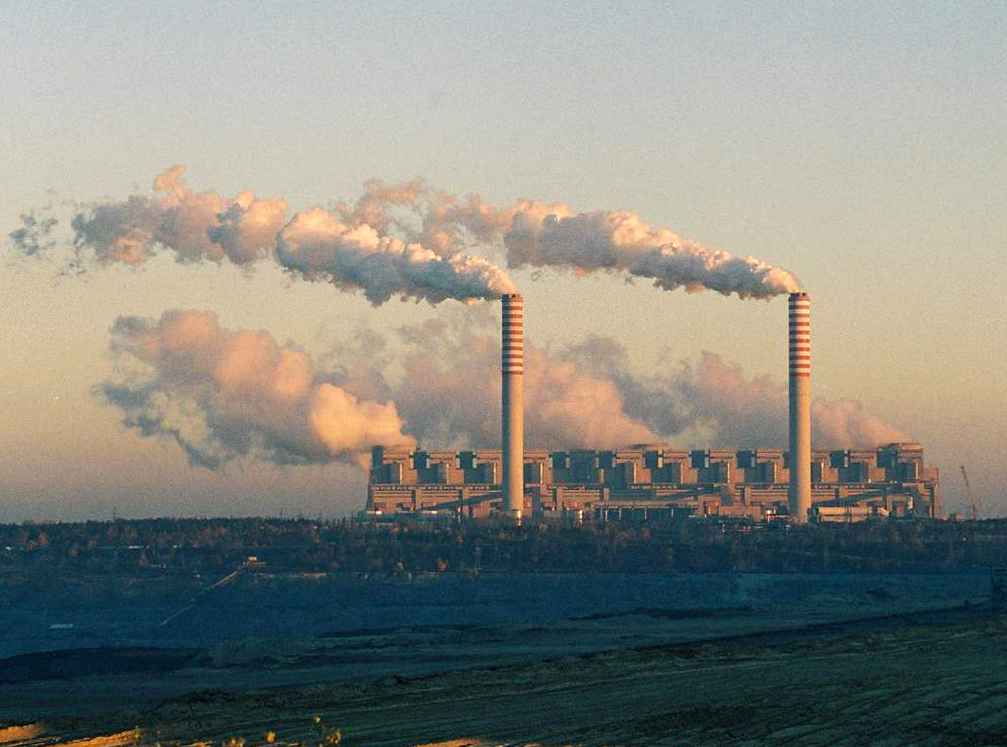
A Trump gambit to undo a key air pollution limit turned out to be a flop.
The Administration has moved more slowly, however, on actually wiping Biden’s regulations off the books. On Friday, the D.C. Circuit decisively rejected one important effort by the Trump EPA. In doing so, it saved (at least for now) a crucial protection for public health. While it’s not impossible to imagine that the Supreme Court might intervene, doing so would probably require it to hear oral argument, given the importance and complexity of the case. That’s unlikely to happen quickly and may not happen at all,
CONTINUE READINGCPUC Proposed Decision Risks Derailing Gas Transition

California passed a promising Neighborhood Decarbonization Program. The CPUC’s plan for implementing SB 1221 sets it up to fail.
My UCLA colleagues and I have written extensively on the promising opportunity for SB 1221 to help interested communities transition off gas. Now, the California Public Utilities Commission (CPUC) has released its long-awaited proposed decision on its plans to implement the SB 1221 pilot program, and the proposal is…disappointing. The current design seems to set the program up to fail. Of biggest concern, the decision proposes to require pilot applicants to navigate a multi-stage process with duplicative …
Continue reading “CPUC Proposed Decision Risks Derailing Gas Transition”
CONTINUE READINGAn Inconvenient Truth Two Decades Later
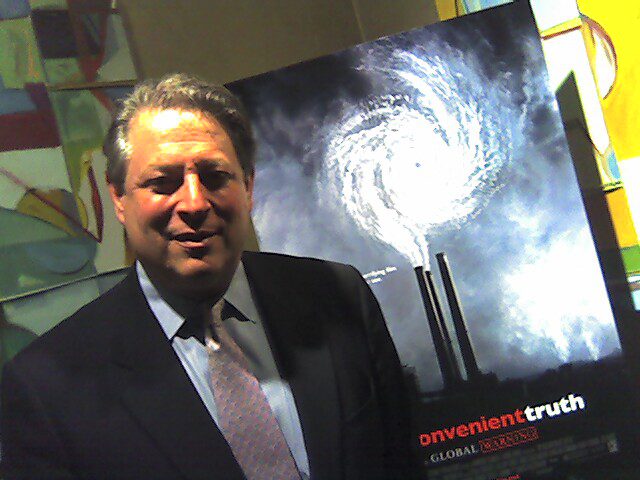
Global X via flickr
The Drain is a weekly roundup of environmental and climate news from Legal Planet.
Twenty years ago this month, I walked out of a movie theater, dumfounded, after seeing “An Inconvenient Truth,” the Al Gore documentary that would go on to frame the conversation around climate change for years. I remember feeling riveted and freaked-out. I’d read enough Adbusters in college to have a decent critique of capitalism, …
Continue reading “An Inconvenient Truth Two Decades Later”
CONTINUE READINGScrap Yards, Scrapped Enforcement?

The City of Los Angeles’s regulatory tools exist to protect communities from metal recycling hazards—but they’re rarely invoked.
This post was co-written by UCLA Law student Kate Inman (J.D., 2026). Throughout California’s Senate District 20, roughly thirty scrap metal recycling facilities sit in the industrial corridors running alongside residential housing. For the working-class, majority-Latino communities living blocks away, the legal system has been slow to respond. Drive through Sun Valley or Pacoima on …
Continue reading “Scrap Yards, Scrapped Enforcement?”
CONTINUE READINGJoin Our Mailing List
Climate policy is changing rapidly. Stay in the loop with expert analysis via email Monday - Friday.

The Drain is a roundup of climate and environmental news from Legal Planet delivered to your Inbox once a week.