























































Region: International
Everything is Awesome!

Well, not really, but China’s astonishing progress in curbing emissions points to a technological way forward — and how the United States is being left behind.
There is so much that is awful, so let’s see some good news for once: China’s carbon dioxide (CO2) emissions were unchanged from a year earlier in the third quarter of 2025, extending a flat or falling trend that started in March 2024. The rapid adoption of electric vehicles (EVs) saw CO2 emissions from transport fuel drop by 5% …
Continue reading “Everything is Awesome!”
CONTINUE READINGA Full-Court Press on Methane, Climate in the Governor’s Race

The Drain is a weekly roundup of environmental and climate news from Legal Planet.
Replacing high-carbon fossil fuels with clean energy while also adapting to climate change — that’s the ballgame. But we may not get to the ninth inning in one piece if we don’t deal with methane first. That’s one takeaway from the COP30 UN climate summit. Pick your metaphor — and there are many — but …
Continue reading “A Full-Court Press on Methane, Climate in the Governor’s Race”
CONTINUE READINGThe Promise and Growing Pains of Managed Aquifer Recharge

By Dave Owen, Helen E. Dahlke, Andrew T. Fisher, Ellen Bruno, and Michael Kiparsky
Around the world, groundwater mismanagement is a major driver of water crises. An emerging method for addressing such mismanagement, called managed aquifer recharge, has generated excitement among scholars and water managers. In a newly published article (Owen et al. 2025), we argue that this excitement, while often justified, should also be tempered by acknowledgment …
Continue reading “The Promise and Growing Pains of Managed Aquifer Recharge”
CONTINUE READINGPointing a Finger at Methane

UCLA launches the STOP Methane Project with Top 25 in ’25 lists of methane super-polluters.
Almost exactly 10 years ago, I got a call from a Los Angeles city leader asking if I’d be willing to attend a town hall in Porter Ranch, California, to help field questions about the unfolding disaster that was the Aliso Canyon natural gas leak, to provide background on environmental law for the discussion. As …
Continue reading “Pointing a Finger at Methane”
CONTINUE READINGGood COP, Bad COP in Belém, Brazil
The Drain is a weekly roundup of environmental and climate news from Legal Planet.
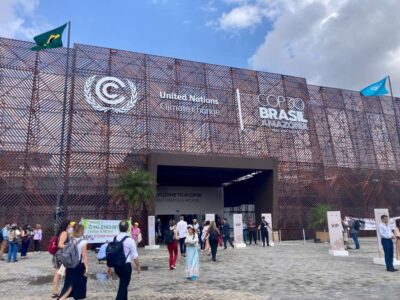
The United Nations mega-conference focused on climate change known as COP (“Conference of the Parties”) is well underway in Belém, Brazil with 193 countries plus the EU, 57 heads of state, 39 ministers and hundreds of governors, mayors, and local officials participating. Two of my UCLA Law colleagues are on the ground in Belém this …
Continue reading “Good COP, Bad COP in Belém, Brazil “
CONTINUE READINGShould Private Firms Be Involved in Cooling the Planet?

Private firms like Stardust Solutions want to get in on planet-cooling interventions. Here’s the OK, the bad, and the ugly about startup involvement.
A story at Heatmap News last month reported that an Israeli-American startup firm, Stardust Solutions, has received $60 million in venture funding for a new type of particle they propose can be used to inject in the stratosphere to reflect a little sunlight and (temporarily, imperfectly) reduce global-average heating from greenhouse gases. The company aims …
Continue reading “Should Private Firms Be Involved in Cooling the Planet? “
CONTINUE READINGWhat to Know About the TFFF Announced at COP30

A bold new investment fund aims to channel billions into tropical forest protection – one key change can make it better.
The world is losing vast swaths of forests to agriculture, logging, mining and fires every year — more than 20 million acres in 2024 alone, roughly the size of South Carolina. That’s bad news because tropical forests in particular regulate rainfall, shelter plant and animal species and act as a thermostat for the planet by storing carbon, keeping it out of …
Continue reading “What to Know About the TFFF Announced at COP30”
CONTINUE READINGIs Diversity A Strength? Not Always

Environmental history shows that specifics matter
To absolutely no one’s surprise, Zohran Mamdani defeated Andrew Cuomo Tuesday in the race for the Mayor of New York City, becoming the Big Apple’s first Muslim mayor. Also to absolutely no one’s surprise, much of the campaign against Mamdani descended into Islamophobia – less from Cuomo himself and more from his supporters and outside …
Continue reading “Is Diversity A Strength? Not Always”
CONTINUE READINGClimate Change is Coming for Your Coffee
The Drain is a weekly roundup of environmental and climate news from Legal Planet.
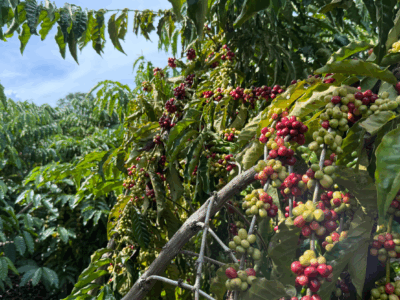
My drug habit is becoming more expensive thanks to the dangerous duo of climate change and Donald Trump. The cost of coffee keeps going up. I saw firsthand why this is happening back in May on an eye-opening trip to Acre, Brazil, where I toured a couple of farms in the Amazon. One was a …
Continue reading “Climate Change is Coming for Your Coffee”
CONTINUE READINGWill Technology Save Us? It Might Have To
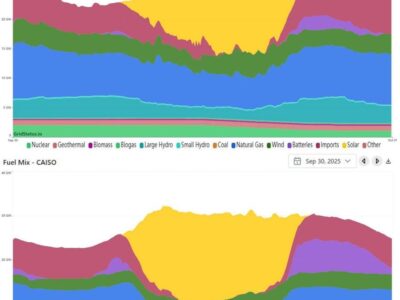
Battery innovations provide at least some source for hope despite the Trump Administration’s war on renewable energy
There is little good out there, but it was nice to see this graphic recently. It’s a graphic of the daily energy usage in California broken down by source and by time period, according to the California Independent System Operator. That’s why you can see the yellow-gold area, representing solar capacity, expand during the daytime …
Continue reading “Will Technology Save Us? It Might Have To”
CONTINUE READINGJoin Our Mailing List
Climate policy is changing rapidly. Stay in the loop with expert analysis via email Monday - Friday.