























































Health
FDA’s Worrisome Proposal on Toxins in Food Additives
Part of it is a move in the right direction. But one provision raises serious questions.
According to the Guardian news site, a proposed new FDA regulation will “expand a controversial loophole to allow some of the world’s most toxic chemicals to be added directly to food without a safety review.” The proposed regulation does two other, seemingly reasonable, things along with the one that raises real concerns. The worrisome …
Continue reading “FDA’s Worrisome Proposal on Toxins in Food Additives”
CONTINUE READINGOpening Shots in a War on Doctors
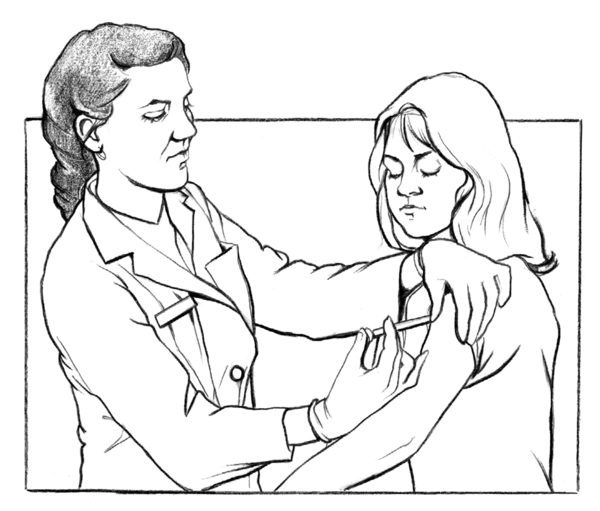
What began as a war on science has now reached your kid’s doctor.
The doctors we all rely on have now joined liberals and journalists as enemies of the people. RFK, Jr., is excited about eliminating “medical tyranny” by replacing doctors with AI. Texas AG Ken Paxton is investigating all the state’s pediatricians for misconduct. Medical associations are under fire. Fanning the flames of distrust for modern medicine has real consequences. We saw that Monday when the Governor of New York was forced to declare an emergency over the spread of measles, a disease once thought to be extinct in the United States.
CONTINUE READINGMontana’s Human Experiment with Untested Drugs
The state has decided to allow experimental drugs to be used on anyone who can pay for them.
Montana has opened a channel for drugs to be sold without the normal requirements of testing for effectiveness and side effects.
CONTINUE READINGThe Sting in the Tail of the Clean Air Act

Weakening restrictions on polluters can trigger different restrictions.
Some of Trump’s most important anti-environmental moves involve unleashing air polluters. There’s a problem with this strategy, however. Doing so raises air pollution levels, which can bring states into collision with other Clean Air Act (CAA) requirements. Thus, the effect could be much tighter restrictions on other sources to compensate for looser standards on some. Worse, this effect isn’t limited to the most directly affected states. They may turn around and demand that upwind states reduce their own emissions to help the downstream states meet federal standards. Even when this isn’t true, and where the state that suffers may be Democratic-leaning and thus of no concern to Trump, there could be economic repercussions in other states.
Two notable examples of this problem involve coal generators and vehicle regulation. The first example involves coal. Trump has exempted coal-fired power plants from pollution limits to allow them to remain open longer. According to E&E News, “Air pollution from coal-fired power plants spiked in 2025, a striking reversal of long-term progress in air quality as the Trump administration boosted coal use. The emission increases were among the largest in at least a quarter-century, on a percentage basis, as the bulk of about 210 power plants registered increased sulfur dioxide and nitrogen oxide emissions,” Power plant sulfur-dioxide emissions were up 18% and nitrogen oxides were up 12%. This is contrary to a strong long-term declining trend.
The second example involves vehicle emissions. Under the CAA, state laws regulating vehicle emissions are generally preempted, but California can apply for a preemption waiver if it needs stricter regulations, and other states can piggyback on California’s standards. California’s ability to seek a waiver has been more limited since, at Trump’s instigation, Congress overturned EPA’s approval of several California waiver requests. The Trump Administration has independently taken the view that California can’t require manufacturers to sell more EVs as a way to meet standards. Although Republicans were mostly targeting California’s standards for greenhouse gases, they have also hampered California’s ability to get waivers for smog and particulates.
The problem arises because stopping a state from regulating some polluters may legally require it to tighten other regulations. Under CAA section 110, states must have state implementation plans that will achieve national air quality standards set by EPA. If one type of source pollutes more, other sources must offset the increased pollution by polluting less. Other CAA provisions put the screws on states that exceed the national standards. As a result, if the Feds exempt one source of nitrogen oxides (perhaps by repealing California waiver), states that had adopted the California standard will need to tighten regulations of other sources. Thus, exempting nitrogen oxides from trucks or cars, or from coal power plants, might require stricter controls on other sources such as natural gas power plants. Moreover, if a state is unable to achieve the national air quality standard, the so-called “Good Neighbor” provision allows it to demand emission reductions from upwind states.
In other words, exempting some sources increases the regulatory burden on others. The exemption may even increase the total regulatory burden, if pollution from those other sources is more expensive to control than pollution from the exempted sources. Here’s why.
CONTINUE READINGThe Accelerating Decline of U.S. Public Health Policy
Just when we get over our shock over one development, another comes along.
It’s hard to believe how quickly a science-driven approach to protecting health has been replaced by ideology and quackery. Lack of expertise is now seen as a plus in making decisions, and the Administration is actively seeking to suppress information about problems that it would rather not address. I posted a month ago about the current evidence-free approach to health policy, Things have only gotten since then. It’s been one bad thing after another. All of this in only a month. There are 34 months left in Trump’s presidency, so you can only imagine how dangerous the situation will be by the time he leaves office.
CONTINUE READINGThe War on Public Health Continues
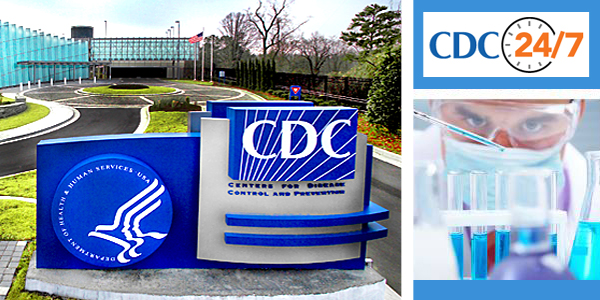
Friday’s layoffs announcements at CDC targeted infectious disease control
During the COVID outbreak, President Trump said, “If we stopped testing right now, we’d have very few cases, if any.” That philosophy seems to have taken hold during his second term in office. On Friday, the Administration fired more than a thousand CDC workers, incljding the scientists and doctors who provide key information and expertise about infectious disease outbreaks. The effect is to kneecap the government’s capacity to detect and track outbreaks.
CONTINUE READINGThe Failed Effort to Protect Workers from Toxics: A Labor Day Reflection

The OSHA law called for rigorous regulation. It never happened.
To put it in a nutshell, the political base for workplace toxic regulation eroded along with America’s industrial unions. That deprived OSHA of the congressional support it needed to thrive. In the absence of a union revival, the right of workers to be free from toxic hazards is likely to remain an unfulfilled dream.
CONTINUE READINGLitigating Against Trump
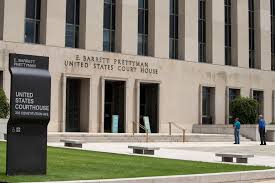
Trump’s agencies had a terrible litigation record the first time. It will probably get better – but not that much better.
In his first term, Trump’s litigation record was awful – winning only one case in four by some estimates.The Trump folks should do a better this time. But they may not improve that much, and could still lose more often than they win. Money invested in litigating against the Administration will be well spent. Meticulous attention to evidence and legal requirements is likely to remain a weak point.
CONTINUE READINGWhat policies lead to greenhouse gas emissions declines?
A recent study emphasizes the role of policy mixes in driving short-term emissions reductions
In a series of posts (beginning here, and ending here) last month, I outlined an approach to climate policy that emphasizes the role of subsidies in building political support and technological progress for climate policy. In doing so, I drew heavily on existing political science research and case studies from North America and Europe. But …
Continue reading “What policies lead to greenhouse gas emissions declines?”
CONTINUE READINGNo More ‘House of Horrors’ Thanks to These New Laws

Several California laws prohibiting dangerous chemicals from household products go into effect on or after January 1, 2025.
Halloween is the one time when we welcome ghouls, ghosts, and goblins coming to our homes (and, if your neighborhood is anything like mine, a variety of tiny superheroes). This season, however, the Legislature is dealing with a different kind of house of horrors: dangerous chemicals in everyday products that affect millions of Californians’ health. …
Continue reading “No More ‘House of Horrors’ Thanks to These New Laws”
CONTINUE READINGJoin Our Mailing List
Climate policy is changing rapidly. Stay in the loop with expert analysis via email Monday - Friday.

The Drain is a roundup of climate and environmental news from Legal Planet delivered to your Inbox once a week.