

























































Environmental Science
Escalating the War on Science

Now the National Academies are in the cross-hairs.
The National Academics of Science, Engineering, and Medicine are at the pinnacle of American science. Recently, President Trump President Donald Trump ordered a so-called suspension and debarment investigation into the National Academies for what a supposedly “fraudulent, biased, and misleading” report on climate change. The Academies, he said, are “run by Radical Left Dumocrats,” which is apparently more than enough reason to ban them from government funding.
CONTINUE READINGProject 2025 Was Awful. Trump Has Been Worse.

Trump disowned Project 2025. In retrospect, it seems like he considered it too moderate.
When the Heritage Foundation released Project 2025, there was a big hullabaloo, and Trump quickly disowned it. Bad as it was, however, it appears Project 2025 apparently failed to anticipate the full sweep of Trump’s second term. Many of Trump’s actions mirror Project 2025 recommendations, but in some key areas he’s gone much further. Here …
Continue reading “Project 2025 Was Awful. Trump Has Been Worse.”
CONTINUE READINGOMB’s New Grant Regulations: A Deeper Dive
A close look at OMB’s proposed rule only heightens concerns.
Is OMB’s proposed rewrite of federal grant regulations as bad as it sounds? Sadly, the answer is yes. Below, this posts takes a close look at some key provisions in the regulations. Some raise constitutional problems. Others are merely bad policy, undermining merit review, deterring valuable research, and skewing research toward the politics of the moment.
CONTINUE READINGOMB’s “Reforms” versus NSF’s Statutory Mission
NSF will need to do some serious explaining about how the “reforms” advance its scientific mission.
In terms of DEI, section 1861p-14(7) says that one factor in assessing grants is “expanding participation of women and individuals from underrepresented groups in STEM.” Section 1855a also authorizes the Foundation to support activities to encourage women qualify for and then pursue careers in STEM. Section 1855b contains similar language about the “participation of minorities” in science. How is the prohibition on DEI consistent with these provisions? If not, does the agency now believe these provisions are unconstitutional and if so, one what grounds?
CONTINUE READINGWhy Does the Trump Administration Keeping Attacking Science?
Apparently, the Administration views science as fatally infected with woke ideas and lacking much other value.
Make no mistake, the Trump Administration is engaged in a serious, carefully honed, effort to undermine American science. The National Science Foundation has lost a third of its staff, while the National Institutes of Health have lost 20%. EPA’s science office is being shuttered. Trump’s proposed budget included a 54% cut for NSF, 12% for NIH, and 46% for NASA’s space research. And last week, the government proposed changes to politicize research funding decisions at the expense of merit review. It also proposes making continuation of long-term funding dependent on political whim, which will drive researchers away from projects taking longer commitments.
CONTINUE READINGThe Latest Step in Trump’s War on Science
OMB’s proposed new rule seeks to politicize research funding across the entire federal government
Last week, Trump’s Office of Management and Budget (OMB) proposed a sweeping new regulation of grants across the federal government. Here are two quick takeaways. First, OMB gives every sign of realizing it is on shaky legal ground. Second, the OMB rule seeks to continue Trump’s 2025 campaign to rip apart research funding. The goals of that campaign were to destabilize scientific research; squelch research on forbidden topics like climate change, clean energy, race, and gender; and inhibit academic criticism of the Administration. The legal basis for the 2025 campaign was dubious, resulting in serious litigation setbacks. OMB is now trying to create a foundation for making the war on science permanent.
CONTINUE READINGAn Inconvenient Truth Two Decades Later
Global X via flickr
The Drain is a weekly roundup of environmental and climate news from Legal Planet.
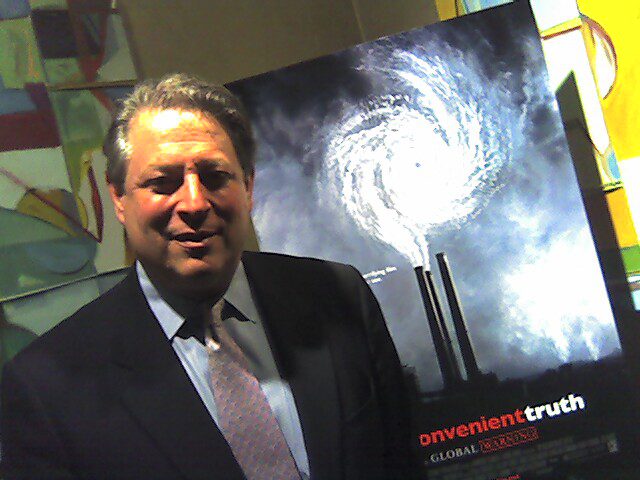
Twenty years ago this month, I walked out of a movie theater, dumfounded, after seeing “An Inconvenient Truth,” the Al Gore documentary that would go on to frame the conversation around climate change for years. I remember feeling riveted and freaked-out. I’d read enough Adbusters in college to have a decent critique of capitalism, …
Continue reading “An Inconvenient Truth Two Decades Later”
CONTINUE READINGThe Other Half of Climate: Policy, Capital, and the Race to Scale Superpollutant Solutions

Learn how California is using satellite data to pull the emergency brake on global warming.
Methane and other short-lived climate pollutants (SLCPs) are responsible for nearly half of today’s net global warming. Because they exit the atmosphere quickly, reducing them can serve as an ‘emergency brake’ on rising temperatures. At the San Francisco Climate Week, UC Berkeley’s Center for Law, Energy and the Environment (CLEE) and the Institute for Governance …
CONTINUE READINGBending Under Pressure

Every now and then, the Trump Administration shows signs of reluctantly giving in to reality.
The Trump Administration’s basic stance has been to pursue ideological purity all costs, beginning with the “shock and awe” campaign of the first year. Don’t expect miracles, but there are at least a few signs that the Administration is tempering that strategy. It’s a bit comforting to see indications that reality is slowly sinking in. It’s also evidence that resistance to Trump policies isn’t futile.
Any trend toward saner policies is likely to be very limited. For instance, Trump and his supporters are too invested in climate denial to ever admit that climate change is a serious problem. The best we might hope for is that they ease up just a little on their war against clean energy. There are at least some hints that this may be starting to happen.
CONTINUE READINGNever Give Up! Every Ton of Carbon We Can Cut Still Matters
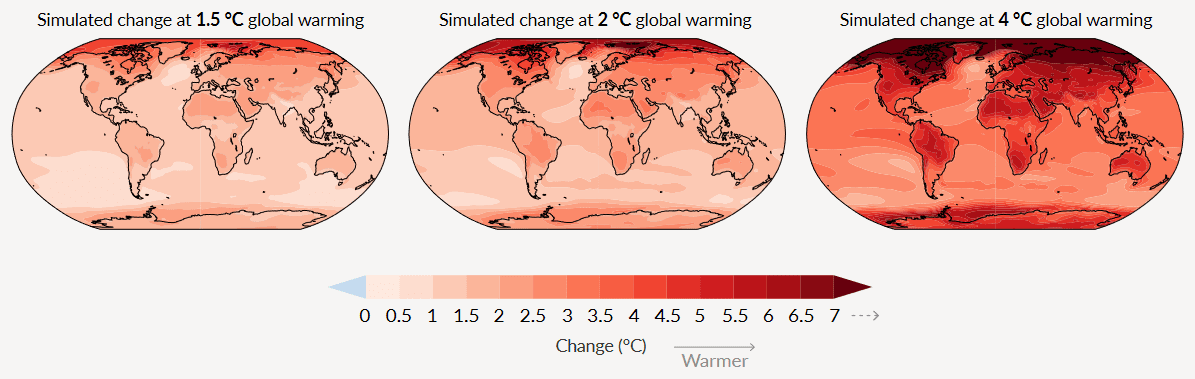
It’s easy to be disheartened when we miss climate targets. But climate change isn’t a yes/no thing. It’s a matter of degree.
It’s easy to lose heart about our prospects for limiting climate change. The US has pulled out of international climate negotiations. Most of the countries that joined the Paris Agreement have missed targets , targets that weren’t aggressive enough in the first place. The 1.5 °C target is already basically out of reach. Is time to give up on slowing climate change and focus on adapting to it? The answer is no. Here’s why.
Climate change is a matter of degrees. That sounds like a truism or a pun, but it’s true in a deeper sense. There is no point past which further warming becomes irrelevant. degree, and every fraction of a degree makes things that much worse.
Join Our Mailing List
Climate policy is changing rapidly. Stay in the loop with expert analysis via email Monday - Friday.

The Drain is a roundup of climate and environmental news from Legal Planet delivered to your Inbox once a week.