

























































Region: National
What’s The Matter With Progressive Billionaires?

Tom Steyer is a good man, but his new gubernatorial campaign ignores how to build real power
It seems like everyone and his brother-in-law is running for California Governor nowadays, and a week ago we got another one: progressive billionaire and climate champion Tom Steyer. One might think that this should be cause for celebration from environmentalists. Steyer is a good man. He has poured money into progressive causes and charities, as …
Continue reading “What’s The Matter With Progressive Billionaires?”
CONTINUE READINGThe Top Ten Things to be Thankful for this Year

It’s been a horrible year for federal environmental law, but there are hopeful developments elsewhere.
This is, if not the winter of our discontent, at least the late autumn. In terms of federal environmental policy, 2025 has been a disaster. Trump’s previous term in office pales by comparison. But all is not gloomy. Outside of D.C., there have been encouraging developments within the U.S. and globally.
Here are ten of those positive developments.
Trump’s Baffling Free Pass for Coke Oven Pollution
Even for the Trump Administration, this seems really weird.
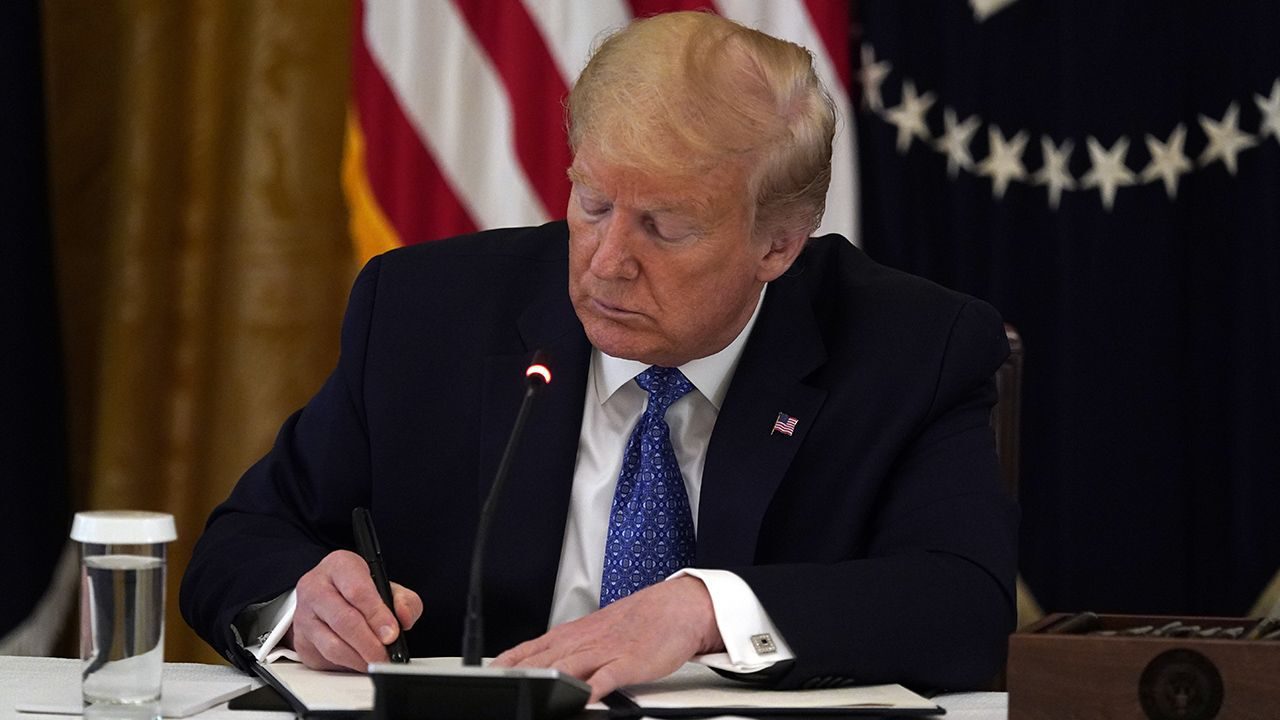
Trump just gave coke ovens a free pass for their toxic air pollution. What makes this so weird is not Trump’s reversal of a public policy protecting public health or of an action taken under Biden. Both of those are routine these days. Nor is it weird that Trump did so without the slightest factual basis. That’s also par for the course these days. What is weird is doing this after Trump’s own EPA director, who has no evident scruples about favoring industry, said no. There is no indication Trump was even aware of this fact. And it is even weirder, in that industry didn’t have a compliance problem in the first place and would save only pocket change from the postponement.
CONTINUE READINGClimate Inaction is an Affordability Problem

The costs of climate change, especially those from climate-related natural disasters, are already substantial for US households.
This post is authored by UCLA Law’s Kimberly A. Clausing along with guest contributors Christopher R. Knittel and Catherine Wolfram. Many of us have seen large increases in our homeowner’s insurance premia in recent years – yet another cost increase that is putting strain on homeowners and driving up rents. In forthcoming work for the …
Continue reading “Climate Inaction is an Affordability Problem”
CONTINUE READINGYes, Secretary Noem, We Really Do Need FEMA

An advisory committee suggests upgrading FEMA, but Noem still hopes to gut it.
The Washington Post reported yesterday that a special advisory council has recommended that FEMA be strengthened and taken out of DHS. Secretary Noem is unconvinced and seems to be trying to bury the recommendations. She’s wrong. FEMA really is needed, and the reasons tell us a lot about what kinds of reforms make sense. First responders are usually state and local – they’re already nearby – and much of the work of reconstruction is also overseen locally. So why do we need FEMA? Let me count the ways.
CONTINUE READINGThe Promise and Growing Pains of Managed Aquifer Recharge

By Dave Owen, Helen E. Dahlke, Andrew T. Fisher, Ellen Bruno, and Michael Kiparsky
Around the world, groundwater mismanagement is a major driver of water crises. An emerging method for addressing such mismanagement, called managed aquifer recharge, has generated excitement among scholars and water managers. In a newly published article (Owen et al. 2025), we argue that this excitement, while often justified, should also be tempered by acknowledgment …
Continue reading “The Promise and Growing Pains of Managed Aquifer Recharge”
CONTINUE READINGRed States and the American Free Enterprise Chamber of Commerce are Climate Champions?
The hypocrisy in Iowa v. Wright is nauseating.
Guess which parties made the following arguments about climate change in a recently decided Eighth Circuit Court of Appeals case, Iowa v. Wright? A group of red states and the American Free Enterprise Chamber of Commerce (AMFREE). The case involves an obscure but important formula, known as the Petroleum Efficiency Factor (PEF), applied when automakers …
CONTINUE READINGTurning Conservative Legal Theories Against Trump

Is the risk of legitimizing bad ideas worth it? Maybe so, under the circumstances.
Conservatives have been obsessed with the idea of a runaway federal government crushing everything in its path. They’ve been successful in promoting ideas to rein in Leviathan, at a time when by our lights the government actually was behaving very reasonably. But now we really do have a rampaging federal government. Conservative ideas could be very useful tools right now, and we shouldn’t hesitate to use them.
CONTINUE READINGWhat the Hell Happened To The Sierra Club?
Its recent implosion over left-wing politics shows a trend that threatens environmental advocacy.
In an era of growing American fascism, for progressive organizations, there are successful strategies, and unsuccessful strategies. And then there is the Sierra Club, which appears to have destroyed itself, according to a depressing and enraging expose in the New York Times (co-written by David Fahrenthold, one of their best reporters): “Sierra Club is in …
Continue reading “What the Hell Happened To The Sierra Club?”
CONTINUE READINGAmerica’s Dirty Pictures: The Forgotten ‘Documerica’ Reminds Us How Far We’ve Come

The Documerica project, housed at the National Archives, provides a vivid window into environmental destruction circa the 1970s.
In recent decades, environmental laws have not only been challenged in courts and Congress; they’ve also taken a verbal beating. They’ve been denounced as “job killers”, “government overreach,” “radical environmentalism,” a “war on coal,” and, lately, just “woke.” It’s become all too easy to focus on the costs of regulation and forget why we adopted …
CONTINUE READINGJoin Our Mailing List
Climate policy is changing rapidly. Stay in the loop with expert analysis via email Monday - Friday.

The Drain is a roundup of climate and environmental news from Legal Planet delivered to your Inbox once a week.