


























































scientific uncertainty
New Trump Nuclear Reactor Policy: “Trust Us”
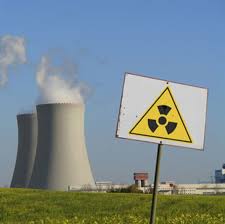
The Administration is eliminating safeguards and courting greater skepticism about nuclear safety
The Trump Administration is quietly dismantling safeguards for nuclear power. I’m neutral. But not if it’s being built with a “safety last” policy. Trump’s Department of Energy wants us to trust them to protect the public. But blind trust for federal agencies is in scarce supply these days. Trying to sneak through regulatory changes may speed things up in the short run but is likely to cause delays later. We know that the changes will be made by political appointees, with experts relegated to minor roles. This will build a legacy of distrust.
CONTINUE READINGIs This the End of Cost-Benefit Analysis?
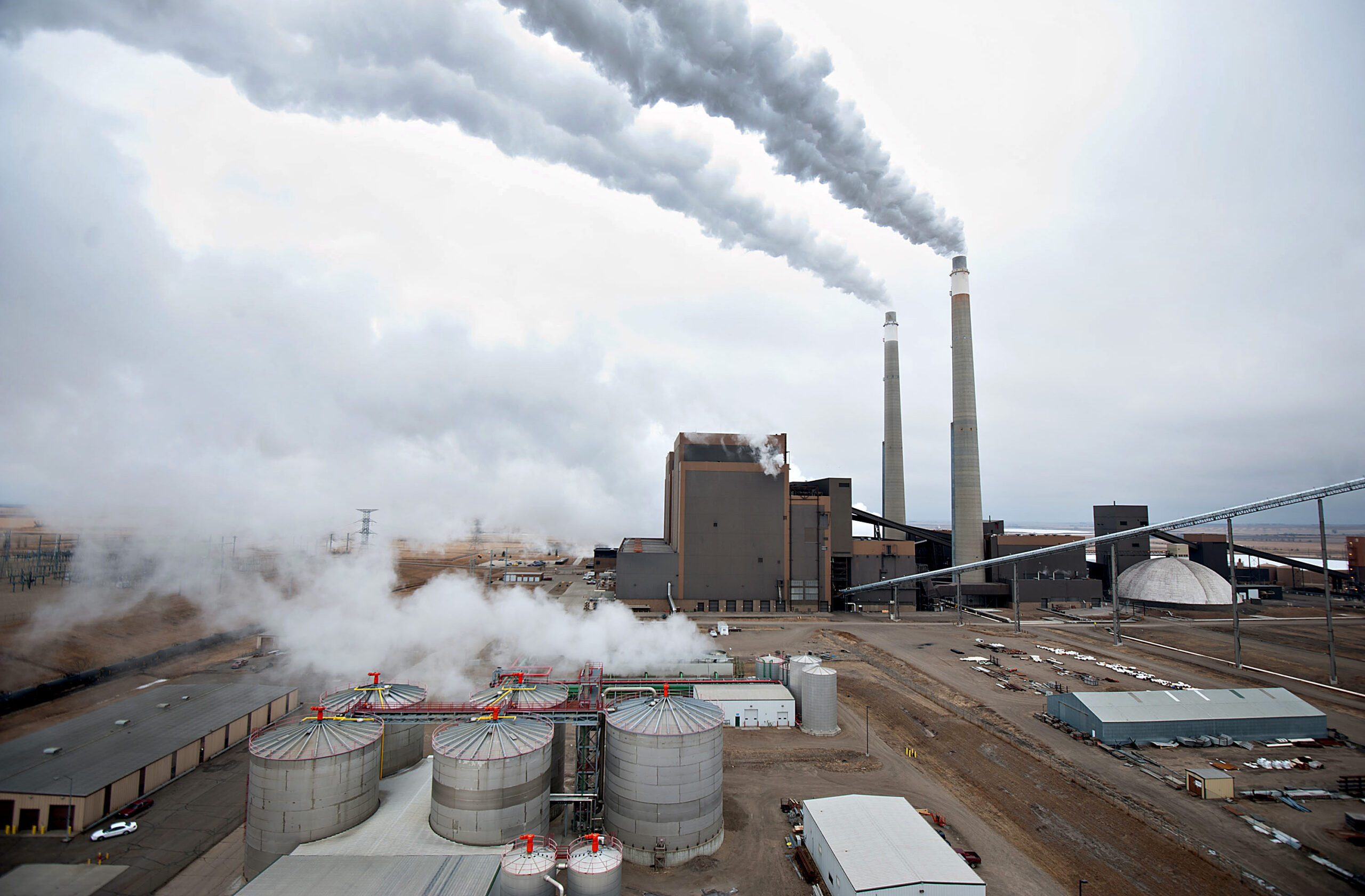
Trump’s EPA is effectively abandoning economic analysis
Maybe the Administration means to keep cost-benefit analysis in place for some other kinds of regulations at EPA or elsewhere. But if the courts uphold the EPA’s refusal to quantify the enormous harms caused by air pollution, it’s hard to see an argument for quantifying many other regulatory benefits. In other settings, environmentalists might applaud the repeal of cost-benefit analysis. In the current setting, however, the purpose is all too plain: to make it easier for the Administration to ignore the ways it is endangering human life and health.
CONTINUE READINGScience and Democracy

The scientific process is crucial for a well-functioning democracy.
Beyond its utility, science also models some important features of democracy. It aspires to a marketplace of ideas in which everyone with the needed background knowledge can participate, and in which conclusions are based on debate and data rather than power. As a recent D.C. Circuit case illustrates, the law calls on government agencies to make decisions in the same, considering all the scientific evidence and arguments, then providing a reasoned explanation for its decision.
CONTINUE READINGThe Energy Secretary Pushes Pseudoscience
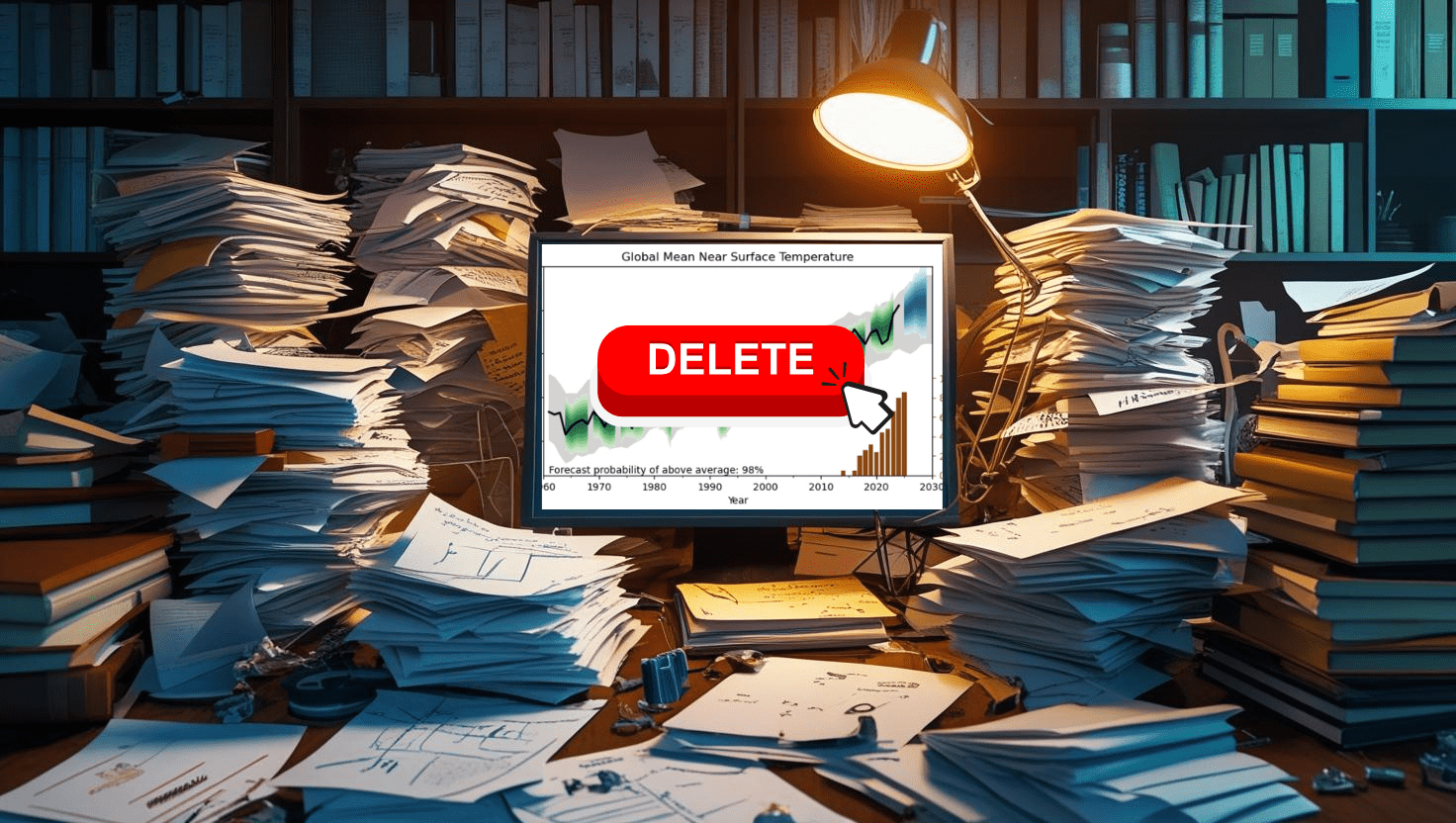
The Drain is a weekly roundup of environmental and climate news from Legal Planet.
Remember alternative facts? That catch phrase from Season 1, Episode 1 where Trump officials lied about the size of his inauguration crowd has now metastasized into a governing philosophy for how federal agencies plan to ignore, and ultimately exacerbate, the climate crisis. Trump 2.0 is pushing alternative science. Late last month, Energy Secretary Chris Wright …
Continue reading “The Energy Secretary Pushes Pseudoscience”
CONTINUE READINGDoes the Law Require Cost-Benefit Analysis?
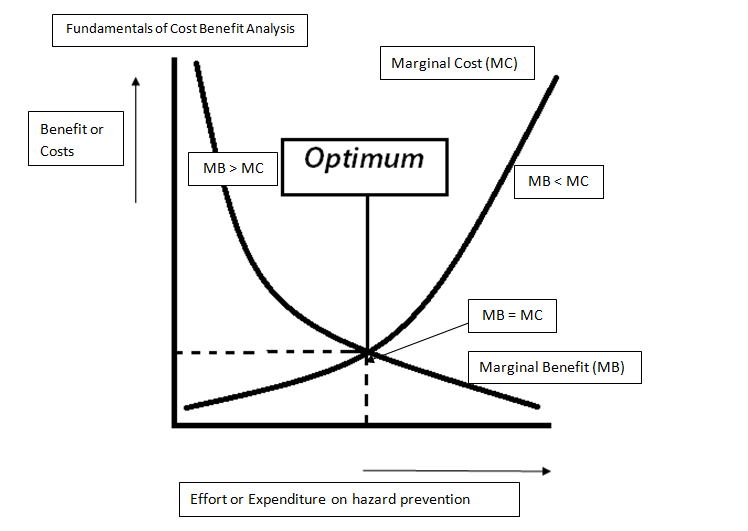
According to the D.C. Circuit, the answer is no.
Putting aside the particulars of the case, it seems wrong to apply the same standard (monetized cost-benefit analysis) to every provision in environmental law. These provisions have different language, reflecting differences in congressional priorities. Some provisions, for instance, may be designed push industry to find innovative solutions; others may reflect Congress’s value judgments or a desire to limit EPA’s discretion. We shouldn’t assume that the myriad differences in statutory language are irrelevant and that Congress wanted agencies to adopt the same method of making decisions in every case.
CONTINUE READINGThe Emperor’s New Endangerment Theory (Part III)

How did EPA get to the absurd conclusion that 1.5 billion tons of carbon emissions aren’t significant? Well might you ask.
There is a very good chance that a court would strike down a EPA’s current finding that carbon emissions from the U.S. power sector are too insignificant to regulate. EPA’s effort to explain its ultimate conclusion rests on a hodgepodge of poorly analyzed considerations, which obviously have been reverse engineered to lead to EPA’s preferred conclusion.
CONTINUE READINGTrump Goes Nuclear
Four new executive orders try to launch a nuclear renaissance.
Diluting safety and environmental reviews is also likely to lead to a lot of litigation, which will slow nuclear licensing to a crawl. In addition, the industry knows that what one President can do by executive order, the next President can undo. So it could be risky to make investments in facilities that will be around for many decades, based on what could be an evanescent presidential policy. And the public will have good reason to fear that public safety won’t be a priority.
CONTINUE READINGThere are Piles of Coal in America’s Christmas Stocking

Coal is piling up, unused, at powerplants across the country
Bad children, supposedly, will get only lumps of coal in their stockings. That could be taken as a metaphor for the anti-environmental programs coming down the line, but I have in mind something a bit less metaphorical. According to a recent report, coal-fired power plants have immense piles of coal – 138 million tons, equal …
Continue reading “There are Piles of Coal in America’s Christmas Stocking”
CONTINUE READINGModel Uncertainty in Politics and Climate Policy

The polls could be systematically off, not just due to random error. That’s a worry with climate models as well.
Yes, your favored candidate could sweep the swing states, and yes, climate change could be more moderate than we now expect. But that shouldn’t give you much comfort on either issue, since the errors could equally be in the opposite directions.
Obviously, we’d like to improve our models, but that’s not always easy. In the meantime, the smart thing is to plan on the basis of the best models we have but avoid overconfidence about our predictions.
CONTINUE READINGArctic Futures: White Shield or Blue Economy
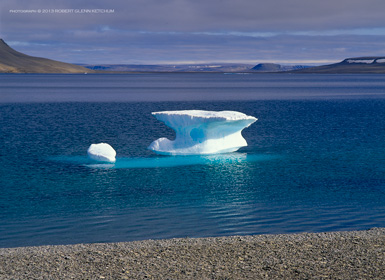
Multiplying proposals for ice restoration face geopolitical obstacles
Ice-thickening. Glacier curtains. Cloud brightening… Proposals for Arctic climate interventions seem to be multiplying by the day. The changing climate is not only shrinking ice caps and ice sheets, but also bringing much greater than average temperature rises in polar regions. These impacts particularly disrupt the lives and livelihoods of Arctic Indigenous Peoples. Arctic impacts …
Continue reading “Arctic Futures: White Shield or Blue Economy”
CONTINUE READINGJoin Our Mailing List
Climate policy is changing rapidly. Stay in the loop with expert analysis via email Monday - Friday.