



























































International Environmental Law
Bring Back “Trump Classic”

The original version of Trump was bad. The current version is much worse.
Trump has succeeded in his second term in making every past President including even himself look better. We’re now almost a year and a half into Trump’s second term. From almost every point of view, it’s worse than his first term. It reminds me of the “New Coke” that Coca Cola once introduced, which was a disaster that led to the reintroduction of what was then dubbed “Coke Classic.” Trump Classic was committed to fossil fuels and eliminating environmental protections. But in almost every respect, his policies were less radical and his methods were less drastic.
China’s Climate Policies: A Timeline
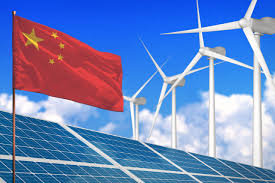
How has China has gone from climate action’s problem child to a promoter of clean energy?
China has long been the world’s top emitter of greenhouse gases, making its climate and energy policies crucial for the rest of the world. It initially took the position that Westerners had caused the problem and should carry the entire burden of fixing it. Over time, however, it has shifted into a position of leadership in clean technology and cooperation on climate issues.
CONTINUE READINGA Compendium of Good News

Hey, it’s not all gloom and doom out there.
We don’t lack for bad news these days. Still, there are also good things happening. I’ve been putting together a list of things that are good news for the environment. EVs, battery storage, and solar are growing around the world. So put on your happy face!
CONTINUE READINGLegislating Sunlight Reflection in Latin America and the Caribbean
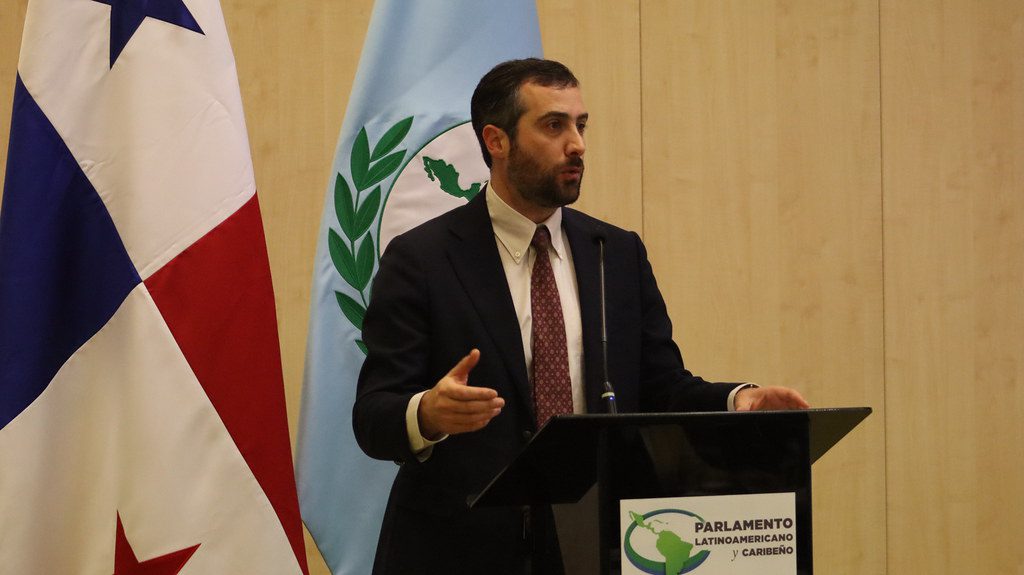
UCLA’s ESI Project co-hosted a science-policy dialogue with Latin American and Caribbean parliamentarians.
In early June, UCLA’s ESI Project, in partnership with the Degrees Initiative, had the exciting opportunity to address the Parliament of Latin America and the Caribbean (PARLATINO), on the emerging issue of Earth system interventions, notably sunlight reflection or SRM. As an interparliamentary body with broad reach, PARLATINO is a forum for legislators from the …
Continue reading “Legislating Sunlight Reflection in Latin America and the Caribbean”
CONTINUE READINGThe Other Half of Climate: Policy, Capital, and the Race to Scale Superpollutant Solutions

Learn how California is using satellite data to pull the emergency brake on global warming.
Methane and other short-lived climate pollutants (SLCPs) are responsible for nearly half of today’s net global warming. Because they exit the atmosphere quickly, reducing them can serve as an ‘emergency brake’ on rising temperatures. At the San Francisco Climate Week, UC Berkeley’s Center for Law, Energy and the Environment (CLEE) and the Institute for Governance …
CONTINUE READINGHow to Flip the Script for a Real Fossil Fuel Phaseout

The First International Conference on the Just Transition Away from Fossil Fuels should look to the Montreal Protocol for a model.
More than 50 governments are gathered in Colombia this week to design a roadmap to phase out oil, gas and coal. This aim, repeatedly proposed in UN climate conferences, has never seriously been pursued. Current fuel market shocks give it new urgency beyond climate change. The Santa Marta conference provides a promising platform to start …
Continue reading “How to Flip the Script for a Real Fossil Fuel Phaseout”
CONTINUE READINGHarmful Activities, the Duty to Rescue, and Climate Change

A concept from tort law suggests another argument for international climate adaptation funding.
Do countries that caused past carbon emissions have a duty to help pay for adaptation and disaster response? Much of the argument about this is phrased in terms of damages for past actions, not unlike arguments that oil companies should pay damages for oil spills. Tort law suggests another way of looking at the issue, one that doesn’t depend on whether the past emissions themselves give rise to duty for reparations. Instead, it depends on the principle that people whose activities contribute to accident risks, even innocently, have a duty to assist victims.
CONTINUE READINGNever Give Up! Every Ton of Carbon We Can Cut Still Matters
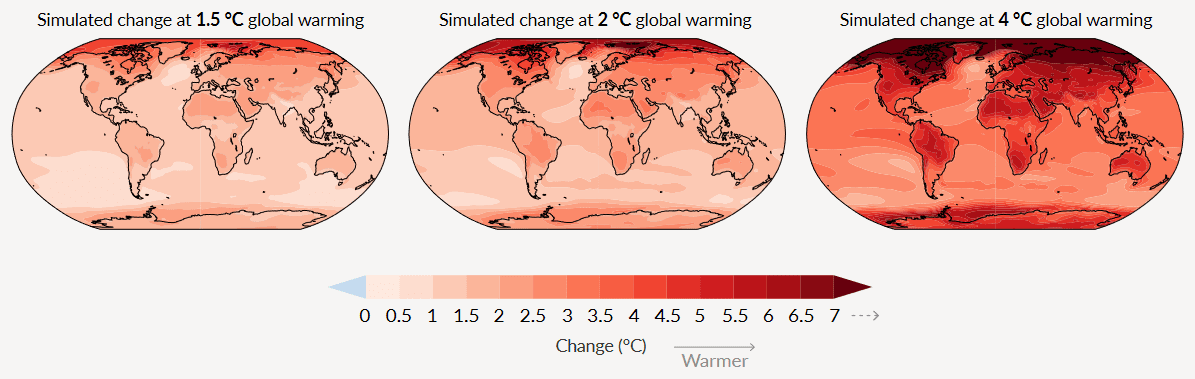
It’s easy to be disheartened when we miss climate targets. But climate change isn’t a yes/no thing. It’s a matter of degree.
It’s easy to lose heart about our prospects for limiting climate change. The US has pulled out of international climate negotiations. Most of the countries that joined the Paris Agreement have missed targets , targets that weren’t aggressive enough in the first place. The 1.5 °C target is already basically out of reach. Is time to give up on slowing climate change and focus on adapting to it? The answer is no. Here’s why.
Climate change is a matter of degrees. That sounds like a truism or a pun, but it’s true in a deeper sense. There is no point past which further warming becomes irrelevant. degree, and every fraction of a degree makes things that much worse.
From Sivuqaq’s Shores in Alaska to the UN: The Fight for Military Cleanup & Indigenous Rights
Per- and polyfluoroalkyl substances (PFAS), also known as ‘forever chemicals’ are intoxicating the Sivuqaq people
“It was so beautiful. Little did we know it was so toxic”, declared Karen (Pungowiyi) Nguyen, a former Indigenous resident of Sivuqaq Island (more commonly known as St. Lawrence Island) in the Northern Bering Sea, when we interviewed her in Alaska in early 2024. She recalled how, as children at the Northeast Cape on Sivuqaq, …
CONTINUE READINGThe U.S. Has Now Become a Rogue Nation

By pulling out of the UNFCCC and dozens of international organizations, Trump has isolated the United States and ceded influence to China and the EU.
In the past few days, Trump has kidnapped the head of state of Venezuela, threatened to invade Greenland, and withdrawn from a 1992 climate treaty negotiated by George H.W. Bush. The treaty, the U.N. Framework Convention on Climate Change, has been the basis for international climate cooperation for the past thirty years, including the Paris Agreement. In addition, Trump is withdrawing from the Intergovernmental Panel on Climate Change (IPCC), which will make it harder for American scientists to contribute to the periodic reports on the state of climate science. Trump’s action is basically a big middle finger toward the rest of the world. If anyone wins from this, it’s China, which can now claim to be the responsible adult in the room.
CONTINUE READINGJoin Our Mailing List
Climate policy is changing rapidly. Stay in the loop with expert analysis via email Monday - Friday.