



























































What Does Wildfire Resilience Cost?
A new UCLA Law report focuses on wildfire liability costs and wildfire mitigation costs in the transmission context.
When it comes to updating transmission lines and other wildfire-related costs, how much of the burden should fall on utility ratepayers? That’s one of the questions at the heart of a new report published by the UCLA Emmett Institute.
First, some context: California saw its hottest temperatures ever recorded in March this year. With a hotter climate come more frequent and intense wildfires, which California saw during the destructive 2025 fire season. In Los Angeles alone, the January 2025 fires are estimated to have caused up to $131 billion in damages. As fire seasons intensify, the electric grid is being strained. This comes with substantial financial costs for utilities: They must pay both to mitigate wildfire impacts and to settle liabilities for utility-caused wildfires. California’s uniquely stringent strict liability standard for utility-caused damages intensifies that cost. Those costs are passed directly to ratepayers. As a result, wildfire-related costs today account for up to a quarter of Californians’ electricity bills, with prices growing faster here than anywhere else in the country. Amidst a warming climate and growing demand for energy from both consumers and industrial customers, utilities will be forced to invest even more in costly transmission and distribution infrastructure in the coming years. How the costs for that infrastructure are allocated will impact ratepayers for years to come. Legislators have taken note of the importance of this issue. Senate Bill 254 contained multiple provisions aimed at keeping electricity costs down amidst rising wildfire risk. It also tasked California’s Earthquake Authority with releasing a report this April outlining potential approaches to dealing with catastrophes and their associated costs, with a focus on utilities. What remains underexplored in this debate is how wildfire costs are assigned in the transmission context, which goes beyond California’s borders and involves multiple regulatory agencies.
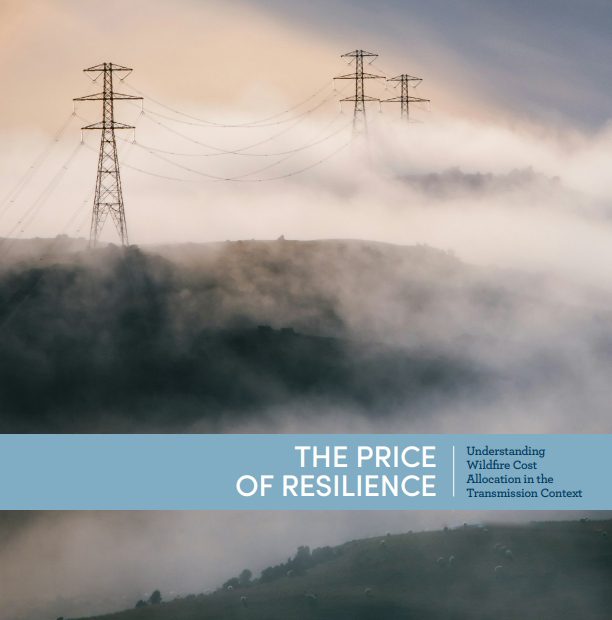
In a new report, released today, I discuss how the methods through which utilities’ wildfire-related costs are allocated between wholesale customers and retail ratepayers are far from transparent. I find a lack of clear guidelines on how to distribute costs between transmission and distribution customers, which allows interest groups to petition for favorable treatment and shift costs onto other customers. In the report, I discuss the treatment of both wildfire liability costs and wildfire mitigation costs in the transmission context, which is governed by overlapping state and federal regulatory frameworks. Transmission is a uniquely difficult area to allocate wildfire costs to because it is inherently interstate, whereas liability standards for wildfires are specific to California. As a result, contentious cost-allocation issues remain. In the report, called The Price of Resilience, I highlight ways in which treatment of these costs could be standardized, and areas where interstate cooperation will be required to achieve fair results. The report also evaluates potential shifts in liability standards, including ways of socializing wildfire-related costs, to alleviate the burden being placed on utility ratepayers. These findings call for a critical evaluation of current cost allocation practices to ensure that no one group is left holding the bill for a problem that affects the entire Western United States.
Read the full report here.


About Elias

Elias van Emmerick(he/him) is the 2025-2027 Emmett Frankel Fellow in Environmental Law and Policy at UCLA School of Law, where his work will focus on energy law and polic…
READ more
Reader Comments