














































The Overlooked Fast Track for Cutting Planetary Warming
Guest contributors V. Ram Ramanathan, Durwood Zaelke, and Marcelo Suárez-Orozco write that we can cut the rate of warming by 30% to 50% within 15 years. “And we must.”
This guest post is authored by V. Ram Ramanathan, Durwood Zaelke, and Marcelo Suárez-Orozco and is informed by a presentation that Ramanathan is set to give at the Vatican on September 26.
Among the three of us, we have 15 decades of high-level experience in climate science, policies and actions, and we have never been more alarmed than we are at this moment. The United Nations has just officially declared that the world has failed in limiting global warming to a safe level. During the last decade, heat-trapping pollutants nearly doubled the rate that heat is being added to the planet—a rate that will push temperatures across the 1.5°Celsius threshold in five years or less and breach the first barrier of the Paris Agreement. This will further destabilize natural climate systems and amplify weather extremes, which are already costing the world economy more than $ 2 trillion annually. At the current rate of warming, the global temperature is likely to cross 2° Celsius in about 15 years, the outer limit of the Paris Agreement, taking us into a climate not witnessed by homo sapiens, ever.
High altitudes in the Tibetan-Himalayan region and the Alps are already warming at two to three times the global average (which may be implicated in the recent Nepal / Tibet floods that left 1400 confirmed dead and 5,000 missing). Other disastrous impacts of reaching 2°Celsius include the the transition of the Amazon from a forest into a savanna. The health impacts could be the worst of all. At 2°Celsius, heat deaths in 2050 could reach a staggering two billion in a worst-case analysis by actuarial experts at Exeter University.
If that weren’t bad enough, a new scientific study raises the possibility that the current rate of warming, if continued, could eventually shut down the ocean current called the Atlantic Meridional Overturning Circulation—AMOC. The Gulf Stream is a major part of this vital ocean current, which plays a dominant role in winter weather over north America and Europe. Worryingly, AMOC is already slowing down.
At today’s rate of warming AMOC could begin to collapse at warming as low as 2° Celsius, which could be crossed by the time today’s infants are in college. Impacts would be punishing, stranding heat in the already too hot tropics, while robbing northern countries of heat now transported north to keep temperatures temperate, leading to bitter winters. If AMOC collapses, currently a low-probability event, it could trigger massive forced internal and international displacements, ushering in the world’s largest crisis of forced migration ever.
Crossing 2°Celsius will trigger other irreversible impacts too, further amplifying warming through the loss of sea ice and glaciers. The depletion of ice and snow will make the planet darker, resulting in more absorption of incoming solar radiation, amplifying warming by 25% or more.
The good news is that we can avoid this fate if we cut the rate of warming quickly—by 50% within 15 years, which is feasible in two parts.
First, we need to cut the super-pollutants of climate. These include hydrofluorocarbons (HFCs), methane, lower-atmosphere ozone, and black carbon soot from diesel and cooking smoke. These short-lived climate pollutants are called super pollutants because they are tens to thousands of times more potent than carbon dioxide in heating the planet and are currently contributing more than half of the warming the planet has witnessed. However, and this is crucial–they dissipate from the atmosphere within two decades, whereas carbon dioxide, the best-known climate pollutant, takes multiple decades to a century to significantly decline.
Technologies exist to quickly and affordably reduce the super pollutants. In many cases we have the policies and laws as well. HFCs are being cut through the 2016 Kigali amendment to the successful Montreal Protocol—the treaty that has slowed warming by several decades while restoring the protective stratospheric ozone layer.
Methane pollution is getting more attention recently, including from Prime Minister Mia Mottley of Barbados, who is recommending a binding international agreement —inspired by the Montreal Protocol—to prevent the oil and gas industry from wasting natural gas, which is 90% methane. Other local solutions can reduce or even eliminate methane from landfills, starting by reducing food waste. There are many other such practical, off-the-shelf solutions.
The immediate task at hand is to thin the invisible heat‑trapping blanket. If we implement super pollutant solutions before 2030 and scale to full potential in less than10 years, the rate of warming can be reduced by 30% by 2040s. But we need to cut the rate of warming by half, i.e. 50%. The super pollutants should be our first target, because the technologies and policies are there and once we put them into action, the blanket-thinning will start immediately.
Second, as the recent IPCC report affirms, we need to focus on removing CO2. The human-made CO2 blanket up there weighs about 1,200 billion tons and we have to thin it by 5%, or 60 billion tons. Nature-based solutions are currently removing about 2 billion tons per year. Chemical/biological/technological solutions are actively pursued. Scaling to 4 billion tons per year would remove the needed tons in 15 years.
Together, these two measures would halve the rate of warming from today’s nearly 0.4° Celsius per decade to less than 0.2° Celsius per decade. We know of no other measures of thinning the heat-trapping blanket to provide the rapid cooling needed to allow us to survive and thrive. Even with rapid actions, climate disruption will continue for decades. We must make people and ecosystems resilient. Since we are all interconnected, we require global cooperation to make people and ecosystem climate resilient. Towards this global cooperation, we propose creating: One Million Climate Advocates to empower the public to support local and national actions; and One Million Climate Champions to connect civil society, governments, and industries to turn climate mitigation policies into actions at the local to the global level.
It’s time to move forward, always forward. Adelante, Siempre Adelante. Those were among the last words Pope Francis offered one of us (Suárez-Orozco). Not forward when the politics are perfect or opposition relents. Forward now, with the urgency of a species that has finally seen the iceberg but still has time to turn the tiller toward safety.
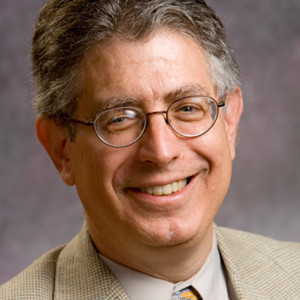
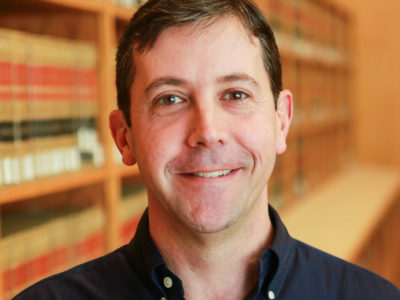
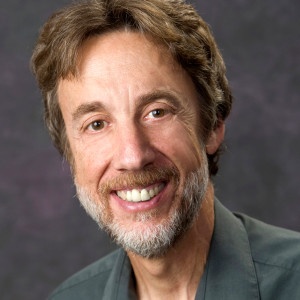
V. Ramanathan is a distinguished research professor at the University of California at San Diego and the winner of the 2026 Crafoord Prize from the Royal Swedish Academy.
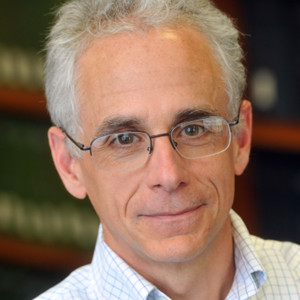
Durwood Zaelke is president of the Institute for Governance & Sustainable Development and adjunct professor at the University of California, Santa Barbara.
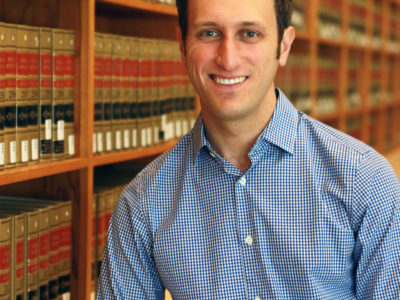
Marcelo Suárez-Orozco is chancellor of the University of Massachusetts Boston & the UCLA Wasserman Dean Emeritus.
Reader Comments
3 Replies to “The Overlooked Fast Track for Cutting Planetary Warming”
Leave a Reply



About Guest

Legal Planet welcomes contributions from policy partners and professors from other environmental law programs.…
READ more
What’s the second measure? I only see reducing superpollutants, including methane.
I believe the second measure in that construction is: “Next, as the recent IPCC report affirms, we need to focus on removing CO2” from nature-based solutions and others.
I vote for All of the Above!!
We can do it!!