

















































A Science-Policy Dialogue on SRM for Latin America
Key takeaways from the UCLA Emmett Institute’s convening on Solar Radiation Modification (SRM) in Santiago, Chile.
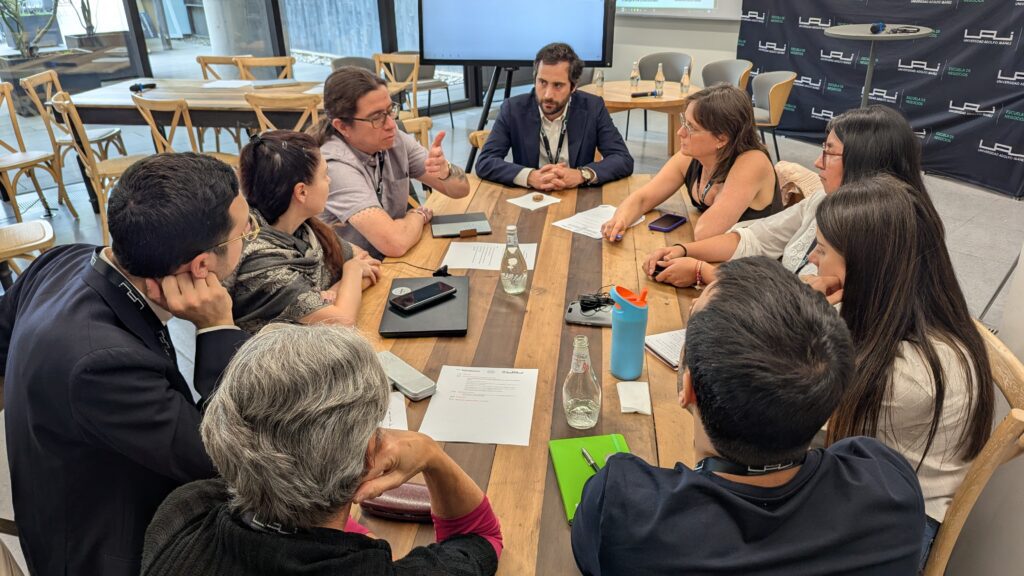
Though interventions like solar radiation modification (SRM) are increasingly breaking into mainstream conversations of climate change, the charged nature of this topic and political extremes that have characterized discussion around it make it difficult for policymakers and decision-makers to find neutral spaces to learn about existing research, ask questions, and brainstorm policy ideas with colleagues and trusted experts.
Creating that neutral space was the goal of an Emmett Institute-organized meeting last month. Working with prominent and respected local partners and in collaboration with the Degrees Initiative, the Emmett Institute’s Project on Earth System Interventions Law and Policy (ESI Project) convened a two-day science-policy dialogue on SRM in Santiago, Chile.
Thanks to the stature and vigorous recruitment efforts of our partners, as well as the credibility of UCLA, the meeting gathered a remarkable, high-level group of 28 policymakers from more than 10 countries across Latin America. They convened together with scientists from across Latin America who are studying the implications of climate change and responses, including SRM, for the region. The result was a candid and substantive exchange—not only on the technical dimensions of these emerging interventions, but on their specific regional implications and governance. The high level of participation and engagement are a sign of the growing salience of SRM and other Earth system interventions for global climate decisionmakers.
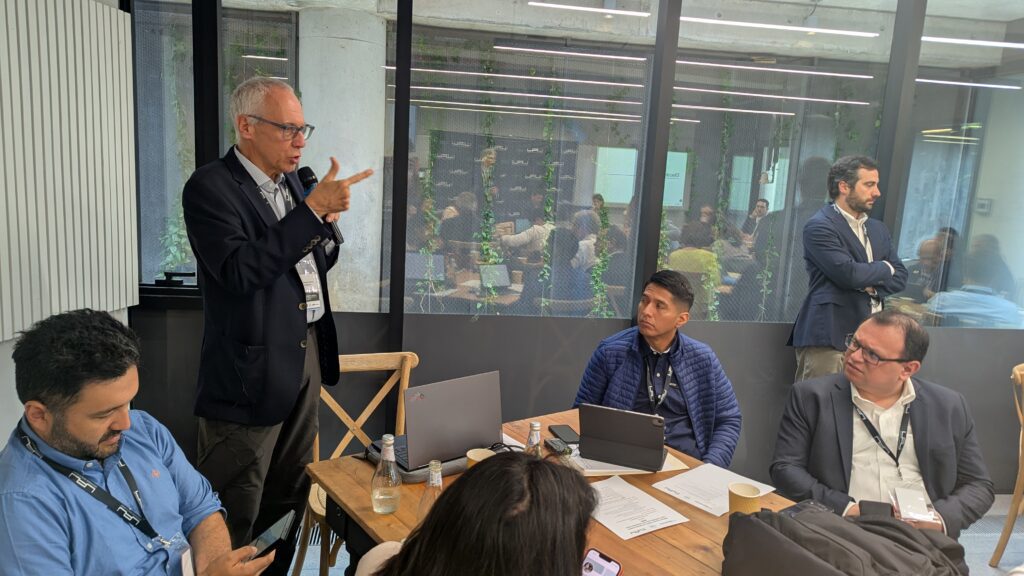
There is increasing attention to Earth system interventions, sometimes called geoengineering, as serious near-term climate threats mount due to too-slow cuts in global greenhouse gas emissions. As policymakers are called upon to address climate change and, increasingly, developments related to SRM, it’s crucial that they be informed about its potential contributions, risks, and challenges to law and policy. The need to provide access to scientific research and build decision capacity for policymakers and other stakeholders is particularly acute in the Global South.
This comes at a critical time. Last month, the Trump administration announced that the U.S. would withdraw from a host of global agreements and organizations, including the UN Framework Convention on Climate Change and the Paris Agreement. These moves have immediate implications for these (already struggling) institutions’ ability to coordinate climate action, but they also have future implications for dialogues about potential climate interventions. Convenings like this one in Santiago, Chile, can provide a vision for bottom-up regional or coalitional approaches on topics like SRM as they increasingly come on the political agenda.
The meeting was held for the first day at the Universidad Adolfo Ibañez, a partner with UCLA and Degrees in convening the meeting, and for the second day in the historic National Senate Chambers. Discussions of SRM and other interventions are sufficiently new to the region that many participants, notwithstanding their policy expertise and stature, both in their countries and across the region, were learning about the issues they present for the first time. The meeting thus aimed, in addition to introducing participants to SRM, to provide plenty of time, and a safe space, for policymakers to pose questions, explore preliminary ideas, participate in arguments, and become acquainted with regional experts. It also sought to connect policymakers and researchers from across the region, to begin building networks that can provide a basis for future cooperation and exploration of potential collaborative action on the issue.
The stature, regional breadth, and engagement of the participants were remarkable. But even beyond these factors, a few aspects of this discussion made this meeting feel different from past convenings on the subject, and especially promising of real progress:
- Serious substantive conversations, including between participants from an extremely broad range of political views who are often adversaries on many issues;
- Widespread affirmation that this issue affects all and must not be reduced to standard lines of ideological or political opposition;
- Sincerely expressed intentions to develop continuing vehicles of collaboration to keep this spirit alive; and
- Several specific requests and offers to support and host further dialogue in the region.
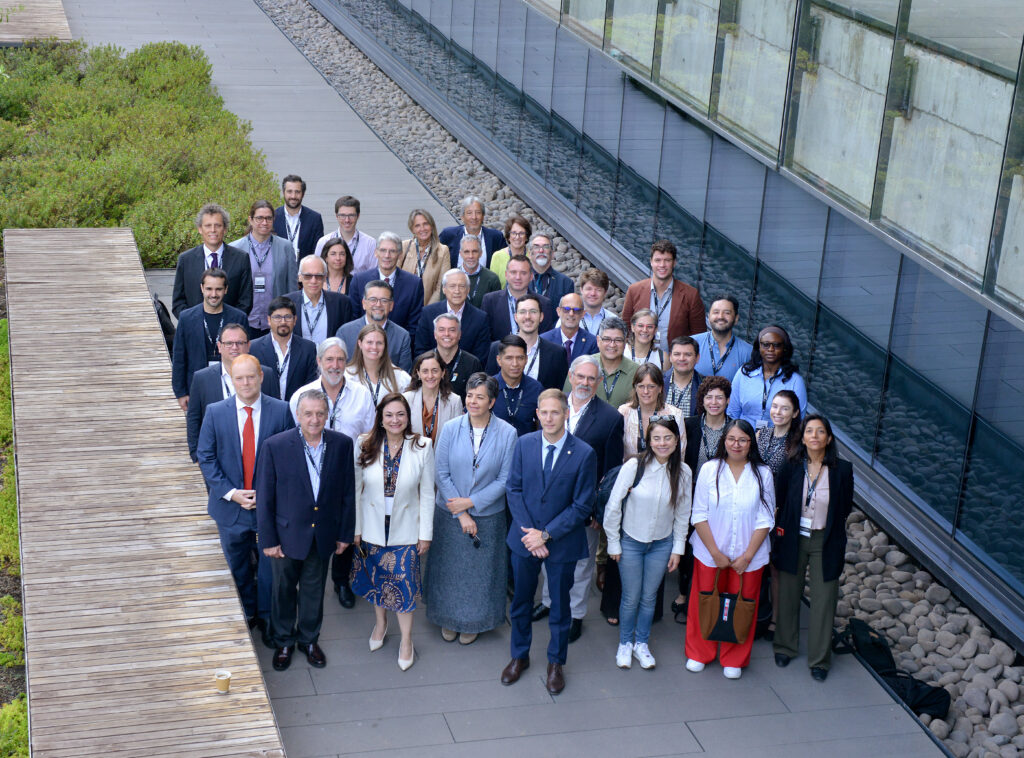
We are grateful to our partners, the Degrees Initiative and Universidad Adolfo Ibañez, for sharing in the work to produce this successful convening and meet an urgent need for the Latin American region as intervention gain increasing prominence in global discussions.
The results of this science-policy dialogue similarly show that there is more work to be done in the region. We at the ESI Project are considering how to keep this remarkable spirit of dialogue growing, either by approaching senior policymakers in particular countries or additional cross-national consultations to build understanding and capacity for coordinated regional action. As interest in SRM continues to grow, sustaining informed, regionally grounded dialogue like this will be an important part of ensuring that future decisions are approached with appropriate care and deliberation.
Read more about the ESI Project at the UCLA Emmett Institute here.
Reader Comments
One Reply to “A Science-Policy Dialogue on SRM for Latin America”
Comments are closed.


About Nico

Nicolás E. Esguerra is Project Director of the Earth System Interventions Law and Policy (ESI) Project at UCLA School of Law's Emmett Institute.…
READ moreAbout Ted

Edward A. (Ted) Parson is Distinguished Dan and Rae Emmett Professor of Environmental Law and Faculty Director of the Emmett Institute on Climate Change and the Environme…
READ more
What is our message to the rest of the world? Have we given up on carbon and methane removal prior to SRM?