






















































Region: California
The Sting in the Tail of the Clean Air Act

Weakening restrictions on polluters can trigger different restrictions.
Some of Trump’s most important anti-environmental moves involve unleashing air polluters. There’s a problem with this strategy, however. Doing so raises air pollution levels, which can bring states into collision with other Clean Air Act (CAA) requirements. Thus, the effect could be much tighter restrictions on other sources to compensate for looser standards on some. Worse, this effect isn’t limited to the most directly affected states. They may turn around and demand that upwind states reduce their own emissions to help the downstream states meet federal standards. Even when this isn’t true, and where the state that suffers may be Democratic-leaning and thus of no concern to Trump, there could be economic repercussions in other states.
Two notable examples of this problem involve coal generators and vehicle regulation. The first example involves coal. Trump has exempted coal-fired power plants from pollution limits to allow them to remain open longer. According to E&E News, “Air pollution from coal-fired power plants spiked in 2025, a striking reversal of long-term progress in air quality as the Trump administration boosted coal use. The emission increases were among the largest in at least a quarter-century, on a percentage basis, as the bulk of about 210 power plants registered increased sulfur dioxide and nitrogen oxide emissions,” Power plant sulfur-dioxide emissions were up 18% and nitrogen oxides were up 12%. This is contrary to a strong long-term declining trend.
The second example involves vehicle emissions. Under the CAA, state laws regulating vehicle emissions are generally preempted, but California can apply for a preemption waiver if it needs stricter regulations, and other states can piggyback on California’s standards. California’s ability to seek a waiver has been more limited since, at Trump’s instigation, Congress overturned EPA’s approval of several California waiver requests. The Trump Administration has independently taken the view that California can’t require manufacturers to sell more EVs as a way to meet standards. Although Republicans were mostly targeting California’s standards for greenhouse gases, they have also hampered California’s ability to get waivers for smog and particulates.
The problem arises because stopping a state from regulating some polluters may legally require it to tighten other regulations. Under CAA section 110, states must have state implementation plans that will achieve national air quality standards set by EPA. If one type of source pollutes more, other sources must offset the increased pollution by polluting less. Other CAA provisions put the screws on states that exceed the national standards. As a result, if the Feds exempt one source of nitrogen oxides (perhaps by repealing California waiver), states that had adopted the California standard will need to tighten regulations of other sources. Thus, exempting nitrogen oxides from trucks or cars, or from coal power plants, might require stricter controls on other sources such as natural gas power plants. Moreover, if a state is unable to achieve the national air quality standard, the so-called “Good Neighbor” provision allows it to demand emission reductions from upwind states.
In other words, exempting some sources increases the regulatory burden on others. The exemption may even increase the total regulatory burden, if pollution from those other sources is more expensive to control than pollution from the exempted sources. Here’s why.
CONTINUE READINGNinth Circuit Upholds South Coast Zero-NOx Emission Standard for Appliances

The Ninth Circuit limiting EPCA preemption is a huge and important win for clean air.
Last fall I wrote about a strangely important case about boilers, in which the Ninth Circuit would decide whether a challenged zero-NOx air emission standard adopted by LA’s air regulator was lawful. The case is important because it had the potential to significantly constrain the ability of air pollution regulators to do their jobs and …
Continue reading “Ninth Circuit Upholds South Coast Zero-NOx Emission Standard for Appliances”
CONTINUE READINGA Tariff on Data Centers Could Help Them Pay Their Fair Share

chaddavis.photography via flickr
The first in our new “Energy Corner” series, this post looks at how California could design a rate structure for large load customers to join the electric grid without burdening ratepayers.
A flurry of new comments was filed last month in Pacific Gas & Electric’s (PG&E) proposal to implement a new electric tariff bill, one specific to large-load customers (read: data centers). Such tariffs determine the electricity rates a utility can charge each class of customer, and the conditions under which it must provide service. PG&E’s …
Continue reading “A Tariff on Data Centers Could Help Them Pay Their Fair Share”
CONTINUE READINGBACA and unions
The complicated dynamics of unions and CEQA may impact this fall’s CEQA ballot initiative
In this post I will assess the labor provisions of the California Chamber of Commerce’s ballot initiative to drastically overhaul CEQA, which will be on the ballot in November. The quick summary is that those provisions turn out to generally codify current practice or law – and importantly, may not be locked-in against subsequent state …
Continue reading “BACA and unions”
CONTINUE READINGBACA and Data Centers, Part II
The inclusion of data centers within this fall’s CEQA ballot initiative may make it much harder to regulate their construction
This is the second of two posts exploring whether the California Chamber of Commerce’s ballot initiative to drastically reform CEQA might facilitate the construction of data centers in California. In the first post, I examined whether data centers fall within the scope of the initiative (and concluded they likely do so). What are the implications …
Continue reading “BACA and Data Centers, Part II”
CONTINUE READINGBACA and Data Centers, Part I
Ballot initiative may facilitate construction of data centers in California
As I noted in my initial analysis of the California Chamber of Commerce’s ballot initiative to rollback most of CEQA, one important point about the initiative is how many different projects are covered by it – despite the framing that it only covers “essential projects.” One kind of development project that is particularly controversial right …
Continue reading “BACA and Data Centers, Part I”
CONTINUE READINGCPUC Proposed Decision Risks Derailing Gas Transition

California passed a promising Neighborhood Decarbonization Program. The CPUC’s plan for implementing SB 1221 sets it up to fail.
My UCLA colleagues and I have written extensively on the promising opportunity for SB 1221 to help interested communities transition off gas. Now, the California Public Utilities Commission (CPUC) has released its long-awaited proposed decision on its plans to implement the SB 1221 pilot program, and the proposal is…disappointing. The current design seems to set the program up to fail. Of biggest concern, the decision proposes to require pilot applicants to navigate a multi-stage process with duplicative …
Continue reading “CPUC Proposed Decision Risks Derailing Gas Transition”
CONTINUE READINGInforming Housing Policy Debates With The Latest Research
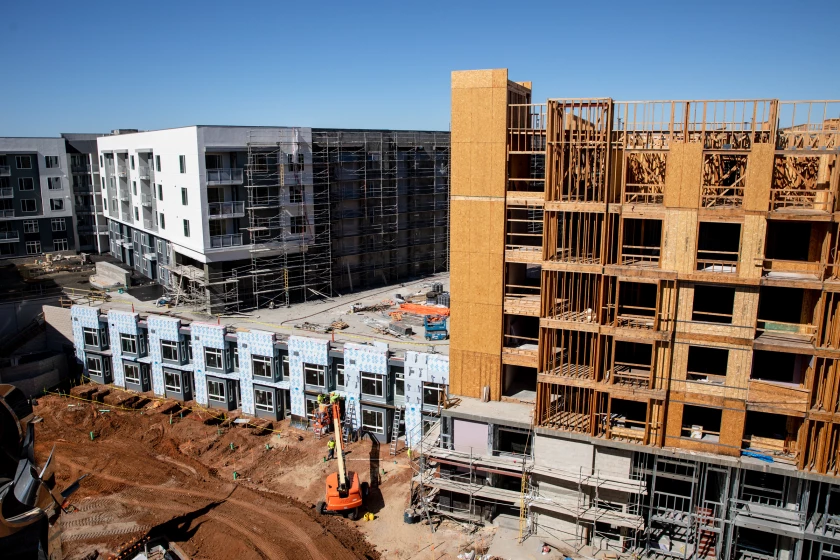
New CLEE “working paper” housing literature review
Housing is in short supply in states like California, leading to massive inequality, economic hardship, population loss, and climate impacts, as more residents live farther from job centers in climate-risky areas that require long commutes. Yet the debate around solutions to this problem, such as zoning and permitting reforms, are often colored by misinformation and …
Continue reading “Informing Housing Policy Debates With The Latest Research”
CONTINUE READINGCalifornia’s Density Bonus Works! And That’s Actually The Problem

A new study shows how increasing developer incentives can generate new units, but the state is digging out of a 50-year hole
Two contradictory things have been true of the YIMBY revolution in California land use law: 1) The California Legislature has been perhaps the most aggressive of any state in pre-empting local discretion to block housing, and giving new incentives to build; and 2) It doesn’t seem to have done much good so far. The classic …
Continue reading “California’s Density Bonus Works! And That’s Actually The Problem”
CONTINUE READINGKeeping the Energy Transition Affordable
A new CLEE report identifies policy solutions to lower California’s electricity rates.
In recent years, California’s already-high electricity rates increased far beyond the rate of inflation. Unsustainably high electricity rates threaten California’s continued progress on climate change and pose painful affordability burdens on California residents and businesses. High electricity rates also threaten California’s leadership in decarbonization and the clean energy transition, which largely relies on the …
Continue reading “Keeping the Energy Transition Affordable”
CONTINUE READINGJoin Our Mailing List
Climate policy is changing rapidly. Stay in the loop with expert analysis via email Monday - Friday.

The Drain is a roundup of climate and environmental news from Legal Planet delivered to your Inbox once a week.