



























































Region: National
Why Does Misinformation Follow Extreme Weather?
The Drain is a weekly roundup of environmental and climate news from Legal Planet.
Nowadays when an extreme weather event strikes in America, what follows is a secondary emergency in the form of misinformation on social media. We’ve seen it play out after floods and heat waves, but this phenomenon really goes into overdrive after hurricanes and wildfires. A recent report from the Center for Countering Digital Hate looked …
Continue reading “Why Does Misinformation Follow Extreme Weather?”
CONTINUE READINGThe Woeful Economics of a Misguided Rollback
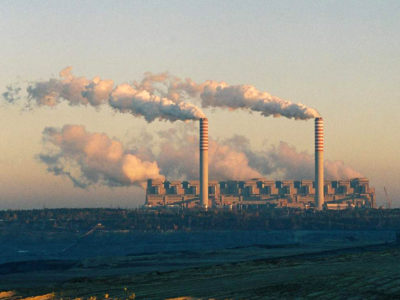
The costs of Trump’s rollback of key climate rules far outweigh any benefits.
Trump’s rollback of regulations limiting emissions from power plants is an economic disaster. According to economists, health damages far exceed savings from lower compliance costs. Just considering health impacts alone, the net cost of the rollback will be $129 billion through 2050. Climate damages add another $148 billion in costs.
CONTINUE READINGDear 2025 1L:

Avoiding a climate disaster isn’t something today’s students can plan on tackling “over the course of their careers.” The most critical time will be the next fifteen years, which means you’ll need to get to work quickly.What we do together between now and 2035 will determine what your lives look like in 2050 and 2080, and what your children and grandchildren will see in the next century. So grab your books, get yourselves ready, and be prepared to head for the trenches when you graduate. No time to waste!
CONTINUE READINGThe Energy Secretary Pushes Pseudoscience
The Drain is a weekly roundup of environmental and climate news from Legal Planet.
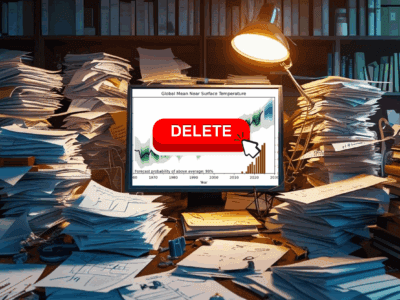
Remember alternative facts? That catch phrase from Season 1, Episode 1 where Trump officials lied about the size of his inauguration crowd has now metastasized into a governing philosophy for how federal agencies plan to ignore, and ultimately exacerbate, the climate crisis. Trump 2.0 is pushing alternative science. Late last month, Energy Secretary Chris Wright …
Continue reading “The Energy Secretary Pushes Pseudoscience”
CONTINUE READINGEmergency Powers Aren’t What They Used to Be
In the post-WW2 era, courts bent over backwards to accomodate emergency actions. Not true today, as Trump is finding out.
In mid-century America, emergency powers were truly potent. But those days are gone. In his two terms as President, Trump has declared 21 national emergencies, including eight since January 20. This glut of “emergencies” can only further discredit the whole concept. He and his advisors seem to see those as creating nearly magical legal powers, allowing them to deport people without hearings, run roughshod over environmental safeguards, and impose tariffs willy-nilly. They are probably in line for a disappointment. Judges are no longer in awe of emergency powers.
CONTINUE READINGHow Trump’s War on Research Hurts the US Economy

NSF Logo
The economic evidence confirms the huge benefits of government support for research.
One of the victims of the Trump Administration has been scientific research, notably including research on the environment, clean technologies, and even public wealth. The government’s own research capacity is under attack from agencies from EPA to NIH, grants to universities have been cancelled, and future funding from agencies like NIH and NSF is in peril. Yet the Administration has given little though about how this effects competitiveness in a high-tech world.
CONTINUE READINGThe Assault on NEPA: A Threat Assessment
National Environmental Policy Act
NEPA is under multiple attacks. Which are the most serious?
NEPA, the law governing environmental impact statements, is under concerted assault from Congress, the White House, and the Supreme Court. As we will see, the Supreme Court’s recent decision in the Seven County Infrastructure Case is probably the biggest problem. Notably, the debate over NEPA has taken place without much hard data about its effectiveness or costs, so everyone seems free to make their own assumptions.
CONTINUE READINGChina is Kicking Our Ass at Our Own Game
The Drain is a weekly roundup of environmental and climate news from Legal Planet.
The first time I saw a Chinese-made EV on the road I was walking on a crowded sidewalk in São Paulo. It was a Saturday night this May, when the whole city seemed to be out enjoying the warm weather. A street rave took over an entire block so to keep moving, we pedestrians had …
Continue reading “China is Kicking Our Ass at Our Own Game”
CONTINUE READINGLegal Planet Goes Hollywood — Sort Of
Trump’s “War On Cities” gets a media hit
A couple of months ago, I wrote this post about the Trump Administration’s war on cities, a move that resembles fascist regimes and thinkers through much of the 20th century. Much to my surprise, I got a call on Friday from a producer at the “Velshi” show on MSNBC to talk about it on Sunday …
Continue reading “Legal Planet Goes Hollywood — Sort Of”
CONTINUE READINGData Center Permitting: A Roadmap
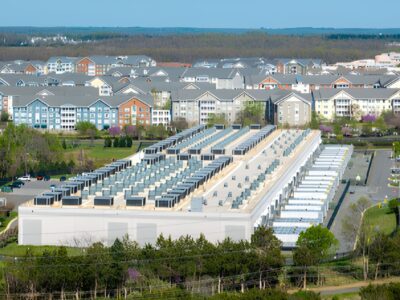
AI is fueling a surge in data center construction. Here’s what you need to know.
Data Centers have significant environmental footprints, which is going to raise several permitting issues except for those using clean energy sources. The permitting issue are mapped out in this post. The Trump Administration is clearly going to do its best to free the industry from environmental limits. We’ll see how successful that is going to be.
CONTINUE READINGJoin Our Mailing List
Climate policy is changing rapidly. Stay in the loop with expert analysis via email Monday - Friday.