























































air quality standards
The Sting in the Tail of the Clean Air Act

Weakening restrictions on polluters can trigger different restrictions.
Some of Trump’s most important anti-environmental moves involve unleashing air polluters. There’s a problem with this strategy, however. Doing so raises air pollution levels, which can bring states into collision with other Clean Air Act (CAA) requirements. Thus, the effect could be much tighter restrictions on other sources to compensate for looser standards on some. Worse, this effect isn’t limited to the most directly affected states. They may turn around and demand that upwind states reduce their own emissions to help the downstream states meet federal standards. Even when this isn’t true, and where the state that suffers may be Democratic-leaning and thus of no concern to Trump, there could be economic repercussions in other states.
Two notable examples of this problem involve coal generators and vehicle regulation. The first example involves coal. Trump has exempted coal-fired power plants from pollution limits to allow them to remain open longer. According to E&E News, “Air pollution from coal-fired power plants spiked in 2025, a striking reversal of long-term progress in air quality as the Trump administration boosted coal use. The emission increases were among the largest in at least a quarter-century, on a percentage basis, as the bulk of about 210 power plants registered increased sulfur dioxide and nitrogen oxide emissions,” Power plant sulfur-dioxide emissions were up 18% and nitrogen oxides were up 12%. This is contrary to a strong long-term declining trend.
The second example involves vehicle emissions. Under the CAA, state laws regulating vehicle emissions are generally preempted, but California can apply for a preemption waiver if it needs stricter regulations, and other states can piggyback on California’s standards. California’s ability to seek a waiver has been more limited since, at Trump’s instigation, Congress overturned EPA’s approval of several California waiver requests. The Trump Administration has independently taken the view that California can’t require manufacturers to sell more EVs as a way to meet standards. Although Republicans were mostly targeting California’s standards for greenhouse gases, they have also hampered California’s ability to get waivers for smog and particulates.
The problem arises because stopping a state from regulating some polluters may legally require it to tighten other regulations. Under CAA section 110, states must have state implementation plans that will achieve national air quality standards set by EPA. If one type of source pollutes more, other sources must offset the increased pollution by polluting less. Other CAA provisions put the screws on states that exceed the national standards. As a result, if the Feds exempt one source of nitrogen oxides (perhaps by repealing California waiver), states that had adopted the California standard will need to tighten regulations of other sources. Thus, exempting nitrogen oxides from trucks or cars, or from coal power plants, might require stricter controls on other sources such as natural gas power plants. Moreover, if a state is unable to achieve the national air quality standard, the so-called “Good Neighbor” provision allows it to demand emission reductions from upwind states.
In other words, exempting some sources increases the regulatory burden on others. The exemption may even increase the total regulatory burden, if pollution from those other sources is more expensive to control than pollution from the exempted sources. Here’s why.
CONTINUE READINGThe New Particulate Standard and the Courts
The tough new air quality standard is sure to be challenged in court. Winning the challenges will be tougher.
EPA has just issued a rule tightening the air quality standard for PM2.5 — the tiny particles most dangerous to health — from an annual average of 12 μg/m³ (micrograms per cubic meter) down to 9 μg/m³. EPA estimates that, by the time the rule goes into effect in 2032, it will avoid 4500 premature …
Continue reading “The New Particulate Standard and the Courts”
CONTINUE READINGEvolving Air Quality Standards

The standards have gotten tougher. Compliance still lags.
The goal of the Clean Air Act is to achieve national ambient air quality standards (NAAQS), with the primary requirement being protection of public health. As our understanding of the health effects of air pollution has improved, there has been a general trend toward tightening the standards. However, it’s very hard to keep track of …
Continue reading “Evolving Air Quality Standards”
CONTINUE READINGGet Ready for Phase 2 of the Deregulation Wars
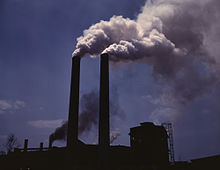
Air quality standards are next on the chopping block.
The first phase of Trump’s regulatory rollbacks has been directed against Obama’s climate change regulations. Those deregulatory actions will be finalized soon. What happens next will be in the hands of the courts. But the Trump EPA is now beginning a new phase in its attack on environmental regulation. Having tried to eliminate climate rregulation, …
Continue reading “Get Ready for Phase 2 of the Deregulation Wars”
CONTINUE READINGUARG Strikes Back
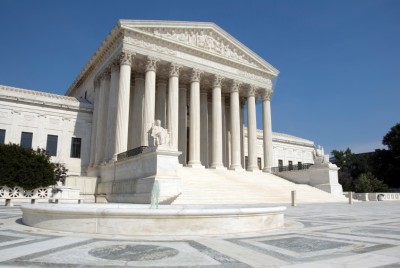
Will UARG Persuade the Supreme Court to Overturn New Air Quality Standards?
“UARG” sounds like the name of a monster in a children’s book or maybe some kind of strangled exclamation. But it actually stands for Utility Air Regulatory Group, which represents utility companies in litigation. UARG did well in two important Supreme Court cases last year, winning part of the case it brought against EPA climate change …
Continue reading “UARG Strikes Back”
CONTINUE READINGJoin Our Mailing List
Climate policy is changing rapidly. Stay in the loop with expert analysis via email Monday - Friday.

The Drain is a roundup of climate and environmental news from Legal Planet delivered to your Inbox once a week.