

























































California
Thoughts on AB 131
Overall a good bill, but the definition of natural and protected lands is inadequate
Governor Newsom is pushing for CEQA reform as part of approval of the state budget, and the result is two budget trailer bills, AB 130 and AB 131, that together provide some of the most significant changes to CEQA in many years. Overall, these are good bills. The changes are focused on facilitating development where …
Continue reading “Thoughts on AB 131”
CONTINUE READINGImmigration Raids are an Attack on Climate
The Drain is a weekly roundup of environmental and climate news from Legal Planet.
It’s hard to watch the Trump administration test drive authoritarianism in California. Since the inauguration, I’ve found solace in slowly rewatching The West Wing, a good bedtime story for anyone who feels nostalgia for partisan politics of yesteryear. Anyone else doing this? It’s uncanny how my rewatching has lined up with real world events. In …
Continue reading “Immigration Raids are an Attack on Climate”
CONTINUE READINGLast Year’s Climate Bond May Not Be What You Thought
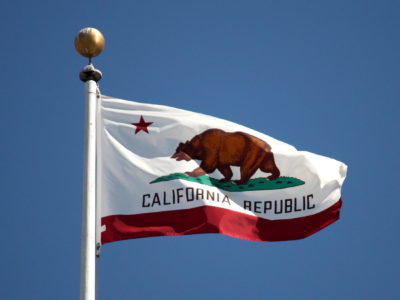
While investing in important adaptation and resilience measures, Proposition 4 does less to create new clean energy infrastructure investments
Last year, legislators passed, the governor signed, and California voters approved, a ten billion dollar climate bond (the Safe Drinking Water, Wildfire Prevention, Drought Preparedness, and Clean Air Bond Act of 2024, SB 867 (Allen), which appeared on the November ballot as Proposition 4). While the bond act’s full title largely tells the story of …
Continue reading “Last Year’s Climate Bond May Not Be What You Thought”
CONTINUE READINGWhy Do Heat Pumps Have a Bad Rap? Lies
The Drain is a weekly roundup of environmental and climate news from Legal Planet.
I just listened to dozens of people tell me that heat pumps don’t work, may cause homelessness, and can bankrupt small businesses. This was shocking news to me, in no small part because I’m currently in the process of installing a heat pump in my condo. Obviously, I don’t want to waste money, sleep on …
Continue reading “Why Do Heat Pumps Have a Bad Rap? Lies”
CONTINUE READINGCould CA Local Agencies Replicate Past Federal Solicitation Approaches?
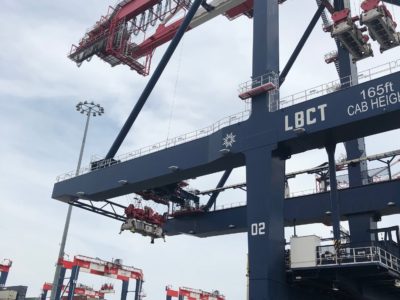
Innovative solicitation & contracting approaches may make offshore wind infrastructure projects work better for communities
Offshore wind is a nascent industry in California, and actions by the new federal administration are threatening to slow or halt the significant progress made in recent years. Despite these new federal policies, however, state and local leaders are planning infrastructure needed to launch the sector in California, including port facilities suitable for assembling and …
Continue reading “Could CA Local Agencies Replicate Past Federal Solicitation Approaches?”
CONTINUE READINGCould Zero-Emission Hydrogen Help Reduce Aviation Emissions in California?

State’s federally funded hydrogen hub releases aviation whitepaper co-led by CLEE.
Few industries face as complex a challenge in decarbonizing as aviation. While great for decarbonizing on-road transportation, batteries are generally too heavy to power long-distance flights. Low-carbon biofuels blended into fossil jet fuel represent only a partial solution, due to lack of feedstocks and blend limits. Zero-emission hydrogen could represent a solution, either as an …
Continue reading “Could Zero-Emission Hydrogen Help Reduce Aviation Emissions in California?”
CONTINUE READINGGas Price Politics and Desperate Moderates
The Drain is a weekly roundup of environmental and climate news from Legal Planet.
In 18 years of working in newsrooms around Los Angeles, I talked with lots of political campaigns — but a phone call from Antonio Villaraigosa in spring of 2018 stands out. I was at my desk in the cramped newsroom of KCRW, sitting in between All Things Considered host Steve Chiotakis and producer Ben Gottlieb, …
Continue reading “Gas Price Politics and Desperate Moderates”
CONTINUE READINGWe need integrated funding to scale up multibenefit projects
by Marie Grimm, Anna Serra-Llobet, Molly Bruce, and Michael Kiparsky
Climate and ecological challenges are fundamentally linked, demanding solutions that address both environmental and social issues. Multibenefit projects–like levee realignments that reconnect floodplains–can combine climate adaptation, water management and ecosystem restoration efforts. However, most funding programs focus on single-purpose projects, making it difficult to support multibenefit solutions. Our new article studies the Pajaro River flood …
Continue reading “We need integrated funding to scale up multibenefit projects”
CONTINUE READINGDOJ vs. C&T

What Trump’s new lawsuits against two states may mean for California’s cap-and-trade program.
As my UCLA Law colleague Ann Carlson described last week, Trump’s DOJ has filed two pretty extraordinary lawsuits against the states of Michigan and Hawaii trying to block those states — preemptively — from bringing suit against fossil fuel companies for climate harms. As Ann points out, these DOJ suits are among the first salvos …
Continue reading “DOJ vs. C&T”
CONTINUE READINGDefunding the Energy Transition

The President Proposes Deep Cuts to Climate and Clean Energy Spending for FY 2026
On May 2nd, the White House released what is generally referred to as a “skinny” budget request outlining priorities for discretionary spending for fiscal year 2026. A full federal budget proposal is expected later this month. The “skinny” budget contains, by the White House’s calculations, $163 billion in non-defense discretionary spending cuts, which it argues …
Continue reading “Defunding the Energy Transition”
CONTINUE READINGJoin Our Mailing List
Climate policy is changing rapidly. Stay in the loop with expert analysis via email Monday - Friday.