
























































Climate Adaptation
Troubled Waters
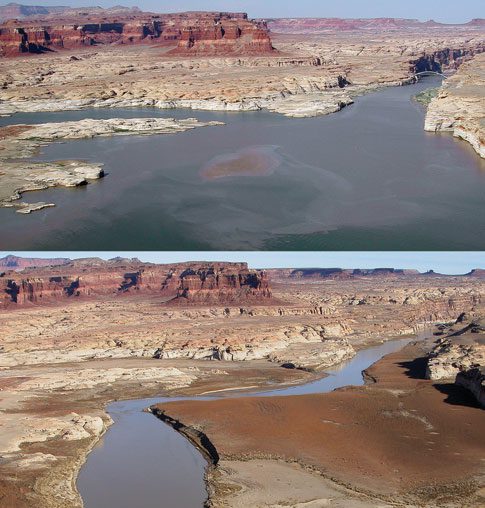
We’re seeing increasing signs of a malfunctioning US water system.
Water problems are popping up all over. Literally so, in at least one case. In the Permian basin, geysers of toxic wastewater are erupting. The water was pumped underground as part of the basin’s massive fracking operations. Fracking produces five or six barrels of wastewater for every barrel of oil. High pressure underground is pushing wastewater into oil and gas basins as well as threatening drinking water aquifers. We’ve been taking our ability to obtain water and manage discharges for granted, just as we tend to take plumbing for granted except when it starts leaking or breaking down. It appears that our neglect is beginning to catch up with us.
CONTINUE READINGWhat the Disappearing Danube Could Tell Us About the Colorado

Today’s drought may not be the worst-case scenario for the Colorado
What’s happened to the Danube is a scary reminder that what we’re seeing today on the Colorado isn’t necessarily the worst case. The situation on the Danube is truly dire. The “Blue Danube” memorialized by the Strauss waltz is now only nine inches deep in Budapest. Cargo ships have come to a halt. Nuclear reactors have shut down for lack of cooling water. Meanwhile, the Colorado is suffering from the worst drought in at least 1200 years, raising fears about the fate of its shrinking reservoirs. And things could get worse.
CONTINUE READINGThe Future of the Colorado

There’s not enough water to go around, but there’s no agreement about what to do.
The Colorado River provides water to 40 million people and about 5.5 million acres of irrigated farmland. There’s only so much water to go around, so how to divide up the water has been hotly disputed for over a century. The previous agreement has come unstuck, but finding a replacement has proved devilishly difficult. I suspect that the Feds would rather avoid this political hot-potato through a state agreement. So far, however, state negotiations haven’t been successful. Maybe the impending threat of a federal mandate will light a fire under the negotiations. Otherwise, we are probably guaranteed years of litigation while the river runs dry.
CONTINUE READINGHarmful Activities, the Duty to Rescue, and Climate Change

A concept from tort law suggests another argument for international climate adaptation funding.
Do countries that caused past carbon emissions have a duty to help pay for adaptation and disaster response? Much of the argument about this is phrased in terms of damages for past actions, not unlike arguments that oil companies should pay damages for oil spills. Tort law suggests another way of looking at the issue, one that doesn’t depend on whether the past emissions themselves give rise to duty for reparations. Instead, it depends on the principle that people whose activities contribute to accident risks, even innocently, have a duty to assist victims.
CONTINUE READINGPolicy Implications of Accelerating Warming
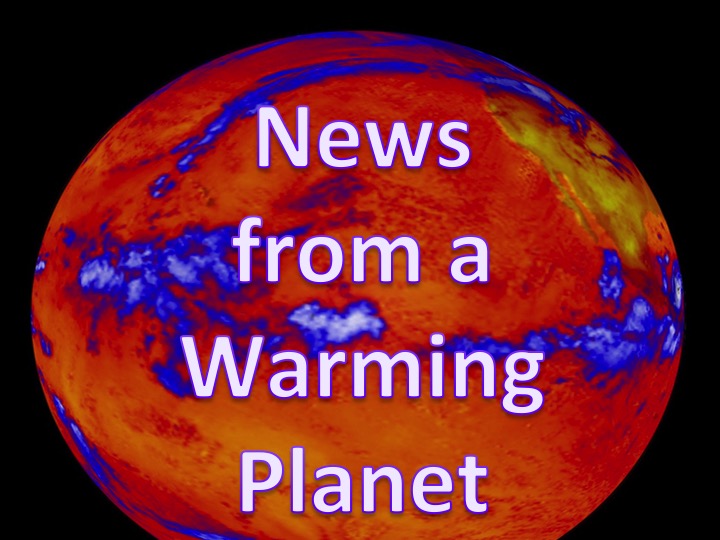
If warming is coming more quickly, we need to pick up the pace on policy responses.
There seems to be an emerging scientific consensus that the rate of global warming is rising. After screening out the effects of natural factors like El Niño, scientists have concluded that the pace of warming has roughly doubled since the 1970s. What does this tell us about policy? Some of the implications are more obvious than others, and at least one implication may be unsettling for some climate advocates. Most obviously, we need to accelerate our efforts to carbon emissions. We will be closing in on possible tipping points faster than expected. Climate impacts that we might have expected twenty years from now could hit in half that time.
CONTINUE READINGCalifornia Wonders if it is Doing Wildfire Risk All Wrong

The California Wildfire Fund seeks input from stakeholders on a range of possible reforms.
Senate Bill 254 (Becker) deservedly received a lot of attention when the Governor signed it into law earlier this year. After many twists and turns and late night speculation of will they/won’t they, SB 254 became a landing pad for a sweeping set of wildfire and electric utility policy adjustments. Among the headlines: Creation of …
Continue reading “California Wonders if it is Doing Wildfire Risk All Wrong”
CONTINUE READINGLast Year’s Climate Bond May Not Be What You Thought
While investing in important adaptation and resilience measures, Proposition 4 does less to create new clean energy infrastructure investments
Last year, legislators passed, the governor signed, and California voters approved, a ten billion dollar climate bond (the Safe Drinking Water, Wildfire Prevention, Drought Preparedness, and Clean Air Bond Act of 2024, SB 867 (Allen), which appeared on the November ballot as Proposition 4). While the bond act’s full title largely tells the story of …
Continue reading “Last Year’s Climate Bond May Not Be What You Thought”
CONTINUE READINGMeeting information needs for water markets: Understanding water diversion and use

New CLEE report examines a prerequisite for fair and effective water markets
by Nell Green Nylen and Molly Bruce Water scarcity is a growing problem for agriculture and ecosystems across the U.S. Southwest. In many areas, unsustainable water use has overstretched local water supplies, and climate change is making these supplies more volatile. Water markets have the potential to enhance climate resilience by helping water users adapt …
CONTINUE READINGIs California’s Climate Resilience Funding Ready for the Future?

New CLEE Report Identifies Key Challenges and Opportunities in the State’s Adaptation Funding Landscape
As climate change accelerates, California faces increasingly severe threats to its communities, economy, and environment. Rising temperatures, prolonged droughts, sea-level rise, and worsening wildfires are among the risks stretching State and local resources and driving demand for adaptation funding. California has utilized its longstanding leadership in climate policy to confront these challenges, including developing the …
Continue reading “Is California’s Climate Resilience Funding Ready for the Future?”
CONTINUE READINGHow are California’s New Climate Adaptation and Resilience Grant Programs Performing?

CLEE reports analyze state’s highly in-demand adaptation and resilience grants for crucial local climate action
California is rapidly experiencing the impacts of a changing climate, from devastating wildfires and persistent droughts to rising sea levels, extreme heat, and erratic precipitation patterns. Climate adaptation is crucial for building resilience to these and other risks, thereby protecting California’s communities, economy, environment, and public health. However, effective adaptation requires significant investment, particularly in …
CONTINUE READINGJoin Our Mailing List
Climate policy is changing rapidly. Stay in the loop with expert analysis via email Monday - Friday.

The Drain is a roundup of climate and environmental news from Legal Planet delivered to your Inbox once a week.