

























































climate science
Escalating the War on Science
Now the National Academies are in the cross-hairs.
The National Academics of Science, Engineering, and Medicine are at the pinnacle of American science. Recently, President Trump President Donald Trump ordered a so-called suspension and debarment investigation into the National Academies for what a supposedly “fraudulent, biased, and misleading” report on climate change. The Academies, he said, are “run by Radical Left Dumocrats,” which is apparently more than enough reason to ban them from government funding.
CONTINUE READINGOMB’s New Grant Regulations: A Deeper Dive
A close look at OMB’s proposed rule only heightens concerns.
Is OMB’s proposed rewrite of federal grant regulations as bad as it sounds? Sadly, the answer is yes. Below, this posts takes a close look at some key provisions in the regulations. Some raise constitutional problems. Others are merely bad policy, undermining merit review, deterring valuable research, and skewing research toward the politics of the moment.
CONTINUE READINGOMB’s “Reforms” versus NSF’s Statutory Mission
NSF will need to do some serious explaining about how the “reforms” advance its scientific mission.
In terms of DEI, section 1861p-14(7) says that one factor in assessing grants is “expanding participation of women and individuals from underrepresented groups in STEM.” Section 1855a also authorizes the Foundation to support activities to encourage women qualify for and then pursue careers in STEM. Section 1855b contains similar language about the “participation of minorities” in science. How is the prohibition on DEI consistent with these provisions? If not, does the agency now believe these provisions are unconstitutional and if so, one what grounds?
CONTINUE READINGWhy Does the Trump Administration Keeping Attacking Science?
Apparently, the Administration views science as fatally infected with woke ideas and lacking much other value.
Make no mistake, the Trump Administration is engaged in a serious, carefully honed, effort to undermine American science. The National Science Foundation has lost a third of its staff, while the National Institutes of Health have lost 20%. EPA’s science office is being shuttered. Trump’s proposed budget included a 54% cut for NSF, 12% for NIH, and 46% for NASA’s space research. And last week, the government proposed changes to politicize research funding decisions at the expense of merit review. It also proposes making continuation of long-term funding dependent on political whim, which will drive researchers away from projects taking longer commitments.
CONTINUE READINGNever Give Up! Every Ton of Carbon We Can Cut Still Matters
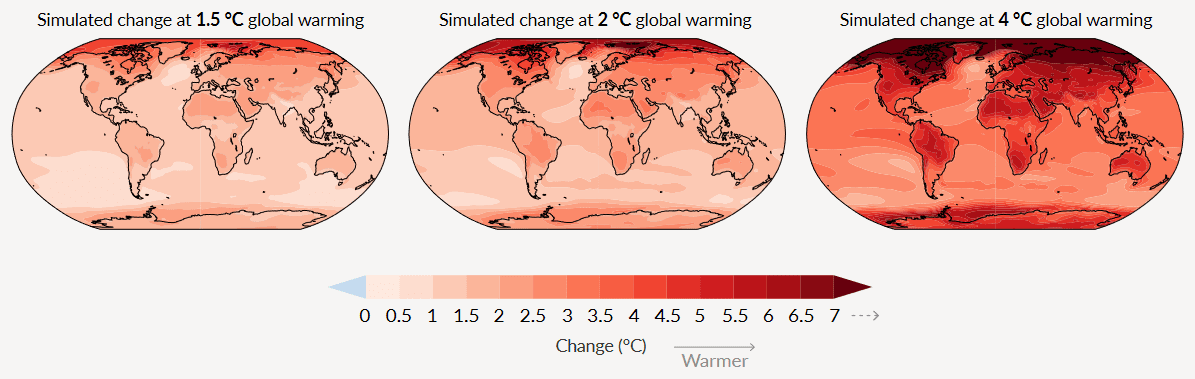
It’s easy to be disheartened when we miss climate targets. But climate change isn’t a yes/no thing. It’s a matter of degree.
It’s easy to lose heart about our prospects for limiting climate change. The US has pulled out of international climate negotiations. Most of the countries that joined the Paris Agreement have missed targets , targets that weren’t aggressive enough in the first place. The 1.5 °C target is already basically out of reach. Is time to give up on slowing climate change and focus on adapting to it? The answer is no. Here’s why.
Climate change is a matter of degrees. That sounds like a truism or a pun, but it’s true in a deeper sense. There is no point past which further warming becomes irrelevant. degree, and every fraction of a degree makes things that much worse.
Policy Implications of Accelerating Warming
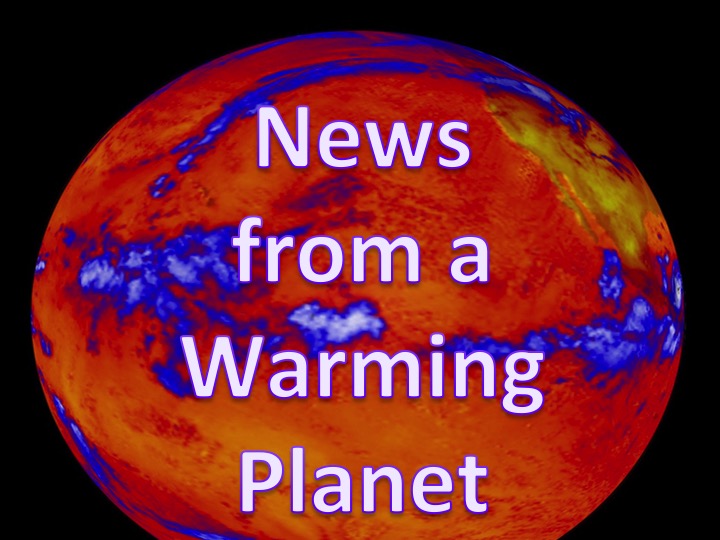
If warming is coming more quickly, we need to pick up the pace on policy responses.
There seems to be an emerging scientific consensus that the rate of global warming is rising. After screening out the effects of natural factors like El Niño, scientists have concluded that the pace of warming has roughly doubled since the 1970s. What does this tell us about policy? Some of the implications are more obvious than others, and at least one implication may be unsettling for some climate advocates. Most obviously, we need to accelerate our efforts to carbon emissions. We will be closing in on possible tipping points faster than expected. Climate impacts that we might have expected twenty years from now could hit in half that time.
CONTINUE READINGThe Environment is a System, Not an Array.
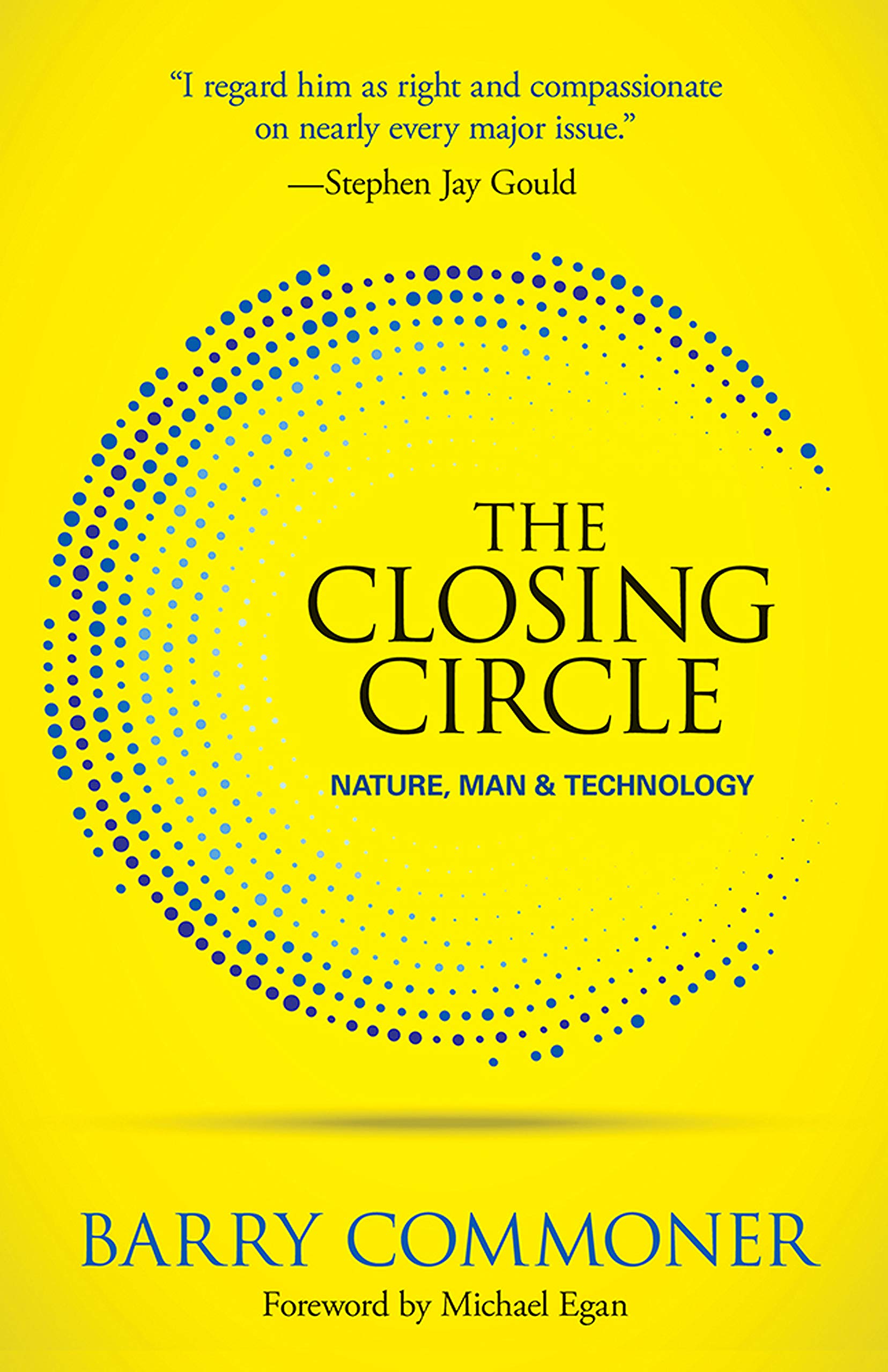
In 1969, Barry Commoner summed up much of environmental science in six words. Today’s conservatives don’t get it.
People have an intuitive tendency to focus on an action’s immediate direct effects. The same intuition leads us to downplay effects that are indirect, long-range, and cumulative. This can lead us astray, as it has the Supreme Court, when dealing with impacts on environmental systems. Writing at the outset of the modern environmental world, biologist Barry Commoner tried to crystalize what was known about the environment into four crisply phrased laws. The first law read simply: “Everything is connected to everything else.” What we have learned since Commoner published The Closing Circle in 1969 has only confirmed that insight.
This interconnected means that the environment is a system (really, a nested set of systems), where interactions are paramount. It’s not just an array of different things happening independently in different places or times. That’s true, as we’ve learned, not only of the environment but the global economy to which it is linked and of the geopolitical realm linked to that.
CONTINUE READINGThe Affirmative Case for Finding Endangerment
Despite hairsplitting by the current EPA, finding endangerment is a no-brainer.
or EPA to decide that vehicle greenhouse gas (GHG) emissions aren’t harmful is iike NASA deciding that the earth isn’t round after all. Over the next year or two, lawyers will be picking over EPA’s detailed legal arguments. Let’s not get mired in the weeds. It’s crazy that this issue is even being raised.
In 2007, the Supreme Court told EPA to do two things: (1) consider whether GHGs endanger human health and welfare, and (2) if the answer is yes, regulate vehicle emissions of GHGs. That’s exactly what EPA did. Nothing has changed in the meantime.
Trump Will Kill Climate Regulations, But How Exactly?

The Drain is a weekly roundup of environmental and climate news from Legal Planet.
The Environmental Protection Agency will officially revoke what’s known as the endangerment finding tomorrow and in so doing try to erase the basis for virtually all that agency’s regulations cutting greenhouse gases. It’s not really a surprise — we’ve been waiting for this announcement for a year. But seeing the agency’s precise justification will help …
Continue reading “Trump Will Kill Climate Regulations, But How Exactly?”
CONTINUE READINGThe U.S. Has Now Become a Rogue Nation

By pulling out of the UNFCCC and dozens of international organizations, Trump has isolated the United States and ceded influence to China and the EU.
In the past few days, Trump has kidnapped the head of state of Venezuela, threatened to invade Greenland, and withdrawn from a 1992 climate treaty negotiated by George H.W. Bush. The treaty, the U.N. Framework Convention on Climate Change, has been the basis for international climate cooperation for the past thirty years, including the Paris Agreement. In addition, Trump is withdrawing from the Intergovernmental Panel on Climate Change (IPCC), which will make it harder for American scientists to contribute to the periodic reports on the state of climate science. Trump’s action is basically a big middle finger toward the rest of the world. If anyone wins from this, it’s China, which can now claim to be the responsible adult in the room.
CONTINUE READINGJoin Our Mailing List
Climate policy is changing rapidly. Stay in the loop with expert analysis via email Monday - Friday.

The Drain is a roundup of climate and environmental news from Legal Planet delivered to your Inbox once a week.