
























































disasters
Insurance Law and Wildfire
Providing a federal backstop for wildfire insurance in return for state and local reforms
This blog post was co-authored with Dave Owen, at UC Law SF. The draft article this blog post series is based is here. This is the sixth in a series of blog posts on our proposal to reform wildfire law in the United States. The first post is here. The second post is here. The …
Continue reading “Insurance Law and Wildfire”
CONTINUE READINGYou May Have Forgotten About Climate Change. But It Hasn’t Forgotten About You
Denial is a great coping mechanism. Until reality turns around and bites you.
Climate change is, apparently, passé. Democratic politicians are avoiding the topic and dialing back ambitious plans to reduce emissions. The President apparently doesn’t think it exists, and the government’s official position is that its effects are too uncertain to worry about. Denial isn’t the world’s best coping mechanism, but it works, at least temporarily. The problem is that, while sometimes that lump you were worried about does go away, sometimes it keep growing and getting harder to treat. In the end, reality doesn’t much care whether you believe in it.
CONTINUE READINGWhat the Disappearing Danube Could Tell Us About the Colorado

Today’s drought may not be the worst-case scenario for the Colorado
What’s happened to the Danube is a scary reminder that what we’re seeing today on the Colorado isn’t necessarily the worst case. The situation on the Danube is truly dire. The “Blue Danube” memorialized by the Strauss waltz is now only nine inches deep in Budapest. Cargo ships have come to a halt. Nuclear reactors have shut down for lack of cooling water. Meanwhile, the Colorado is suffering from the worst drought in at least 1200 years, raising fears about the fate of its shrinking reservoirs. And things could get worse.
CONTINUE READINGCanada in Flames

What’s causing the fires? What harm do they do? What should we do?
One of the world’s great disasters is unfolding, as fires have covered millions of acres in Canada, destroying pristine ecosystems and poisoning the air for millions of people. Something like seven million acres have already burned. The U.S. government’s response is to threaten Canada with tariffs, apparently as punishment for allegedly having poorly managed its forests. Instead, we should be partnering with Canada on forest management, and we should cut the greenhouse gas emissions that are ramping up the fire risk.
CONTINUE READINGPolicy Implications of Accelerating Warming
If warming is coming more quickly, we need to pick up the pace on policy responses.
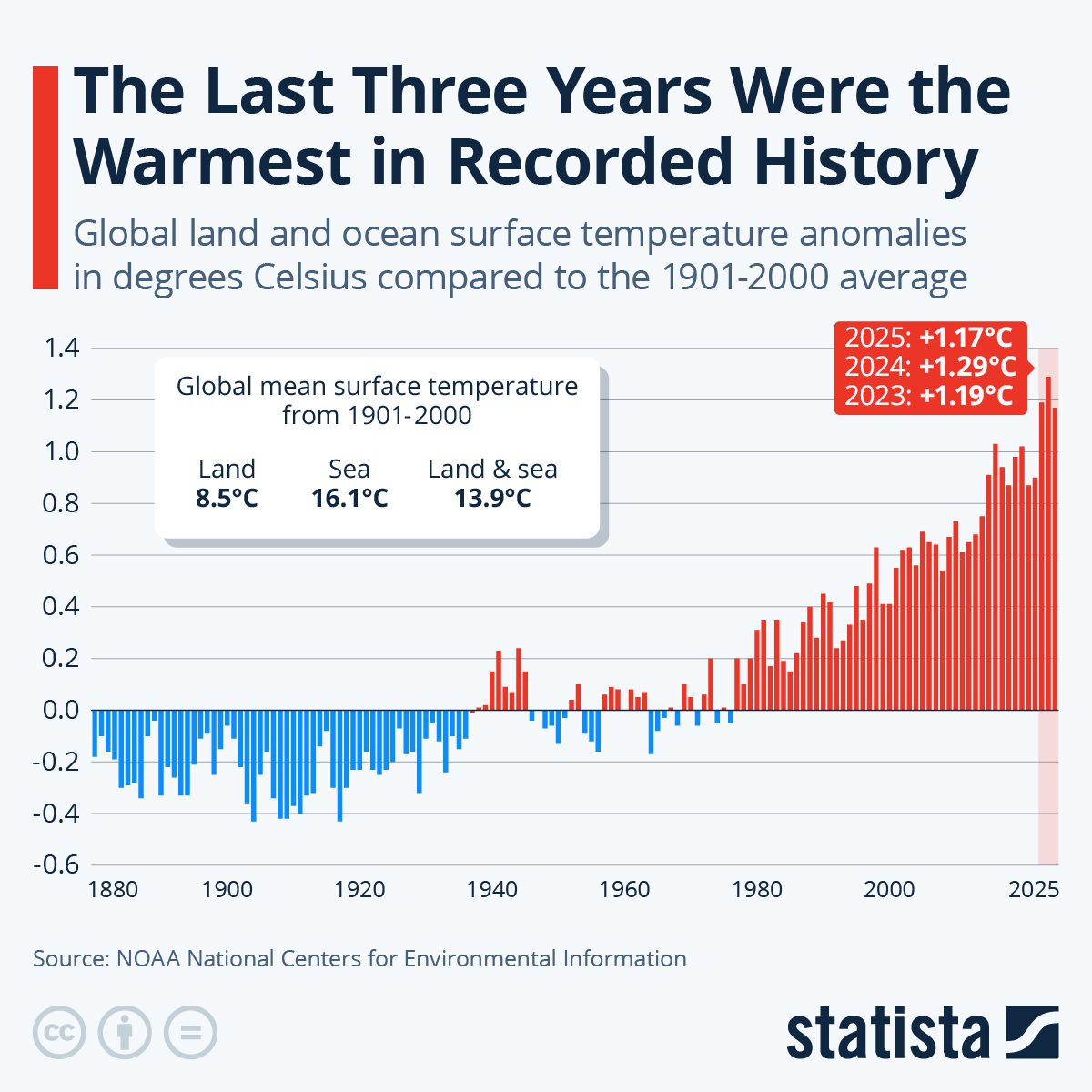
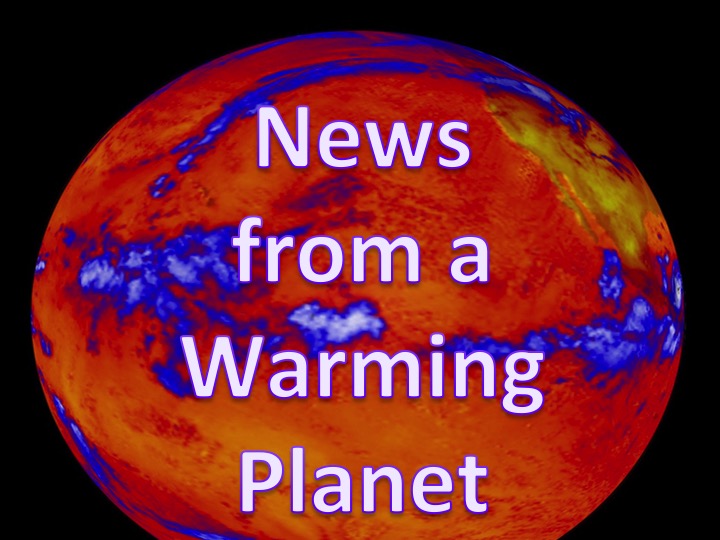
There seems to be an emerging scientific consensus that the rate of global warming is rising. After screening out the effects of natural factors like El Niño, scientists have concluded that the pace of warming has roughly doubled since the 1970s. What does this tell us about policy? Some of the implications are more obvious than others, and at least one implication may be unsettling for some climate advocates. Most obviously, we need to accelerate our efforts to carbon emissions. We will be closing in on possible tipping points faster than expected. Climate impacts that we might have expected twenty years from now could hit in half that time.
CONTINUE READINGNoem’s Disastrous Reign at FEMA

The post-Noem agency is in desperate need of rebuilding.
It’s going to be very difficult for a new DHS head to shift course given the message coming from the White House. But without a change in the direction, a weaker FEMA will increase the country’s vulnerability to the disaster risks posed by an increasingly unruly climate. Noem has done great damage to FEMA, leaving the country more vulnerable to disasters. Trump’s desire to abolish the agency isn’t helping. Among her failings, her damage to the Federal Emergency Management Agency (FEMA) may not be the worst, but it’s far from the least. Restoring the FEMA will be a major undertaking and a heavy lift in an administration best known for agency destruction.
CONTINUE READINGYes, Secretary Noem, We Really Do Need FEMA
An advisory committee suggests upgrading FEMA, but Noem still hopes to gut it.
The Washington Post reported yesterday that a special advisory council has recommended that FEMA be strengthened and taken out of DHS. Secretary Noem is unconvinced and seems to be trying to bury the recommendations. She’s wrong. FEMA really is needed, and the reasons tell us a lot about what kinds of reforms make sense. First responders are usually state and local – they’re already nearby – and much of the work of reconstruction is also overseen locally. So why do we need FEMA? Let me count the ways.
CONTINUE READINGWillful Ignorance as Government Policy
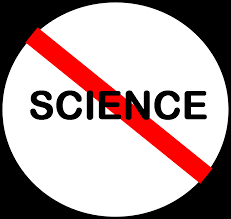
The Trump Administration is systematically shutting down sources of vital information.
There is a deep anti-intellectualism embedded in MAGA. As RFK Jr. advises people, why pay attention to scientists when you can just “do the research” in the far corners of the internet?
There’s also the fear that data and research may not fit its political agenda. For instance, better information about extreme weather could support more robust programs to deal with those threats rather than supporting massive budget cuts. More robust government programs aren’t part of the MAGA agenda. Even worse, information about extreme weather would also shed light on climate change, a taboo subject.
Saving Disaster Law From the Imperial Presidency
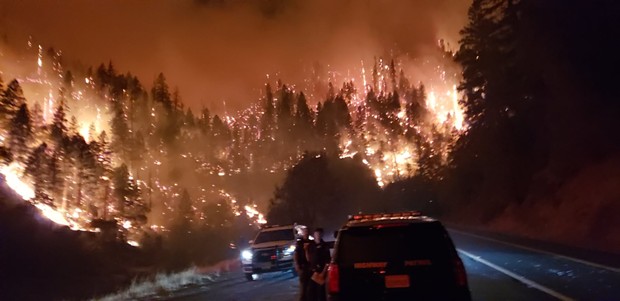
Trump’s efforts to deconstruct disaster relief have serious legal flaws
In recent days, Trump has said that he won’t provide relief for the LA fires unless California changes its voting laws and its water regulations. And he also suggested that he’d like to abolish FEMA entirely. The first of those proposals seems clearly unconstitutional. The second one is both a terrible idea and beyond his legal authority.
CONTINUE READINGLGBTQ People Face Greater Climate Risks
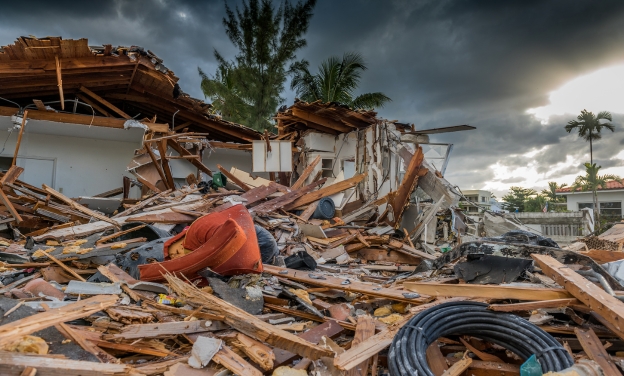
A new study by the UCLA Williams Institute finds that LGBTQ people in same-sex couples are at greater risk of exposure to the harms of climate change compared to straight couples.
In August of 2005 when Hurricane Katrina made landfall in Louisiana and Mississippi, the combination of torrential rain and flawed infrastructure proved deadly. More than 1,800 people died and the price tag for the damage quickly rose to the tens of billions of dollars. In the chaotic disaster response that followed, several communities were disproportionately …
Continue reading “LGBTQ People Face Greater Climate Risks”
CONTINUE READINGJoin Our Mailing List
Climate policy is changing rapidly. Stay in the loop with expert analysis via email Monday - Friday.

The Drain is a roundup of climate and environmental news from Legal Planet delivered to your Inbox once a week.