























































Energy
Three Cheers for Two Clean Energy Victories for California

Gov. Newsom signed SB 1359 and AB 2313, two bills that the UCLA Emmett Institute had identified as clear winners for ratepayers.
After a suspenseful few weeks, we’re excited to see that yesterday, Governor Newsom signed into law two key bills that will help reduce costly gas bills and help households transition to a cleaner energy future: SB 1359 and AB 2313. We’ve written about both of these bills before, in multiple reports and blog posts. It’s …
Continue reading “Three Cheers for Two Clean Energy Victories for California”
CONTINUE READINGGorsuch is (Partly) Right
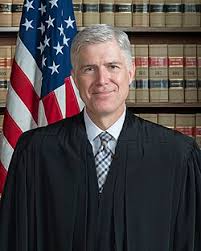
Justice Gorsuch is wrong about the cure, but delegation has gotten out of hand.
Justice Gorsuch has made it a personal crusade to revive the nondelegation doctrine, in part because of concerns about the rising tide of presidential power. The nondelegation doctrine tries to limit the ability of Congress to delegate authority to the executive branch. That’s an unworkable solution, but Gorsuch is right that Congress has put far too much trust in the good faith and sound judgment of the President and his subordinates. That’s especially true of national security and emergency powers.
CONTINUE READING‘Solar for All’ Victories and the Future of Grantee Litigation

Two courts vacated U.S. EPA’s termination of solar funds. Guest contributor Adam Earl King outlines what to watch for on appeal.
Guest contributor Adam Earl King is a student at The University of Texas School of Law (JD ’27) and a Summer ’26 Legal Research Assistant at UC Berkeley’s CLEE. This time last year, local-government and non-profit grantees’ hearts dropped when EPA Administrator Lee Zeldin announced via X that he’s ending the “boondoggle.” The so-called “boondoggle” …
Continue reading “‘Solar for All’ Victories and the Future of Grantee Litigation”
CONTINUE READING“National Security” is Becoming a Punch Line

Whenever he wants to roll back environmental protections, Trump cooks up a new national security justification.
A recent NY Times article recounts how often President Trump has invoked national security. It earnestly dissects his latest and most absurd claim: that the Arc deTrump he wanted to build will be filled with snipers, ammunition, and drones. It turns out that the snipers would be in an excellent position to shoot out the crosses in Arlington National Cemetery but not to protect anything of strategic importance. The environment has been one of Trump’s most fertile grounds for pretextual national security claims.
CONTINUE READINGThe EPA Power Plant Rule Repeal Don’t Make No Sense

The Drain is a roundup of environmental and climate news from Legal Planet.
The hair-on-fire news this week was the Environmental Protection Agency announcing that it is repealing rules that limit planet-warming greenhouse gas emissions from power plants fueled by coal and fossil gas. I saw the headline (“EPA Poised to Repeal Carbon Rules for Coal, Gas Power Plants“) on Sunday evening, when Zahra Hirji, Jen Dlouhy, and …
Continue reading “The EPA Power Plant Rule Repeal Don’t Make No Sense “
CONTINUE READINGThe Rise and Fall of an Energy Emergency
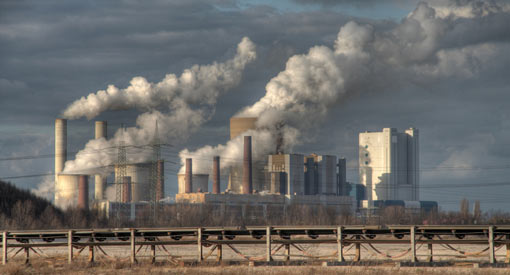
Frantic federal efforts to keep uneconomical coal plants from closing met their doom in a new court decision.
According to the Department of Energy, decrepit coal-fired power plants had to be kept open to avoid “unacceptable reliability risks within five years” unless something changed. You could be forgiven for thinking that calling this hypothetical situation an emergency was something of a stretch. The legality of the orders reached the D.C. Circuit in a Michigan case involving a coal plant that seemingly everyone except Trump wanted to close. The court found no basis for the order. The opinion avoids directly calling out the government’s abuse of power. Instead, it keeps focused on basic issues of statutory interpretation. The statute clearly didn’t give DOE anything like the authority to take over the power system that it was claiming.
CONTINUE READINGMoving Environment Assessment Outside the Permit Process

Streamlining is good but shouldn’t become an excuse for just ignoring the environment.
I’m very sympathetic to arguments that we’re unable to build important infrastructure, whether housing or transmission, because we have too much red tape. There’s a real temptation, however, to throw out the environment a baby with the procedural bathwater. It’s hard not to suspect that sometimes that’s the point and permit reform is just an effort to avoid considering environmental harms. Be that as it may, it’s easy to embrace restrictions on environmental reviews without giving enough thought to what we may be losing – and how we might be able to get the best of both worlds. As Eric Biber has discussed in many of his posts, many proposed permit reforms are not well-designed to achieve their ends. A more fundamental problem is that we’re not always sure we’re addressing the right part of the problem.
CONTINUE READINGWhich way is the wind blowing in wind energy litigation?
The latest court decisions and legal challenges are shaping the future of wind energy development across the United States
Guest contributor Adelaide Duckett, Legal Fellow at the State Energy & Environmental Impact Center at NYU School of Law Across the country, wind developers and state governments are successfully navigating new legal challenges facing wind energy, fighting to keep projects moving forward despite mounting obstacles. Hostility to wind development has manifested in various ways …
Continue reading “Which way is the wind blowing in wind energy litigation?”
CONTINUE READINGShould we be data center YIMBYs?

Photo by Geoffrey Moffett on Unsplash
Nobody likes data centers. Still, banning them in blue states alone may be a bad idea.
Monterey Park is not often called the New York of California, but the city resembles New York—the state, that is—in one big way: Both have passed moratoria on data center development. When Monterey Park passed its ban in 2025, it was the first municipality in California to do so. Nationwide, however, hundreds of localities have …
Continue reading “Should we be data center YIMBYs?”
CONTINUE READINGKeeping the Energy Transition Affordable
A new CLEE report identifies policy solutions to lower California’s electricity rates.
In recent years, California’s already-high electricity rates increased far beyond the rate of inflation. Unsustainably high electricity rates threaten California’s continued progress on climate change and pose painful affordability burdens on California residents and businesses. High electricity rates also threaten California’s leadership in decarbonization and the clean energy transition, which largely relies on the …
Continue reading “Keeping the Energy Transition Affordable”
CONTINUE READINGJoin Our Mailing List
Climate policy is changing rapidly. Stay in the loop with expert analysis via email Monday - Friday.

The Drain is a roundup of climate and environmental news from Legal Planet delivered to your Inbox once a week.