

























































fossil fuels
When and How to Oppose Fossil Fuels

The answer is clear: “It depends.”
There’s been a lot of talk about whether climate policy should focus on promoting clean energy or should push hard to limit fossil fuels. To some extent, these are two side of the same coin. Yet, the politics could be very different. The debate has been too simplistic. What stance to take about opposing fossil fuels depends on who you are and where you sit, which fossil fuel is involved, and what kind of regulation is at issue. The nuances matter here, and the stakes are huge.
CONTINUE READINGWhat Explains Trump’s Energy Policy?
There’s no plausible economic explanation. It’s all about politics.
Trump’s energy policy rests on promotion of U.S. fossil fuel production and use. The instruments include orders forcing coal-fired generators to keep operating, relaxed air pollution standards for power plants, and repeal of as many energy efficiency standards as possible. Trump’s overall economic policy centers on mercantilism, the belief that countries get rich by exporting more than they import. That fits pieces of his energy policy but not others. There’s also some rhetoric about free choice by consumers, but Trump clearly is not a believer in free markets as a matter of principle.
CONTINUE READINGThe Dim Outlook for Trump Energy Dominance
About the best he can hope for in the long run is to maintain the status quo.
U.S. oil is seeing a future of declining U.S. and global demand for gasoline and diesel, with U.S. production also remaining stagnant. The future for natural gas production is looking rosier given increasing energy demand and possible growth in U.S. exports. From the perspective of the oil industry, this is probably an optimistic forecast. It assumes that there are no major advances in battery technology that would further accelerate adoption of EVs or sharp decreases in the price of solar. It also assumes that nuclear power doesn’t expand globally, and that other countries are willing to trust the U.S. as a source of a vital energy resources.
CONTINUE READINGThe National Security Scam

Just about everything gets labeled an emergency or national security threat these days. The courts may be starting to catch on.
The Trump Administration invokes national security and declares national emergencies to justify all manner of actions such as excusing violation of environmental laws. Past Administrations have gotten strong deference for their emergency claims. But this one may be quickly using up its credibility. You can pass a certain number of counterfeit bills, but a flood of counterfeits is hard to hide.
CONTINUE READINGUnderstanding the Energy Dominance Agenda
What does this key concept in Trump’s energy policy actually mean?
The term “energy dominance” is at the core of the Trump Administration’s energy and environmental policies. But hat does it mean? Trump fleshed out the concept of energy dominance when he proclaimed October to be “National Energy Dominance Month.” (He forgot to issue the proclamation until halfway through the month, meaning it got even less attention than it might have otherwise received. Still, it unpacks some of his thinking in a useful way. Below, I’ll try to tease out answers to some of the key questions.
CONTINUE READINGKeeping Coal on Life Support

Trump is doing everything he can to boost coal. And still, the industry is on life support.
The good news for investors is that coal is behaving like much of the non-AI stock market this year. Yet this growth is taking place on a very low baseline, which had slumped well below from Great Recession levels. If investors are to be believed, Trump may be able to keep the coal industry on life support. But it’s still in the ICU.
CONTINUE READINGThe Emperor’s New Endangerment Theory (Part I)
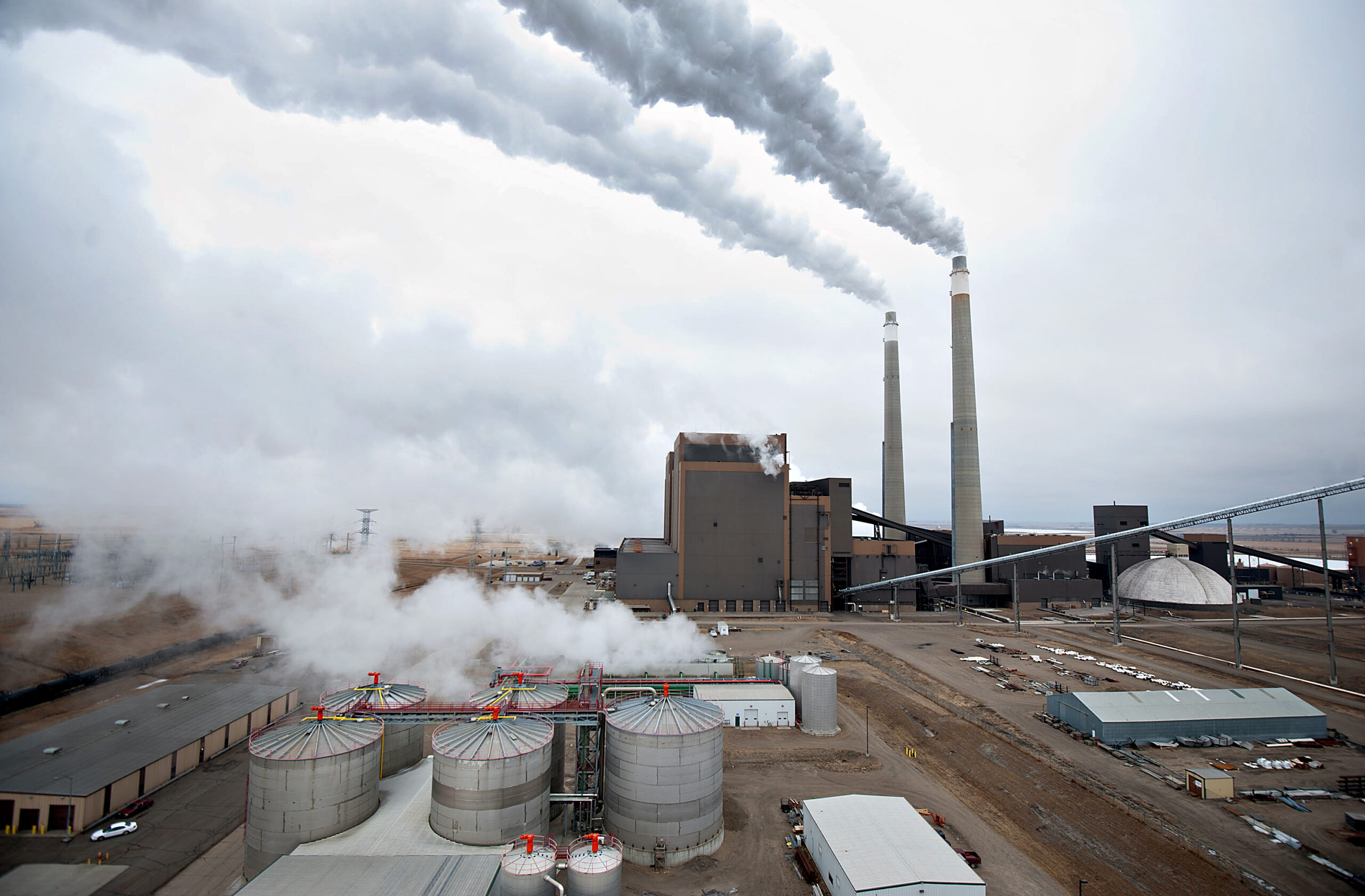
EPA says the electricity sector’s climate impacts aren’t significant. Really??
EPA has proposed a novel reading of the Clean Air Act (CAA) that would foreclose any regulation of CO2 emissions from power plants. EPA’s core argument is that the statute requires it to determine whether an industry’s emissions “cause or contribute significantly” to climate change and that the industry’s carbon emissions don’t meet that standard. …
Continue reading “The Emperor’s New Endangerment Theory (Part I)”
CONTINUE READINGAbundance and the Seven County case
The Court’s decision will facilitate fossil fuel projects much more than clean energy
I’ve seen some posts on the social media site formally known as Twitter arguing that the Seven County case is a win for an abundance-focused policy – in that it will facilitate more construction of infrastructure by eliminating or reducing environmental reviews. I think that statement is somewhat accurate in general. But I think it is …
Continue reading “Abundance and the Seven County case”
CONTINUE READINGIs Trump Good for the Oil Industry?
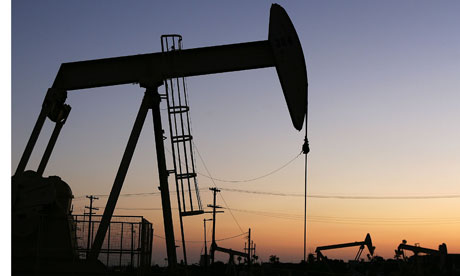
Not particularly, it would appear. If there’s an effect, it’s not big enough to hit the eyes.
No doubt, the industry would rather have Trump in office than Harris. But the effect on industry profits may only be incremental. It would be great to see a rigorous statistical analysis by a finance expert, but a bump to oil profits isn’t obvious in share prices.
CONTINUE READINGA Trumped-Up Energy Emergency
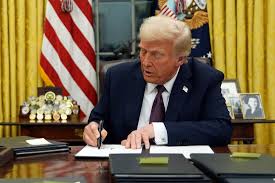
We have weathered past threats to energy security through democratic processes, not by executive fiat.
The Executive Order has fabricated an energy emergency and is doubly wrongheaded. First, as the statistics bear out, there is neither a domestic energy emergency nor an energy crisis. The U.S. has effectively secured energy independence. More significantly, Trump’s politically driven, fossil fuel-dependent energy portfolio is neither diversified nor economically sound.
CONTINUE READINGJoin Our Mailing List
Climate policy is changing rapidly. Stay in the loop with expert analysis via email Monday - Friday.

The Drain is a roundup of climate and environmental news from Legal Planet delivered to your Inbox once a week.