




























































NEPA
How to Create Permit Certainty?
What might be a good path forward for the FREEDOM Act?
This is the third post in a series looking at the most recent proposed legislation for permit certainty, the FREEDOM Act. Part one, discussing why Congress is considering permit certainty and its importance, is here. Part two, analyzing the strengths and weaknesses of the bill, is here. The good parts of the bill – making …
Continue reading “How to Create Permit Certainty?”
CONTINUE READINGAnalyzing the FREEDOM Act
Permit certainty bill has beneficial judicial review provisions, but problematic provisions for damages and compensation.
This is the second post in a series on the FREEDOM Act, a bill in the House of Representatives to address the issue of permit certainty. Part one, explaining why permit certainty is now a hot topic in Congress, is here. All of the reforms in the FREEDOM Act turn on the creation of a …
Continue reading “Analyzing the FREEDOM Act”
CONTINUE READINGThe FREEDOM Act and Permit Certainty
Permit certainty bill has potential, but also some problems that could make it unworkable
As one advocate for permitting reform aptly noted, “permit certainty” is now a prerequisite for any action on permitting reform in this Congress. That’s because the Trump Administration’s war on renewable energy means that Democrats have no desire to do a deal that would not, in practice, make a difference for investment in new clean …
Continue reading “The FREEDOM Act and Permit Certainty”
CONTINUE READINGNew Trump Nuclear Reactor Policy: “Trust Us”
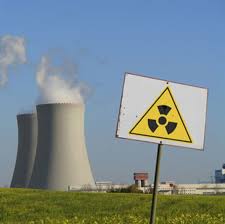
The Administration is eliminating safeguards and courting greater skepticism about nuclear safety
The Trump Administration is quietly dismantling safeguards for nuclear power. I’m neutral. But not if it’s being built with a “safety last” policy. Trump’s Department of Energy wants us to trust them to protect the public. But blind trust for federal agencies is in scarce supply these days. Trying to sneak through regulatory changes may speed things up in the short run but is likely to cause delays later. We know that the changes will be made by political appointees, with experts relegated to minor roles. This will build a legacy of distrust.
CONTINUE READINGThat Was the Year That Was

2025 had a lot of bad environmental news, but also a few rays of hope.
2025 has been a dark time for Americanswho care about the environment. Rather than being a repeat of his first term, which had been bad enough environmentally, Trump’s second term has been a tsunami of bad news. Besides some outright rollbacks, Trump has done his best to purge the government of programs and people implementing environmental law. Much of that has been illegal but effective anyway. The demolition of the East Wing will be remembered as a defining moment, the perfect metaphor for an Administration that has religiously embraced the motto, “move fast and break things.”
CONTINUE READINGNEPA and Democracy
The Trump Administration is at war with transparency and public input.
The Administration is out to limit public oversight of government actions that, taken alone or as a group, will have major environmental impacts – notably, oil production, coal mining, nuclear reactors, and pipelines. Congress will also have less visibility into these important decisions. People are often impatient about procedures that slow decision making, sometimes properly so. But the solution is not a secretive decision-making process. If it’s true that democracy dies in darkness, it’s also true that ugly things rawl out of the woodwork when the lights are off.
CONTINUE READINGNEPA Reform and Transmission
Reducing NEPA compliance alone won’t solve our transmission problems, and it might be a bad deal for the climate
The recent passage of the SPEED Act highlights one angle in current permitting reform debates: A focus on NEPA, which as a procedural statute might be more feasible to reform than other substantive statutes. Advocates for the SPEED Act have argued that it will help with a range of infrastructure projects, including transmission. But a …
Continue reading “NEPA Reform and Transmission”
CONTINUE READINGWhat’s So Special About NEPA?
Guest contributors Dinah Bear and Niel Lawrence argue that the National Environmental Policy Act process provides unique and wide-reaching benefits.
Attacks on our federal environmental charter, the National Environmental Policy Act, or NEPA, have escalated from seeking the statute’s truncation to its outright abolition. Increasingly bandied about is the claim that while all well and good when passed in 1969, NEPA is now superfluous because we have a whole series of other laws protecting specific resource and places. This ill-founded contention misses what is unique about NEPA and why we benefit from it, today as much as ever.
NEPA is our one, full-spectrum, nationwide mechanism for getting agencies to use their discretion better. Other, resource-specific,federal environmental laws are prohibitory, setting minimum protective standards as a floor under agency discretion. They provide a basic “thou shalt not” for individual resources and values. NEPA’s focus is on the positive, the field of possibilities, not what agencies have to avoid but rather on how to do best what they can do—over and above those often bare-bones minimums. As applied, if well and conscientiously implemented, NEPA equips and nudges agencies toward decisions that are smart, well-informed, and responsive. In so doing, it confers three critical benefits on the public.
Permit Certainty
Revised SPEED Act tries to give certainty to permit holders, and probably fails.
The SPEED Act will be up for a vote in the House of Representatives later this week, and the vote will likely be close. The Act is an effort to do permitting reform for NEPA compliance, in theory to accelerate reviews and provide more certainty about what those reviews cover. I’ve already provided an assessment …
Continue reading “Permit Certainty”
CONTINUE READINGFixing Fix Our Forests
The emergency provisions of Fix Our Forests are a key weakness in the bill
The permitting reform bill that has made the most progress through Congress is the Fix Our Forests Act, which I’ve written about here, here, and here. And as I’ve written before, fixing fire management on federal lands should be a top priority for any reforms. I’m not sure that the model of Fix Our Forests …
Continue reading “Fixing Fix Our Forests”
CONTINUE READINGJoin Our Mailing List
Climate policy is changing rapidly. Stay in the loop with expert analysis via email Monday - Friday.