





















































public lands
Fire and Permitting Reform
Addressing the difficult parts, regulation and litigation
This is the second of three posts on proposed legislation to address the fire crisis on federal lands (the first post is here). Last post, I talked about why this legislation is essential, and the strengths of the bill that the House passed last Congress. In this post, I’ll talk about the parts of the …
Continue reading “Fire and Permitting Reform”
CONTINUE READINGDeal or No Deal?
Should Congress pass EPRA?
This is the second in a series of posts on permitting reform. The first post is here. Given the provisions of the Energy Permitting Reform Act (EPRA), should Congress enact it as it stands now? Answering that question is tricky, in part because it depends both on uncertain political and administrative action, as well as …
Continue reading “Deal or No Deal?”
CONTINUE READINGShould We Do Permitting Reform?
What is at stake with the Manchin bill.
As Congress wraps up its lame duck session before the new Congress and President arrive in January, there is a lot of debate about whether to move forward on permitting reform within a quickly shrinking window of time. The basis of debate is the Energy Permitting Reform Act (EPRA) co-sponsored by Senators Manchin and Barrasso. …
Continue reading “Should We Do Permitting Reform?”
CONTINUE READINGJustin Pidot: Manchin’s Latest and Last Run at Promoting Fossil Fuels through a Permitting Reform Bill

His proposal is a bad deal on climate and an afront to environmental justice
Last week, Senator Manchin unveiled his latest permitting bill, negotiated with Senator Barrasso and set to be marked up by the Senate Committee on Energy and Natural Resources on Wednesday. After recently completing a 3 ½ year stint as general counsel at the White House Counsel of Environmental Quality, I recognize that continuing to improve …
CONTINUE READINGA New Era of Conservation on the Horizon

Lessons from philanthropist and conservationist Kris Tompkins after a visit to the UCLA Emmett Institute.
“Sentiment without action is the ruin of the soul.” That line by writer Edward Abbey is a favorite quote of Kris Tompkins. She’s the legendary conservationist and philanthropist who recently visited UCLA Law at the invitation of the Emmett Institute and the Lowell Milken Center for Philanthropy and Nonprofits. Ever since Thompkins’s visit with …
Continue reading “A New Era of Conservation on the Horizon”
CONTINUE READINGNEPA in the Ninth
Can an agency just shortcut the whole process? The 9th Circuit says no.
On Wednesday, the Ninth Circuit decided a NEPA case that discusses two interesting issues. But what’s most striking isn’t what the court did discuss but what it didn’t mention : the fact that last year’s NEPA amendments speaks directly to one of those issues. Apparently the word that NEPA was extensively amended a year ago …
Continue reading “NEPA in the Ninth”
CONTINUE READINGA New Era for Protecting Public Lands

The Bureau of Land Management has always prioritized extraction activities. Now the agency has announced a rule that could elevate conservation.
In August, 2021, I blogged on Legal Planet about a piece in Science I had co-authored arguing for an end to prohibiting “nonuse” rights to bid on public land use. The article helped popularize the issue and the Bureau of Land Management today announced a final rule that, as the BLM press release describes, “recognizes …
Continue reading “A New Era for Protecting Public Lands”
CONTINUE READINGThe Wilderness Act and climate change
Changing the Wilderness Act to respond to climate change is a terrible idea
The Wilderness Act is one of the iconic pieces of environmental legislation, and it is 50 years old this year. It created a process and management standard by which millions of acres of relatively undeveloped federal land were protected from development and most forms of active human management. These lands are to be managed, as …
Continue reading “The Wilderness Act and climate change”
CONTINUE READINGU.S. Supreme Court Deals Blow to National Rails-to-Trails Movement
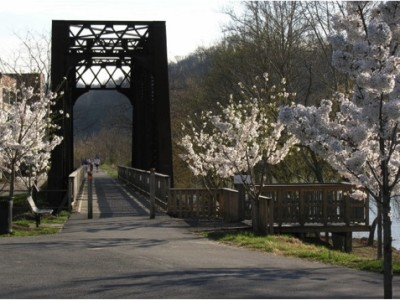
Justices Hand Property Owners Another Important Win, With Public Access the Loser
Some U.S. Supreme Court decisions blow through American jurisprudence like a hurricane. Others slip into the law books quietly, like the proverbial cat’s paws. Today’s Court decision in Marvin M. Brandt Revocable Trust v. United States falls into the latter category: largely overlooked by Court followers and the media, but with the potential to have …
Continue reading “U.S. Supreme Court Deals Blow to National Rails-to-Trails Movement”
CONTINUE READINGBreaking News: Interior Nominee Blocked
HuffPost reports: Republicans have blocked President Barack Obama’s pick for the No. 2 job at the Interior Department because of a flap over oil leases in Utah. In a 57-39 Senate vote, Democrats fell short of the 60 votes they would have needed to advance the nominee past GOP obstacles. It’s the first time Republicans …
Continue reading “Breaking News: Interior Nominee Blocked”
CONTINUE READINGJoin Our Mailing List
Climate policy is changing rapidly. Stay in the loop with expert analysis via email Monday - Friday.