


























































renewable energy
Creating Lease Certainty
There are some steps Congress could take to increase certainty for energy leases on federal lands, but there will be tradeoffs.
As my prior two posts noted, there are substantial legal authorities that allow an executive to suspend or cancel leases for energy development. In the case of on-shore leases, that power might be extremely broad. And with an Administration that appears to use its powers to pursue political grudges and to push the envelope on …
Continue reading “Creating Lease Certainty”
CONTINUE READINGCanceling Onshore Leases
The executive may have broad authority to cancel onshore leases, perhaps even without compensation. Congress might want to fix that.
My last post covered the likely power that the Administration has to cancel off-shore leases for wind projects – a power that it probably has, if it was to ever get its act together. But even though the Administration has not yet used it, I think it probably has even broader power to cancel leases …
Continue reading “Canceling Onshore Leases”
CONTINUE READINGOn the theory of permitting certainty
It’s a hard problem to solve. There might be lessons from housing and land-use.
What is being called “permitting certainty” is now a central component of any permitting reform that might pass through this Congress. Permitting certainty is the concept of making it harder for the Executive Branch to capriciously revoke permits based on personal grudges, political vendettas, or other factors that Congress does not wish to be the …
Continue reading “On the theory of permitting certainty”
CONTINUE READINGPermit Certainty
Revised SPEED Act tries to give certainty to permit holders, and probably fails.
The SPEED Act will be up for a vote in the House of Representatives later this week, and the vote will likely be close. The Act is an effort to do permitting reform for NEPA compliance, in theory to accelerate reviews and provide more certainty about what those reviews cover. I’ve already provided an assessment …
Continue reading “Permit Certainty”
CONTINUE READINGThe Answers are Blowing in the Wind
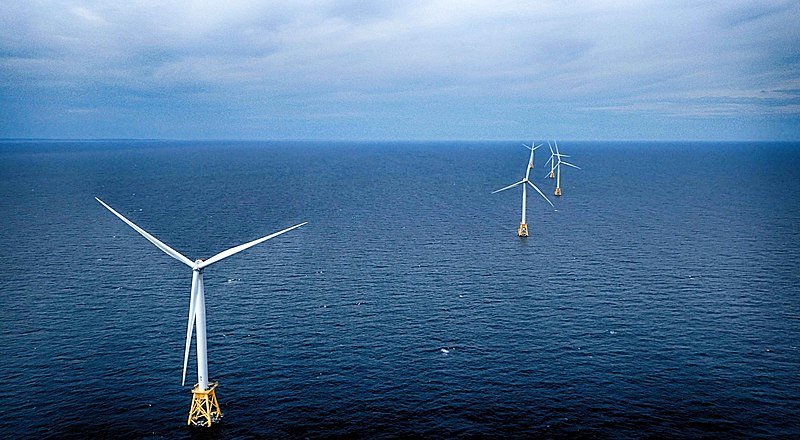
A district court overturns the moratorium on offshore wind, deciding two key legal issues along the way.
The Trump Administration advanced two far-reaching arguments in this case. One is that, when the President directs how an agency should exercise its statutory authority, normal limits on agency action don’t apply. The other is that, even if an agency action is illegal, it must remain in effect against everyone in the world except the plaintiffs who challenged it in a specific case. We can expect the government to keep pressing these points, up to and including Supreme Court review. But the district court in the offshore wind case, along with other lower courts, correctly rejected these arguments.
CONTINUE READINGThe Top Ten Things to be Thankful for this Year

It’s been a horrible year for federal environmental law, but there are hopeful developments elsewhere.
This is, if not the winter of our discontent, at least the late autumn. In terms of federal environmental policy, 2025 has been a disaster. Trump’s previous term in office pales by comparison. But all is not gloomy. Outside of D.C., there have been encouraging developments within the U.S. and globally.
Here are ten of those positive developments.
The Color PURPA

A Win for Solar– And a Glimpse of Life After Chevron
The majority in a recent case — an Obama appointeet and a Trump appointee — ruled in favor of renewable energy. Even without Chevron deference, they were able to conclude that the statute favored solar producers. And unlike a win under Chevron, this one can’t be reversed by a more conservative agency — it’s etched in stone.
CONTINUE READINGCalifornia Must Invest in Climate and Communities to Drive Climate Progress

The state has pioneered an approach—what’s worked, and what’s next?
As solar and other climate infrastructure construction accelerates, and with Californians concerned both about the cost of living and about seeing local opportunities result from climate projects, the conversation about community benefits (commitments to hiring and other local investments made by developers in connection with new projects) has grown increasingly animated in California and even …
Continue reading “California Must Invest in Climate and Communities to Drive Climate Progress”
CONTINUE READINGRight-wing populist environmentalism?
The future of environmentalism may include a right-wing, populist strain that is heavily NIMBY
While there is a lot of focus on left-wing NIMBYs in public discourse, there’s also a lot of right-wing NIMBY mobilization too. For instance, the conservative California city of Huntington Beach is leading the resistance to state efforts to require upzoning to facilitate housing. Conservative rural communities are often the locus of opposition to both …
Continue reading “Right-wing populist environmentalism?”
CONTINUE READINGTwo more recent NEPA studies
These studies have better methodological approaches, and highlight the ways in which NEPA does (and does not) matter for renewable energy
In a prior blog post, I criticized a recent NEPA study from the Breakthrough Institute for some key methodological limitations. Two more studies of NEPA have since come out from Resources for the Future that I want to highlight because I think they have stronger methodological foundations. There are still important limits on what these …
Continue reading “Two more recent NEPA studies”
CONTINUE READINGJoin Our Mailing List
Climate policy is changing rapidly. Stay in the loop with expert analysis via email Monday - Friday.

The Drain is a roundup of climate and environmental news from Legal Planet delivered to your Inbox once a week.