

























































Legislation
Statutory Language? Who Cares About Statutory Language?

A new DOE guidance seems flatly contrary to the statute it’s acting under.
The Department of Energy has issued new guidance that cuts off rebates for people who replace a gas furnace with a heat pump. Under the new guidance, the rebate will be allowed only if the heat pump replaces an electric furnace. Unless I’m missing something, the statute creating the program says the exact opposite. I suppose maybe at this stage I should find this blithe lack of concern for legality unsurprising. Maybe I haven’t adjusted to the Trump era as much as I’d thought. The rebate program specifically covers “any “project that includes [among other things] … the purchase or installation … of an electric heat pump … to replace a nonelectric appliance.”
One Big Loser in the California Primary is Already Clear

The Drain is a weekly roundup of environmental and climate news from Legal Planet.
The stakes are high for climate and energy policy in California’s primary election. In the gubernatorial race, we’ll either get a real runoff between a billionaire climate progressive and a moderate Democrat with big corporate backing OR, more likely, we’ll get to watch that moderate Dem do a cake walk against a Republican. The governor’s …
Continue reading “One Big Loser in the California Primary is Already Clear”
CONTINUE READINGCan Sustainability Be Abundant, Safe, and Affordable?

Read and watch key takeaways from the UCLA Emmett Institute’s 2026 symposium on climate policy and affordability.
This month, the UCLA Emmett Institute explored the intersection of climate goals, affordability concerns, and environmental protections by hosting a symposium titled “Can Abundance Be Sustainable?” The all-day, public event at UCLA School of Law brought together academics, community advocates, policymakers, journalists, students and—not one but two—heads of utility regulatory bodies. The goal was to think deeply about the path …
Continue reading “Can Sustainability Be Abundant, Safe, and Affordable?”
CONTINUE READINGBest Climate Anthem? Here’s Your Earth Day Playlist

The Drain is a weekly roundup of environmental and climate news from Legal Planet.
Three years ago, I made the case that Taylor Swift should write a climate anthem because movements need their own music. It hasn’t happened yet. But if you dig a little deeper than the Billboard Hot 100, there are songwriters today who include environmental messages in their music and they follow in the footsteps of …
Continue reading “Best Climate Anthem? Here’s Your Earth Day Playlist”
CONTINUE READINGCalifornia’s Gas System Is Crumbling. SB 1359 Charts a Path to a Clean Energy Future.

SB 1359 (Stern, 2026) would adopt many of the proposed policies outlined in the 2025 UCLA Law report, “Go Big, Save Big: Approaches to Fund Building Electrification in California.”
A new bill introduced by Sen. Henry Stern, SB 1359 (2026), titled the “Gas Transition Responsibility and Electrification Act,” would establish a comprehensive framework to manage the transition away from natural gas and toward electrification in a way that protects ratepayers, reduces emissions, and ensures an orderly and equitable phase-down of gas infrastructure. Specifically, SB …
CONTINUE READINGBig Oil Could Pay for Climate-Fueled Insurance Hikes

The Drain is a weekly roundup of environmental and climate news from Legal Planet.
There are several ways to try to make polluters pay. California is considering a new one — empower the state Attorney General to sue oil and gas companies to recover costs on behalf of Californians specifically related to the housing insurance market. Survivors, taxpayers and policyholders — whose rates are skyrocketing as a result of …
Continue reading “Big Oil Could Pay for Climate-Fueled Insurance Hikes”
CONTINUE READINGBlow Your Mind on Space Pics to Save the World

NASA
The Drain is a weekly roundup of environmental and climate news from Legal Planet.
Hope, optimism, humility and awe have been in short supply. This week, I felt all of these things not once but twice — first while sitting in the dark at the movies and again while watching the NASA livestream of Artemis II’s lunar flyby. There is nothing like space exploration to change your frame of …
Continue reading “Blow Your Mind on Space Pics to Save the World”
CONTINUE READINGCalifornia Has a Neighborhood Decarbonization Law. How Does It Work?
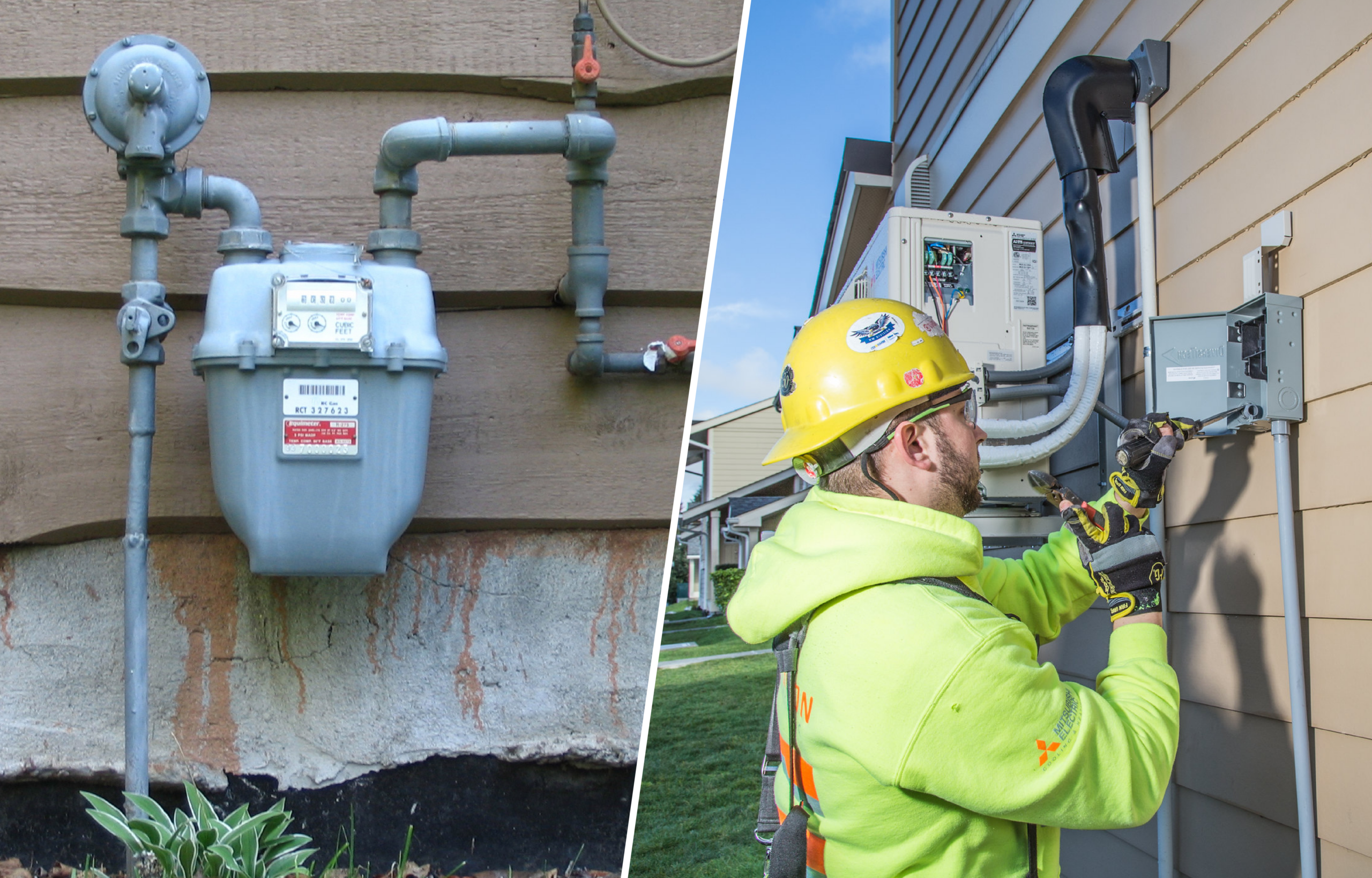
New FAQ from UCLA outlines what we know (and don’t know) about the implementation of SB 1221, California’s landmark neighborhood decarbonization law.
By Sooji Yang, Lauren Dunlap, Elias van Emmerick, and Gregory Pierce The California Public Utilities Commission (CPUC) is currently navigating a wide array of questions from stakeholders as it designs a first-of-its-kind program to transition entire blocks of buildings from natural gas to zero-emission alternatives. Guidelines for the pilot program—a central component of Senate Bill …
Continue reading “California Has a Neighborhood Decarbonization Law. How Does It Work?”
CONTINUE READINGThe Promise of Non-Pipeline Alternatives to Gas Lines
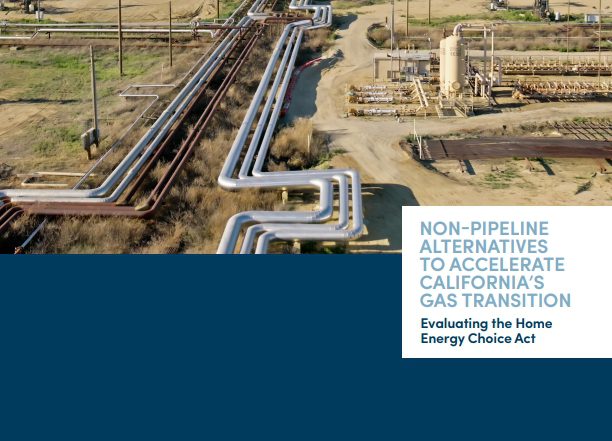
A new UCLA Law brief evaluates the Home Energy Choice Act (AB 2313) by California Assemblymember Marc Berman.
This post was co-written by Guest Contributor Maeve Anderson (J.D. Candidate 2026, UCLA School of Law). California’s transition away from natural gas is accelerating, with new policy tools emerging to speed the shift and ease the financial burden on ratepayers. In February 2026, California Assemblymember Marc Berman introduced the Home Energy Choice Act (AB 2313), a bill that would …
Continue reading “The Promise of Non-Pipeline Alternatives to Gas Lines”
CONTINUE READINGWorrying Gaps in CA Climate Disclosure Implementation

Guest contributors Cynthia Hanawalt and Andy Fitch write that CARB lacks authority to exempt insurers from GHG emissions reporting.
Guest contributors: Cynthia Hanawalt is the Director of Climate and Business Law at Columbia University’s Sabin Center for Climate Change Law and Andy Fitch is a Climate and Business Law fellow at the Sabin Center. We recently surveyed the empirical literature regarding the impacts of corporate greenhouse-gas (GHG) disclosure on companies’ emissions, and called for …
Continue reading “Worrying Gaps in CA Climate Disclosure Implementation”
CONTINUE READINGJoin Our Mailing List
Climate policy is changing rapidly. Stay in the loop with expert analysis via email Monday - Friday.

The Drain is a roundup of climate and environmental news from Legal Planet delivered to your Inbox once a week.