




























































Litigation
Milestones in State Climate Policy

The first efforts to clean up the grid date back forty years, but state climate policy really got moving at the turn of the century.
The federal government’s interventions in climate policy have been erratic, driven by political polarization and alternating control of the White House. In contrast, state governments have engaged in steady campaigns to reduce carbon emissions. Some people seem to think this has been a recent innovation, but it has now been ongoing for a generation. Here are some the key milestone along the way, closing with Trump’s pledge to bulldoze state policies that don’t fall in line with his priorities.
CONTINUE READINGNightmare on Penn Ave (Part 2)
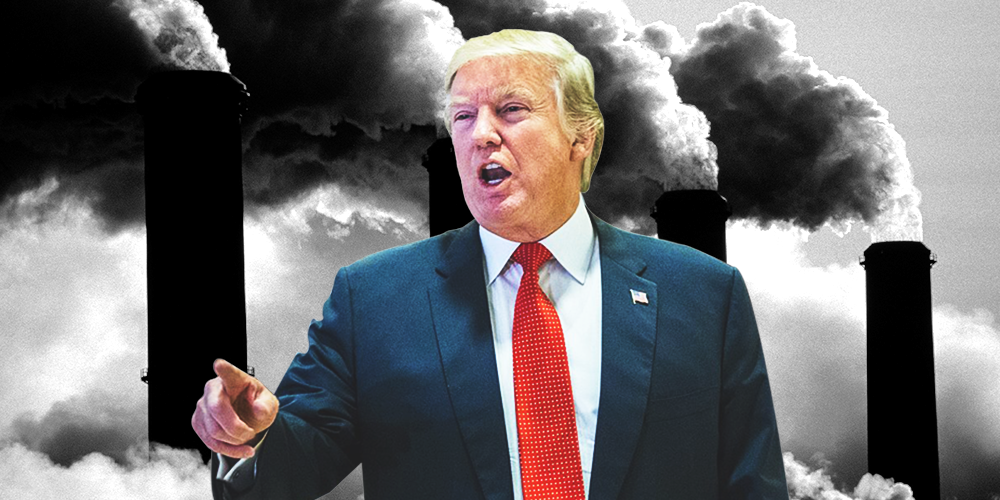
After a year of Trump 2.0, here’s how things stand.
Eight years ago almost to the day, I wrote a post titled, “One Year and Counting.” I was writing at the end of Trump’s first year in office. And here we are again, one year into a second Trump Administration. Trump’s basically deregulatory strategy has remained largely unchanged. But there are some notable differences in the situations then and now. I closed my 2017 post with this: “One characteristic of the Trump Administration is a ceaseless stream of controversies and dramas. But generally speaking, the amount of actual legal change has been much more limited, because the system is designed to provide checks on administrative and legislative action.” It remains to be seen how well those checks will function this time around.
CONTINUE READINGA Procedural Snarl in the Oil Patch

Can oil companies use World War II contracts to vault from state to federal court in cases about present-day coastal damage?
As a matter of common sense, however, it’s hard to see why oil production activities that would not otherwise be considered “federal” should change their statute because the producers also happen to own refineries — especially since in some instances it appears that all the oil from one of their fields might be going to a different refinery anyway. But textualist judges aren’t necessarily attended to common sense.
CONTINUE READING2026: The Year Ahead

Here are six big things to watch.
What to watch for environmentally in 2026: court tests of Trump’s power, midterms, China, grid issues, and state energy moves. In 2025, Trump rolled out new initiatives at a dizzying rate. That story, in one form or another, dominated the news. This year, much of the news will again be about Trump, but he will have less control of the narrative. Legal and political responses to Trump will play a greater role, as will economic developments. Trump’s anti-environmental crusade could run into strong headwinds.
CONTINUE READINGCan Anyone Stop The Kennedy Center Abomination?

The answer may surprise you!!
A friend wrote to me on Friday, asking: isn’t Trump’s “renaming” of the Kennedy Center obviously illegal?” I couldn’t help responding: “what is this ‘illegal’ of which you speak?” Trump has broken so many laws with impunity, and been given a pass by a MAGAt Supreme Court and a supine Congress that such questions do …
Continue reading “Can Anyone Stop The Kennedy Center Abomination?”
CONTINUE READINGFederalism, AI, and the Environment
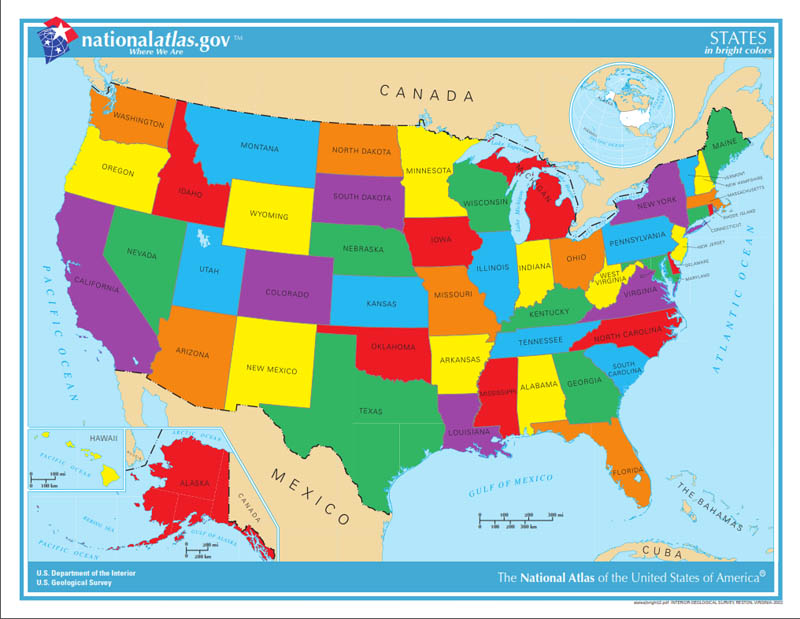
Trump’s efforts to overturn state laws are part of his effort to consolidate power and suppress opposition.
State authority isn’t unlimited, but current legal doctrines give it broad scope. So, apparently, does national politics, given that Congress recently rejected a proposal to preempt state AI laws and has never seriously considered preempting state climate laws.
As we all know, Congress has found it extraordinarily difficult to enact legislation on major issues. The executive branch, under the Supreme Court’s “major questions doctrine,” lacks the power to fill the gap. That leaves only the states to save us from paralysis when major new issues arise. That may not be ideal, but it’s better than nothing.
The Answers are Blowing in the Wind
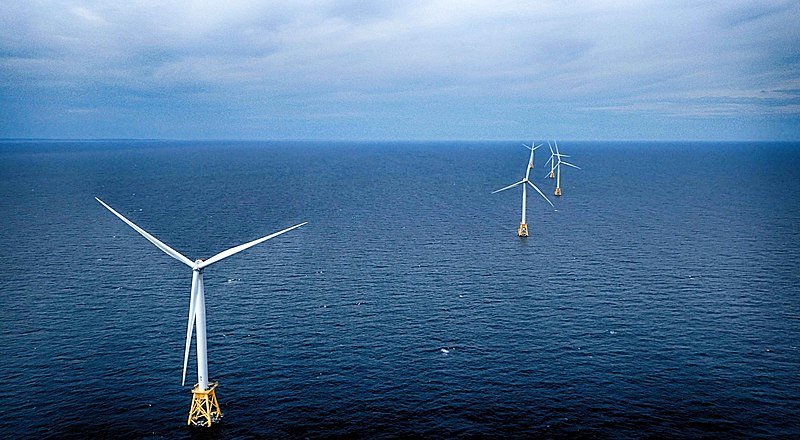
A district court overturns the moratorium on offshore wind, deciding two key legal issues along the way.
The Trump Administration advanced two far-reaching arguments in this case. One is that, when the President directs how an agency should exercise its statutory authority, normal limits on agency action don’t apply. The other is that, even if an agency action is illegal, it must remain in effect against everyone in the world except the plaintiffs who challenged it in a specific case. We can expect the government to keep pressing these points, up to and including Supreme Court review. But the district court in the offshore wind case, along with other lower courts, correctly rejected these arguments.
CONTINUE READINGTrump is Trying to Make Us Pay More for Gas

The Drain is a weekly roundup of environmental and climate news from Legal Planet.
At a White House photo op last week, surrounded by rich auto executives and congressional Republicans, Trump delivered his latest blow to Americans’ pocketbooks by announcing a policy change that could cost us consumers up to $185 billion when filling up our tanks at the pump. If you’re scratching your head trying to recall this …
Continue reading “Trump is Trying to Make Us Pay More for Gas”
CONTINUE READINGRed States and the American Free Enterprise Chamber of Commerce are Climate Champions?
The hypocrisy in Iowa v. Wright is nauseating.
Guess which parties made the following arguments about climate change in a recently decided Eighth Circuit Court of Appeals case, Iowa v. Wright? A group of red states and the American Free Enterprise Chamber of Commerce (AMFREE). The case involves an obscure but important formula, known as the Petroleum Efficiency Factor (PEF), applied when automakers …
CONTINUE READINGThe Lingering Legal Issue of California’s Limits on Vehicle Emissions
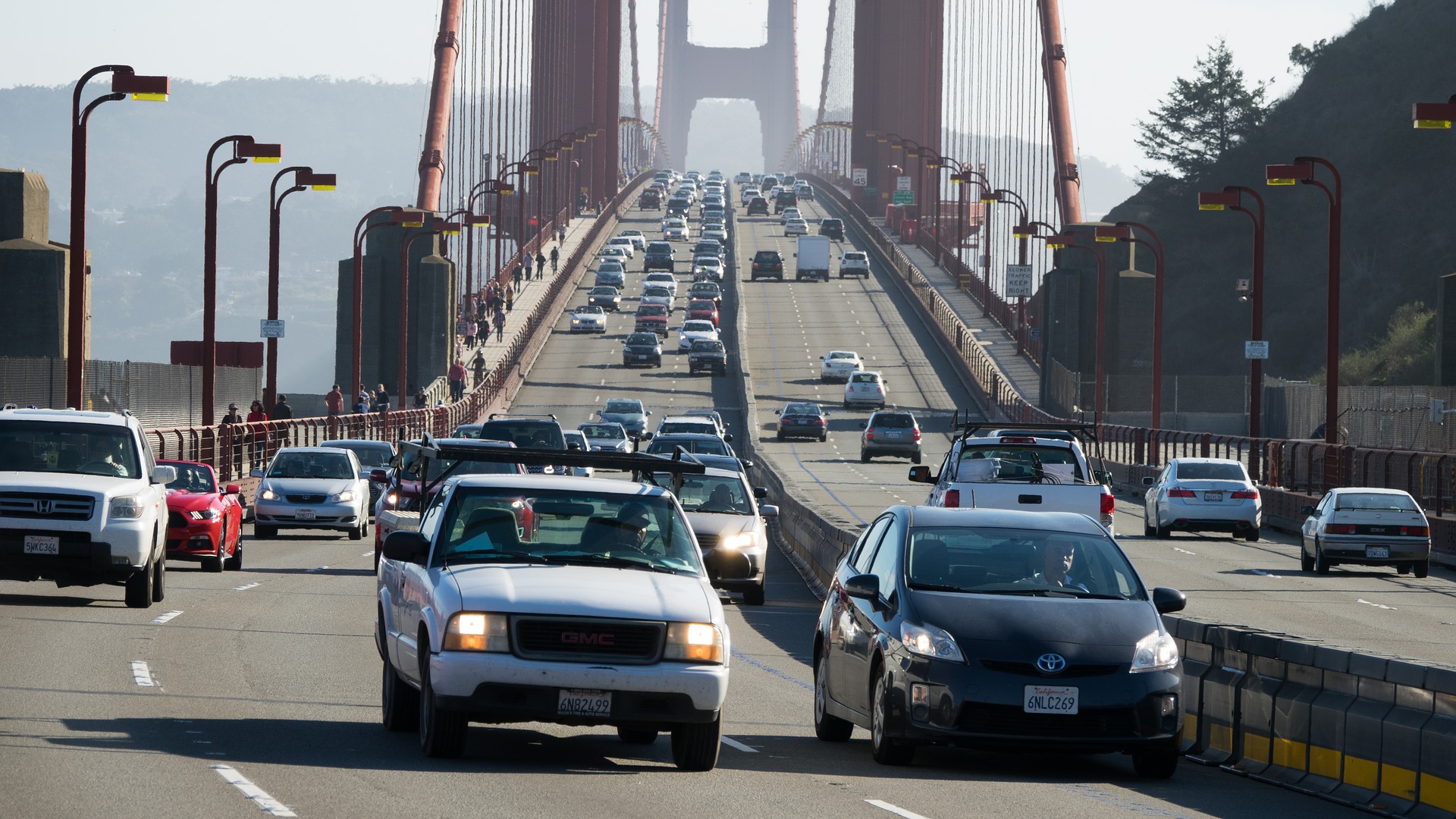
The issues are complex, but the state has some strong legal arguments on its side.
The odds are high that the Trump Administration will withdraw California’s power to regulate greenhouse gas emissions from cars and trucks – and along with it, California’s effort to become all-electric. This is a crucial issue for the state because transportation accounts for about 40% of the state’s emissions. It’s also crucial for the other states have exercised the option of adopting California standards. The issues are complex, involving an unusual statutory scheme. Here’s what you need to know, and why I think California should win this fight.
CONTINUE READINGJoin Our Mailing List
Climate policy is changing rapidly. Stay in the loop with expert analysis via email Monday - Friday.