


























































Regulatory Policy
Transmission Tangle, Transmission Tango
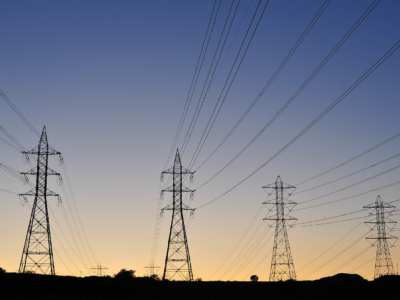
A new report maps out recent federal actions to improve planning for future electric transmission
On the macro level, just about everyone is a big fan of a rapid, aggressive build-out of new long-distance electric transmission lines – to help meet the anticipated rapid growth in demand for electricity due to the electrification of transportation and energy use in buildings, and the growth of AI. In addition, new big bulk …
Continue reading “Transmission Tangle, Transmission Tango”
CONTINUE READINGRegulatory Rollbacks: What to Expect
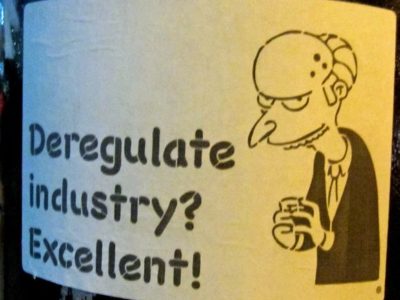
A replay of 2017? Or maybe something more radical? You can probably guess the answer.
Repealing and replacing existing environmental regulations will have a lower priority in this iteration of the Trump presidency – it will often be easier to just ignore the existing regulations or eliminate the regulators rather than the regulations. When it does rollback regulations, the administration will probably take more extreme legal positions and will be more likely to make constitutional arguments against environmental regulation.
CONTINUE READINGThe Downsides of Ping Pong Governance
Judicial review, by moderating policy swings, may be important to facilitating long-term investment
I’ve written about debates over permitting reform and other versions of regulatory streamlining to support the development of infrastructure that we need to address climate change. Another view, well articulated by Nicholas Bagley at University of Michigan, is that the problem is more fundamental: Excessive focus on governmental procedures and process, reinforced by searching judicial …
Continue reading “The Downsides of Ping Pong Governance”
CONTINUE READINGLives in the Balance: Infectious Disease and the Trump Administration

The Administration has made serious inroads on safeguards against infectious disease.
Disease control, like many other traditional government activities, has been under a MAGA-driven onslaught. Indeed, we cannot rule out the risk that rather than helping, the government will try to block the use of lifesaving vaccines.
CONTINUE READINGDissecting the Attacks on the Endangerment Finding
EPA has identified four different arguments against the endangerment finding. None have merit.
In late 2009, EPA made a formal finding — often called the Endangerment Finding —that greenhouse gases may endanger human health and welfare. Undaunted by the overwhelming scientific evidence in favor of that finding, the Trump EPA plans to reconsider that finding. Few independent observers believe EPA will succeed, but the issue is important enough to warrant a close look. Here’s a deep dive.
CONTINUE READINGWhat is Life Like Inside Trump’s EPA?
Three EPA employees talk about DOGE, work anxiety, regulatory rollbacks, and the impact on protecting health and the environment.
The new head of the U.S. the Environmental Protection Agency — whose mission is to protect human health and the environment by developing and enforcing regulations — this week made what he proudly called the “largest deregulatory announcement in history” in the form of nearly three dozen policy reversals and “reconsiderations.” EPA Administrator Lee Zeldin’s …
Continue reading “What is Life Like Inside Trump’s EPA?”
CONTINUE READINGState-Level Actions To Decarbonize Aviation

New CLEE report explores the risks of federal preemption.
Aviation is a significant and growing source of greenhouse gas emissions. But the federal government in the United States has failed to address it so far. In response, some state policy makers and advocates are now considering legal avenues to effectively require the use of sustainable aviation fuels, which emit less carbon than traditional jet …
Continue reading “State-Level Actions To Decarbonize Aviation”
CONTINUE READINGLegal Safeguards Against Deregulation

Congress was aware that there could be a backlash against environmental standards. It took precautions.
If it could, no doubt the current Administration would be happy to have the same polluted air and water–and energy-wasting appliances)– that we had fifty years ago. Thanks to the anti-backsliding aspects of environmental law, however, they can’t really achieve that. The best they can generally do is to get rid of recent regulations that haven’t gone into effect yet.
CONTINUE READINGEPA Jumps the Shark

Just as a past dictator rejected modern genetics, Trump rejects climate science. For both, evidence was no match for ideology and ego.
Honestly, EPA’s embrace of climate denial is just plain embarrassing. And the rest of the world will justifiably view it as one more sign that the U.S. has taken leave of its senses. Trump can change the name of a water body on maps, but he can’t change scientific reality. The scientific evidence about the reality of climate change, its causes, and its harms is incredibly well-established. It’s based on many different types of data and models, which have been tested and retested.
CONTINUE READINGMake America’s Environment Filthy Again
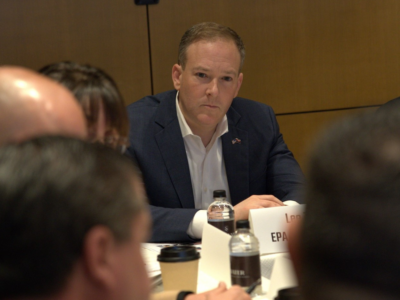
EPA Administrator Lee Zeldin has launched a full-scale attack on climate, air and water pollution.
In what is one of the most mind-boggling press releases ever to come out of the Environmental Protection Agency, Administrator Lee Zeldin today declared that he wants to make America’s air and water dirty again and to make the planet still warmer. He announced 31 actions that will obliterate protections for cleaner air, cleaner water, …
Continue reading “Make America’s Environment Filthy Again”
CONTINUE READINGJoin Our Mailing List
Climate policy is changing rapidly. Stay in the loop with expert analysis via email Monday - Friday.