



























































Transportation
The Top Ten Things to be Thankful for this Year

It’s been a horrible year for federal environmental law, but there are hopeful developments elsewhere.
This is, if not the winter of our discontent, at least the late autumn. In terms of federal environmental policy, 2025 has been a disaster. Trump’s previous term in office pales by comparison. But all is not gloomy. Outside of D.C., there have been encouraging developments within the U.S. and globally.
Here are ten of those positive developments.
The Lingering Legal Issue of California’s Limits on Vehicle Emissions
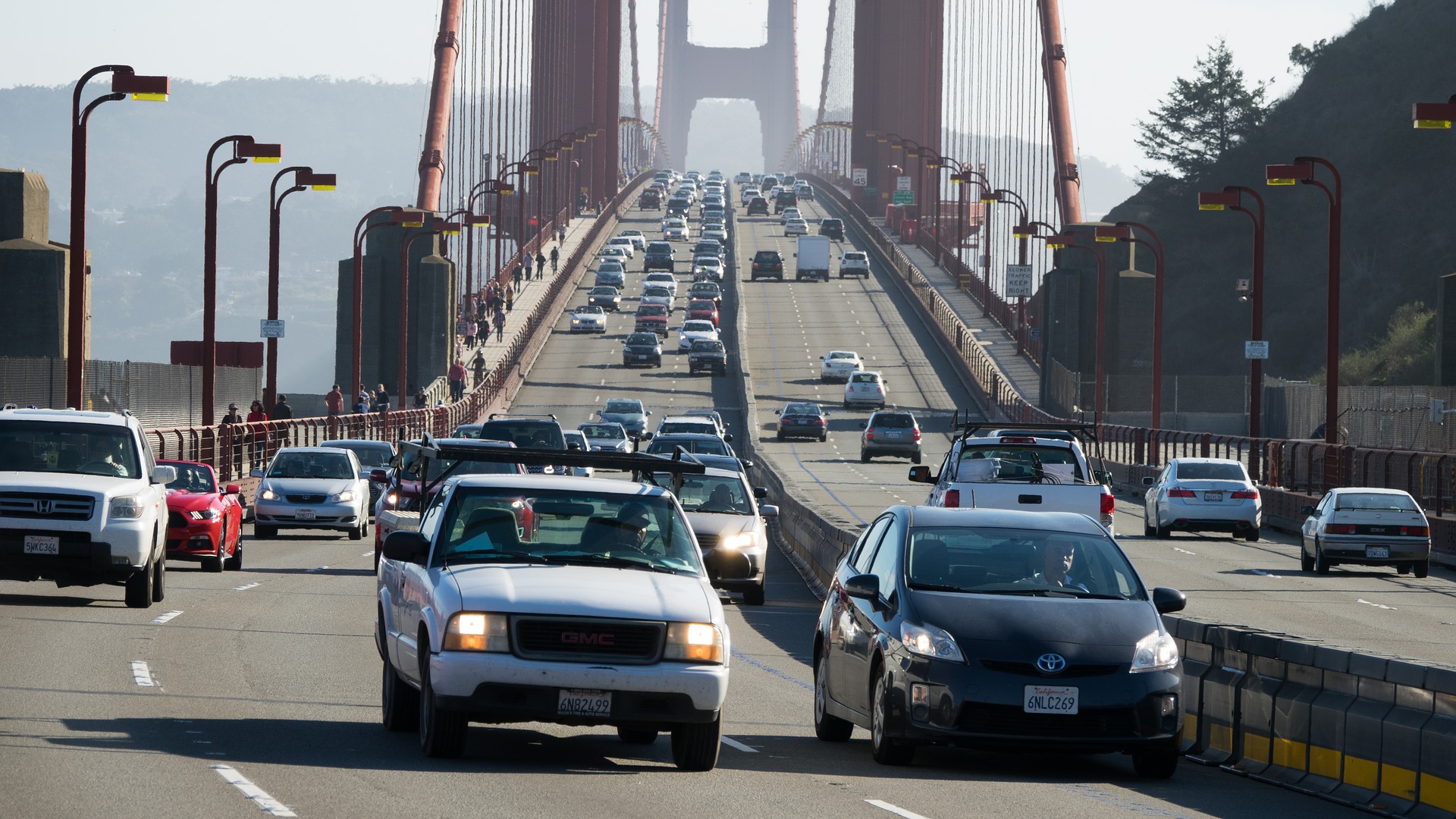
The issues are complex, but the state has some strong legal arguments on its side.
The odds are high that the Trump Administration will withdraw California’s power to regulate greenhouse gas emissions from cars and trucks – and along with it, California’s effort to become all-electric. This is a crucial issue for the state because transportation accounts for about 40% of the state’s emissions. It’s also crucial for the other states have exercised the option of adopting California standards. The issues are complex, involving an unusual statutory scheme. Here’s what you need to know, and why I think California should win this fight.
CONTINUE READINGLighting Candles in Dark Times: Environmental Law Centers in the Trump Era

These law school centers show it’s possible find ways to make a difference.
Environmental law have become vibrant parts of the law and policy ecosystem. At a time when despondency seems all too common, the work of these law school centers offers beacons of hope for the future of environmental protection. Some of that work is playing defense — pushing back against deregulatory efforts — while other work plays offense by identifying innovative directions for environmental policy. A comprehensive survey isn’t practical, but I’ll provide examples from several different centers.
CONTINUE READINGLearning from the Laureates

The 2025 Economics Prize, Technological Innovation, and the Energy Transition
In energy technology as elsewhere, Trump is hobbling American science with budget cuts and demands for political submission. The epitome of his approach is the decision to give political appointees rather than experts the ultimate decision on each project, replacing scientific merit with politics as the deciding factor. His war on science is also a war on future economic growth. And his effort to halt creative destruction is the pathway to a stagnant economy. By trying to prop up an incumbent industry threatened by new technologies, he’s undercutting a central driver of economic growth.
CONTINUE READINGWhere Should EV Chargers Go?

California set an infrastructure milestone – but how can it reach ambitious goals for EV drivers?
As the California Energy Commission proudly announced this week, the state is now home to over 200,000 publicly accessible electric vehicle chargers. This milestone is worth celebrating, both in absolute and relative terms: California has far more individual public charging ports than gasoline nozzles, and with around 2 million EVs now on the road, around …
Continue reading “Where Should EV Chargers Go?”
CONTINUE READINGImmigration Law is Environmental Law

The recent ICE raid on a Hyundai-LG plant in Georgia highlights a problem in our visa system — and our politics.
Three weeks ago, federal and state agents conducted an immigration raid at a multi-billion-dollar Hyundai-LG battery plant under construction in Ellabell, Georgia and detained some 475 workers. About 300 of these workers were South Korean citizens. 14 were from China, Japan, and Indonesia. Another 145 were from Mexico and other Latin American countries. As has …
Continue reading “Immigration Law is Environmental Law”
CONTINUE READINGWhy are California’s Zero-Emission Truck Standards Under Attack?
They are highly effective, as CLEE’s new Factsheet series on Zero-Emission Trucks documents.
The world of zero-emission trucks is at a pivotal moment. On one hand, the technology is rapidly advancing, and manufacturers are producing a growing number of zero-emission truck models in Europe, China, and here in California. Yet on the other hand, this clean transition is facing significant political and legal challenges from the U.S. federal …
Continue reading “Why are California’s Zero-Emission Truck Standards Under Attack?”
CONTINUE READINGCan California Try Again with Vehicle Pollution Limits?
A new Sixth Circuit decision provides encouragement.
In May, Congress effectively killed the most recent efforts by California to clean up its vehicle fleet. Although many people seem to have assumed the contrary, this may not be the end of the road for California regulators. A new court of appeals decision is an encouraging signal that California may be able try again when the political forces in DC are less militantly anti-environmental.
CONTINUE READINGState Agencies Respond to Trump’s EV Threats
A solid list of proposals – are they enough?
The Trump Administration and Congress have spent much of the year attacking vehicle electrification efforts–everything from executive orders threatening electric vehicle policies and incentives (in the name of promoting “true consumer choice”) and the repeal of vehicle emission standards (backed by false claims of consumer savings) to the elimination of EV tax credits and manufacturing …
Continue reading “State Agencies Respond to Trump’s EV Threats”
CONTINUE READINGListing Trump’s Environment and Energy Executive Orders
I’m counting 35 so far. But I wouldn’t be shocked to learn that I’d missed something.
I’ve put together a list of all the Trump 2.0 executive orders that I could identify dealing with environment or energy. Just to keep you reading, I should tell you that the most important ones are near the end. Whatever you might say about Trump, no one can question his zeal for eliminating environmental protections.
CONTINUE READINGJoin Our Mailing List
Climate policy is changing rapidly. Stay in the loop with expert analysis via email Monday - Friday.