


























































Some Early Thoughts on the Dismantling of CAFE Standards
In short, the new standards are full of legal problems (and substantively awful).
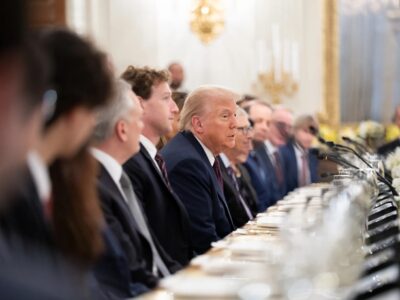
 It’s hard not to take personally this week’s overturning of the Biden Administration’s CAFE standards, and their replacement with standards that will, if finalized, reduce the projected average miles per gallon of the fleet from over 50 MPG to 34.5. The Biden standards were among my proudest accomplishments while serving at NHTSA (along with increasing NHTSA’s budget by 50 percent and adopting the strongest safety rule in decades by mandating automated emergency braking including for pedestrians at night). To see all our hard work to protect safety and the environment go up in smoke in less than a year is awful. To hear Trump call our fuel economy rules part of the “greatest scam in American history, the Green New Scam,” is a badge of honor, I guess, but still despicable. And to see Ted Cruz standing behind Trump in the Oval Office brought back the horror of his attacks on me when I was nominated to lead NHTSA.
But I’m also trying to take a hard-headed look at the actual proposal. And in my quick perusal of the proposed rule, it’s clear that the so-called “SAFE 3” standards are on very shaky legal ground and a complete assault on electric vehicles in general and EV companies in particular.
Here are a few high/lowlights:
- The proposed rule is a wholesale attack not just on electric vehicles but on those companies — Tesla, Rivian, Lucid — that have succeeded in part because of the credit trading that previous CAFE rulemakings allowed. Under the new scheme, all credit trading across companies is disallowed effective for Model Year 2028. Companies can still trade credits across their own fleets but not with other manufacturers. That is a huge blow to Tesla and others whose success has depended to a significant extent on selling credits to conventional manufacturers who failed to meet the standards.
- The proposed rule attempts to set new standards for Model Years 2022-31. Yet the statute under which NHTSA operates requires the agency to provide 18 months lead time before the beginning of a model year for a standard to take effect. It is, of course, long past MYs 2022, 2023, 2024 and 2025. And 2026 MY vehicles are already available. Any final rule won’t provide manufacturers with 18 months lead time for 2027 either. The agency includes a convoluted explanation for why it can lower but not increase standards without providing 18 months lead time even though the statute says no such thing. The statute does allow the agency to amend standards without the lead time but the proposed rule is hardly an amendment: it is a wholesale repudiation of the Biden standards. And NHTSA acknowledges in the proposal that it is changing its own legal interpretation of the statute over its past interpretations: it previously interpreted the ability to amend to be limited to the beginning of the model year being altered. This attempt strikes me as a major legal weakness of the rule making but is the only way NHTSA can gut six years of standards. Under the Supreme Court’s decision that overturned Chevron, Loper Bright v Raimondo, the agency’s new interpretation should be entitled to no deference. Indeed because the previous interpretation is longstanding and adopted close to the time the statute was adopted, the agency’s prior interpretation is likely to be accorded great weight.
- Similarly, the governing statute authorizes NHTSA to set standards for at least 1 but not more than 5 model years. By my math, rolling back standards for Model Years 2022-2031 is setting standards for 10 years. The statutory language couldn’t be clearer. Again, no deference to the agency and the plain language of the statute should apply.
- Another legal weakness is that the entire proposal rests on excluding electric vehicles under what is known in CAFE-speak as the “baseline.” The baseline models the world as it exists in the absence of CAFE standards; the agency then sets standards that do not take electric vehicles into account (as required by the statute). The first Trump Administration did this and so did the Biden Administration. Trump II deviates from this by excluding EVs from the baseline even though they exist in the real world. Again, the agency has to try to explain why it is changing its legal interpretation of the statute; again, the agency should not receive any deference in a legal challenge to its decision to exclude EVs from the baseline. The reason for excluding EVS is, of course, to weaken the standards.
- The statute requires NHTSA to set standards that are “maximum feasible.” It’s hard to imagine how a significant rollback of even Trump’s own standards (the standards for MY 2022 and 2023 were set by the first Trump Administration) are maximum feasible. The Loper Bright doctrinal change may come back to bite the Trump Administration here too.
- The statute that governs the CAFE standards required the agency to set standards that would achieve 35 MPG for the combined passenger and non-passenger vehicles by 2020. The new Trump proposal says its regulations would achieve 34.5 MPG by 2030. Again, seems like a significant legal weakness and more evidence that the standards are not maximum feasible.
A couple of other quick observations. NHTSA acknowledges in its proposal that its new standards would increase air pollution both from upstream emissions due to increased fuel production and from more pollution from increased fuel consumption. The agency thinks, however, that perhaps it shouldn’t take the environmental effects of its standards into account in setting the standards. NHTSA is taking comment on this question. Why consider issues like whether fuel economy standards increase air pollution, after all?
I haven’t yet looked at the cost-benefit analysis and I suspect that, as with the proposed rules from Trump 1, there will be plenty of problematic assumptions and flat-out errors. The agency will be taking comments and holding a virtual public hearing sometime in the near future. It’s clear from even a quick read that there will be plenty to say about this awful proposal.
About Ann

Ann Carlson is the Shirley Shapiro Professor of Environmental Law as well as Faculty Director of the Emmett Institute on Climate Change and the Environment at UCLA School…
READ more
Reader Comments