



























































Eliminating the Endangerment Finding Doesn’t Mean the Government Can’t Regulate Cars and Trucks
The Clean Air Act and Energy Independence and Security Act still give EPA, California, and NHTSA significant power.
 The withdrawal of EPA’s endangerment finding is bad in many respects that I don’t want to downplay and that many have already focused on. But it’s also worth stressing that, should a president take office in 2029 who cares about climate and air pollution from cars and trucks, the federal government — and California — will continue to have a number of strong options to regulate.
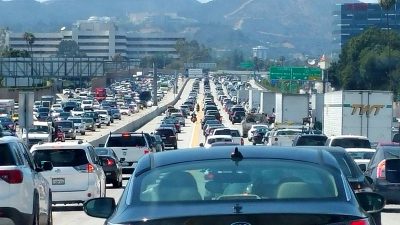
Pollution from cars and trucks doesn’t only cause or contribute to climate change, of course. Across the country, vehicles are a huge source — almost half – of one of the major sources that cause ozone. Vehicles are also a significant contributor to fine particulate matter — one of the deadliest air pollutants. In California transportation is the single largest contributor to air pollution. In Southern California — still the nation’s most ozone-polluted basin — 80 percent of nitrogen oxides come from the transportation sector. Heavy duty trucks are the biggest source. Southern California can’t come into compliance with federal pollution standards without huge cuts in pollution from cars, trucks and other sources like trains and ships.
What’s the best way to cut conventional pollution from vehicles? Making them zero emission, by running on something other than fossil fuels. So even without the endangerment finding, a new president can use the Clean Air Act to push for much cleaner vehicles, vehicles that are powered by electricity or hydrogen. A new president can also grant California authority to regulate conventional pollution from cars and trucks by shifting to cleaner fuels. In fact, California could seek a waiver from the current Administration to issue tough new conventional pollution standards — without attempting to cut greenhouse gases – and as a legal matter it would be very difficult for the Environmental Protection Agency to turn that waiver down (though the state would have to avoid issuing standards “substantially similar to” the waiver programs Congress overturned through its questionable use of the Congressional Review Act). An ancillary benefit is that standards that push toward zero emission cars and trucks would also emit far fewer greenhouse gases.
EPA isn’t the only agency with important authority to regulate cars and trucks. The National Highway Traffic Safety Administration (NHTSA), of course, has statutory authority to regulate fuel economy and fuel efficiency from cars and trucks. Even though the Trump Administration is proposing to decimate the Biden Administration’s fuel economy (CAFE) rules for cars and light trucks, the authority to regulate fuel economy remains in place. A new administration can use this authority to issue new standards — though the authority has been weakened with the elimination of penalties for failure to comply. A new Congress should reinstate those penalties and eliminate some restrictions in the CAFE statute, including the prohibition on considering alternative fuel vehicles in setting standards, to make the statute more effective. But perhaps less well known is how strong NHTSA’s authority is to regulate the fuel efficiency of heavy duty trucks. That authority is much less restrictive than NHTSA’s CAFE authority and even if EPA can’t regulate GHGs from heavy duty trucks, NHTSA can regulate fuel efficiency. Of course the more fuel efficient a truck is, the fewer greenhouse gases it emits,.
These aren’t the only sources of regulatory power that remain. Many states, for example, have strong climate laws in place. But in the wake of the terrible news that EPA has walked away from regulating greenhouse gases by withdrawing the endangerment finding, it’s important to remember that the federal government retains significant power to address pollution in ways that will also attack climate change.


About Ann

Ann Carlson is the Shirley Shapiro Professor of Environmental Law as well as Faculty Director of the Emmett Institute on Climate Change and the Environment at UCLA School…
READ more
Reader Comments