




















































A Chance to Rebuild Better
AB 2385 by Assemblymember Cottie Petrie-Norris would help local governments spring into action after disasters.

Fourteen months after the Palisades and Eaton fires, many Angelenos remain uncertain if they will ever return to the neighborhoods they call home and policymakers are still grappling with how to help rebuild.
Back in September, I wrote about a drafting wrinkle in state law that’s standing in the way of local governments’ ability to recover well from the next big disaster event they experience. As an Angeleno and through my work supporting the Blue Ribbon Commission on Climate Action and Fire-Safe Recovery, I’ve seen firsthand the consequences when there’s no accountable governance structure ready and able to lead in the wake of a major disaster event.
Hopefully, local governments will soon have the power to change that. Last week, Assemblymember Cottie Petrie-Norris introduced AB 2385, a bill that fixes the drafting issue with the Disaster Recovery Reconstruction Act (DRRA) of 1986, the main tool local governments could use to set up post-disaster recovery governance structures. Instead of referencing the now-defunct community redevelopment agencies, the law would specifically enumerate the powers a disaster recovery agency could have—a list of powers drawn from past disaster recovery experience to reflect capacity research shows will support the most effective, efficient rebuilding process. The bill also clarifies that locals can take advantage of pre-existing governance structures, like enhanced infrastructure financing districts and climate resilience districts, to aid in recovery. Building on existing capacity rather than reinventing the wheel will empower local governments to act swiftly once disaster strikes.
And the bill would provide local governments with resources to help take advantage of this new tool: It directs the Governor’s Office of Land Use and Climate Innovation (LCI) to coordinate with the Office of Emergency Services (OES) and regional councils of government to provide guidance for locals on exactly how to implement the bill, including model ordinances locals can tailor to fit their needs. This recognition that one size doesn’t fit all is important. What’s right for LA and what’s right for Paradise might differ dramatically. LCI and OES are tasked with thinking through these differences and helping locals choose the path that will work best for them.
Finally, the bill acknowledges that recovering well from disaster is, at heart, an exercise in holistic planning. For this reason, locals are required to harmonize their general plans with disaster recovery plans. Beginning the exercise of envisioning what a well-recovered community looks like—an economically-thriving, safe, insurable, resilient space—before disaster actually struck would have been of immeasurable value here in Los Angeles. Over a year after the January 2025 fires, Los Angeles is still struggling with a lack of local government accountability and an uneven recovery process largely driven by individual access to resources. Under enormous pressure to respond to the disaster itself and community needs post-disaster, local government officials are left building the ship as they sail it, in fits and starts. Pre-disaster recovery planning could have avoided that outcome. AB 2385 gives local governments the tools, and the nudge, they need to start doing this work before they are consumed by the immediate needs that drive emergency response.
Almost 40 years ago, the California Legislature recognized that in our disaster-prone state, planning ahead to recover from disaster is not just good policy—it’s a necessity. But for the last 15 years, local governments have not had a clear pathway to think ahead to holistic recovery and create a structure that enables them to achieve that vision as quickly as possible after a disaster event. AB 2385 could fix that. And having a recovery plan in place could make all the difference when the state’s next big disaster hits.


About Julia
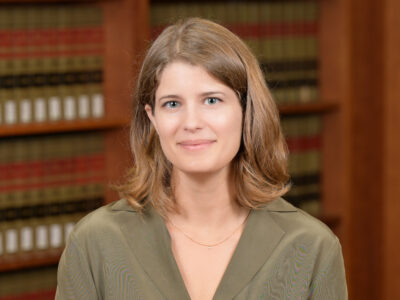
Julia Stein is Supervising Attorney for the Frank G. Wells Environmental Law Clinic, and Project Director for the Emmett Institute on Climate Change and the Environment a…
READ more
Reader Comments