

























































An Inconvenient Truth Two Decades Later
The Drain is a weekly roundup of environmental and climate news from Legal Planet.

Twenty years ago this month, I walked out of a movie theater, dumfounded, after seeing “An Inconvenient Truth,” the Al Gore documentary that would go on to frame the conversation around climate change for years. I remember feeling riveted and freaked-out. I’d read enough Adbusters in college to have a decent critique of capitalism, but Gore’s sense of moral outrage at the fossil fuel industry — and Republican strategists — for deceiving the public about the scientific consensus served as a real wake-up call. It was one of those rare moments when you walk home thinking, “What do we do about this?”
A few weeks ago, I saw Al Gore talk about the film ahead of its 20th anniversary. He was in town for the Sustainability in Entertainment Honors event, timed to The Hollywood Reporter‘s annual Sustainability Issue. Gore was the keynote, in conversation with actor Bradley Whitford of the West Wing.
“I’d been developing a slideshow,” Gore said. “I started when I was back in the VP gig using Kodak carousels and the slides – you’d have to put them right side up and not get them backward.” Hollywood producers saw Gore help promote the 2004 sci-fi thriller “The Day After Tomorrow” (the Gulf Stream shuts down creating an Ice Age) and they convinced him to transform his traveling slideshow into a non-fiction version of a climate warning. The film’s format doesn’t seem so unique now, after decades of TED Talks, but at the time it stood out. Gore on stage in a suit in front of an applauding audience explaining charts about carbon dioxide levels in the atmosphere alongside photos of disappearing glaciers and news footage of Hurricane Katrina and other disasters.

“An Inconvenient Truth” found a big audience. The Paramount Classics film made about $50 million globally at the box office — unusual for any documentary. It grabbed mainstream attention for climate science in a way that scientists could not or would not. It launched a generation of climate activists. Gore founded The Climate Reality Project which trained hundreds of people to present the information to their communities. Exit polling found the message resonated with conservative viewers. “This is really not a political issue so much as a moral issue,” Gore says in the film. But the movie was followed by a dramatic escalation of industry misinformation and politicization. After all, it was the first time a famous Democrat stood up and spoke loudly about climate change.
Does the science stand up? Environmental scientist Dana Nuccitelli revisited the film for Yale Climate Connections and found “that its scientific overview was imperfect but predominantly accurate.” Risks were exaggerated—some of the glaciers aren’t melting as fast as feared—but the science was in the ballpark, Nuccitelli says. At that time, the atmospheric concentration of carbon dioxide had surpassed 380 parts per million and Gore was warning that within 50 years we would approach 500 parts per million. Well, CO2 levels just averaged about 431 parts per million last month, according to National Oceanic and Atmospheric Administration’s Mauna Loa Observatory in Hawaii.
Gore pioneered the uncomfortable message that our current energy system was causing irreparable harm. And at that time, it was indeed inconvenient. In 2006 when the film came out, there were just 7 gigawatts of solar power worldwide. The idea that we should power the world on wind and solar was more than inconvenient, it was nearly inconceivable. Today “there are 2,930 gigawatts — a 500% increase,” Gore said. When it comes to new electricity generation even Texas is installing mostly solar and wind, he noted.

But it’s been 20 years of two steps forward, one step back. While we’ve made huge technological advancements, we’re not making nearly enough progress cutting climate pollution. Gore told the Hollywood audience that we’re in a “federal climate policy recession” because of Trump and the massive lobbying by fossil fuel interests. “There’s a certain amount of climate hushing that’s going on right now,” he said.
Yes, yes there is. Climate hushing has been the talk of the town this week thanks to an Op Ed making the rounds. “When it comes to climate change, for now, it might be better to say nothing at all,” writes Matt Huber in an essay for the New York Times Opinion pages. Huber argues that some progressive Democrats on the campaign trail are no longer talking about climate and that this shift is good and that it “marks the end of an era,” that began when “An Inconvenient Truth” made the climate crisis go mainstream.
Many science and policy folks did not take kindly to his argument, but my favorite response has been the 10-part thread by Sen. Sheldon Whitehouse for why Democrats should stand up and talk about climate loudly, like Gore did 20 years ago.
The truth is that in 2026, the renewable energy transition is an increasingly convenient truth. When America’s affordability crisis is made worse by a fossil energy crisis, it’s not a hard pivot for a decent politician to talk about the two issues together. Does it mean that a Democrat in Maine or Montana should make climate the main issue of the campaign? No. But surely, they can talk about the home insurance meltdown without having to avoid the obvious connection to extreme weather. Just like they can rail against the cost of electricity without having to avoid the obvious connection to the federal government’s war on cheap energy. After all, if you have to go silent on something so obvious—and no longer all that inconvenient—are you still telling the truth?
Our song this week is “I Need to Wake Up” by Melissa Etheridge, the song from Gore’s film. I’ll be honest, it’s not my favorite on the ever-growing Climate Playlist but it’s probably the only Oscar-winning song on the list. The playlist is now 190+ songs and 14 hours of music (on Spotify and Apple Music).
More Climate Politics
Tom Steyer is perfectly comfortable merging a message of affordability with climate in his campaign to become California’s governor. He spoke with David Gelles of the NYT.
With federal climate policy dormant, others are focused on post-2028: “The next U.S. administration would do well not only to learn from previous policy regimes, but also to reconsider the very concept of ‘climate policy,’ writes Daniel Propp at Foreign Policy. “the next administration should resist the urge to roll out splashy, top-down programs, instead allowing climate considerations to quietly permeate the regular operations of federal agencies,” he writes.
Trump Administration

Trump and his entourage are in Beijing starting today and climate will not be on the agenda, though rare earth minerals, trade, and AI will dominate.
In an interview Monday morning with CBS News, Trump proposed suspending the federal gas tax “for a period of time.” Deeming it a “great idea,” he said “when gas goes down, we’ll let it phase back in.” He would need Congress, but you can expect this to gather some momentum. The gas tax pays for roads and bridges, and a 4-month suspension could cost $11 billion, Marketplace reports.
FEMA is not working. A White House task force called for speeding up aid and responding to fewer disasters, but some of its ideas would require action by Congress to become reality, NYT’s Scott Dance reports.
Trump just appointed the fourth FEMA chief in this administration, E&E reports.
Gov. Newsom announced Friday that he has requested a yearlong extension of FEMA funding for L.A. fire survivors. Without the extension, the money will run out July 9. Now the decision on FEMA support lies with the federal government, Erin Stone reports for LAist.
The Trump Administration plans to repeal a Biden-era rule that allowed public lands to be leased for conservation purposes and which protected millions of acres from both industrial development and the effects of climate change, Maxine Joselow reports.
War on Iran
A large oil slick is spreading in the Persian Gulf off Kharg Island, Iran’s primary crude oil export terminal, satellite images show. The presumed oil spill had spread over an area of more than 20 square miles as of last week and appeared to be as big as 3,000 barrels, the New York Times reports.
Big Oil is reaping the benefits. First-quarter 2026 earnings for Exxon Mobil, Chevron, BP, and TotalEnergies beat analyst estimates, driven by elevated oil and gas prices.
Especially so for Shell, which adjusted profit soared 24 percent, to $6.92 billion, in the first three months of the year from the same time last year, higher than analysts expected.
This war profiteering has renewed calls for a windfall tax on oil profits, similar to the response when oil companies benefited from higher energy prices after Russia’s invasion of Ukraine in 2022.
Who is it hurting? Your local farmer’s market. Andrew Campa reports for the LA Times. Expect to see higher prices and surcharges on credit card purchases next time you go.
An overwhelming majority of America’s farmers who responded to a nationwide survey by the American Farm Bureau Federation say they cannot afford to purchase enough fertilizer to get them through the year. The percentage who pre-purchased fertilizer varies significantly by region.
Energy
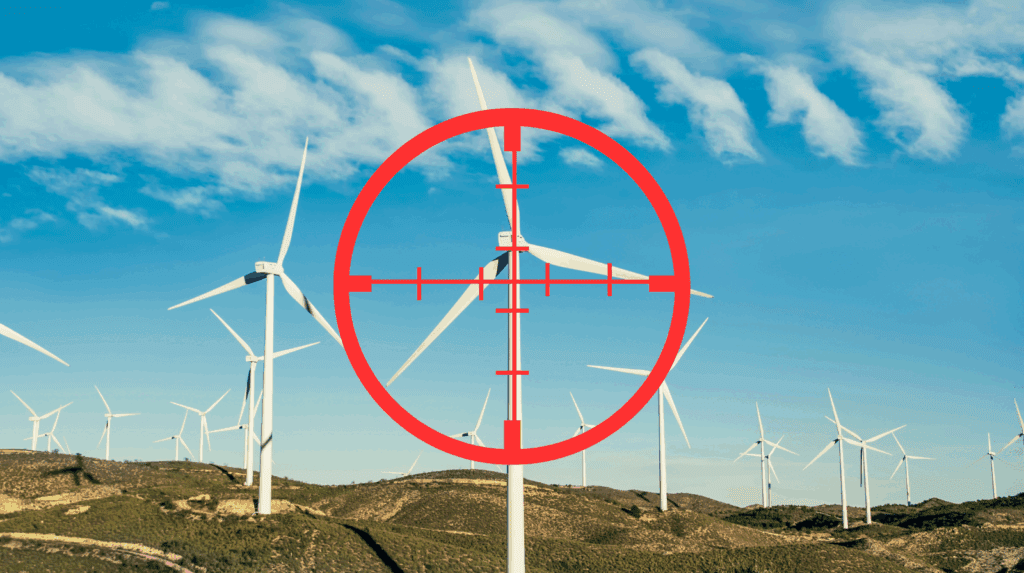
The Defense Department has stopped once-routine reviews of wind energy developments, jeopardizing more than 250 onshore wind projects, Canary Media’s Kathryn Krawczyk reports. “Trump is keeping gigawatts of clean and cost-effective power off the grid at a time when the nation desperately needs more of it to power data centers, factories, and electric appliances coming online.”
Those blocked projects constitute, the Financial Times says, about 30 gigawatts of cheap clean energy at a time when we desperately need it. “There is no drone on earth that can shoot the breeze,” quips Bill McKibben in a newsletter rant. “Our job is to change our nation’s politics so the wind can blow free.”
In Northern California, aging wind turbines are being updated and it’s a great example of “repowering” wind farms to dramatically increase wind capacity without needing new land, Justin Gerdes writes at Quitting Carbon, who took a tour in Altamont Pass. “Aging wind farms across the U.S. are ripe for repowering.”
At least 20 planned data center projects were nixed after local pushback during just the first 3 months of 2026 – a record, according to Robinson Meyer at Heatmap News. “The cancellations reveal the rapidly expanding backlash to data center construction has not yet peaked.”
In Mississippi, Elon Musk’s XAI is still at it despite the ongoing lawsuit. The company added 19 natural gas turbines to its second data center campus in Southhaven over the past two months, Molly Taft reports citing internal emails seen by WIRED. Taft previously found that new gas projects linked to just 11 data center campuses could create more greenhouse gases than entire countries.
This week, the EPA under Lee Zeldin proposed letting data center developers start building before they obtain required federal air permits by changing the definition of “Begin actual construction.”
In Ohio, the final tally in a local referendum on a renewable energy ban was 53% “yes” votes to keep the ban versus 47% “no” votes to axe it. “Confusing ballot language could be the reason an Ohio county upheld that ban on renewable energy last week,” Canary Media says.
In New York City, developer AvalonBay saved big and cut pollution by outfitting apartments with tech that runs HVAC equipment more efficiently, Jeff St. John reports. “Now the firm is scaling the strategy nationwide.”
One area where hyperlocal opposition to energy projects has had little effect? Brownsville, Texas, where political and business leaders have courted LNG build-out. The Texas Observer’s Gaige Davila has been reporting on this in a 2-part series. “Now emails and documents obtained by the Observer reveal how this posture may have been influenced by an extensive and yearslong lobbying effort by NextDecade, with Cameron County and the city being in regular contact with the company as the firm worked through various legal setbacks.”
Electricity prices continued to climb higher in April, according to Heatmap and MIT’s newly launched Electricity Price Hub. Prices in were 6.7% higher, on average, than the same month the previous year.
Electric Vehicles
China exported more EVs and plug-in vehicles than gas or diesel cars for the first time in April, the Wall Street Journal reports. China exported 769,000 automobiles in April, with new-energy vehicles, a term that includes EVs and plug-in hybrids, accounting for 52.7% of total exports, according to the China Passenger Car Association.
Congress is terrified that Trump will open the U.S. to Chinese vehicles, POLITICO reports.
In the UK, used EV sales grew by almost a third in three months to reach a record high, Business Green reports.
Toyota is accelerating EV sales “in a sign that the hybrid pioneer is facing up to the threat posed by such cars — especially those made by Chinese rivals,” FT’s Harry Dempsey reports. Toyota, the world’s biggest automaker, more than doubled EV sales in the first three months of 2026 to a record 79,002 compared with the same period last year.
Forests
Good news for tropical forests: Global tree loss fell 14 percent in 2025 from the year before, according to a report by World Resources Institute. That decline was mostly attributed to progress in protecting tropical forests. Tropical rainforest loss fell 36% in 2025 from the record high of 2024, WRI finds.
These gains were offset, however, by destruction from wildfires, which consumed about 26 million acres, an area almost as large as Cuba, write Sachi Kitajima Mulkey and Harry Stevens for the NYT.
Bad news is that if deforestation and global warming continue unchecked, the Amazon rainforest could hit a tipping point. A study, published in the journal Nature, provides new insight into said tipping point at which an incremental but profound and irreversible ecosystem transformation begins.
My UCLA colleagues at the Governors’ Climate and Forests Task Force are gathering next week in Caquetá, Colombia for their 16th annual meeting. The organization of 45 subnational governments is continuing to pioneer a “New Forest Economy” that protects intact forests, restores degraded lands, and creates just and sustainable jobs and economic opportunities across the tropics.
Plastics
From February to now, plastics prices have reached multi-year highs, fundamentally reshaping global markets, according to Plastics Today. “Polymer markets have entered uncharted territory where geopolitical disruption, not traditional supply-and-demand fundamentals, now determines pricing across the global petrochemical value chain.”
Producers such as Dow Chemical have announced price increases as high as 30% and 40%. Recycled plastic could finally have its day.
The prices of recycled plastics, which are made from post-consumer, industrial and agricultural plastic waste “have remained relatively stable throughout this period,” Susanne Rust reports for LAT.
A new California law (SB 343) will ban companies from using the old recycle symbol if their products aren’t commonly recycled, Michael Coren writes in his Wash Post column. It creates a two-part test.
Meanwhile, California’s landmark plastic recycling law (SB 54 passed in 2022) is “heading for a courtroom showdown,” POLITICO reports. Environmental groups helped pass the law but Gov. Newsom ordered regulators to rewrite draft implementation rules to lower business costs last year, and now those same enviro groups are preparing to sue. NRDC and Californians Against Waste announced Wednesday that they intend to challenge the state’s newly finalized recycling rules.
Los Angeles

Mayor Karen Bass quietly eliminated a city climate team, Sammy Roth reports with a scoop. “Marta Segura — who led the climate emergency office since its inception in 2021 and also served as L.A.’s chief heat officer — was quietly fired by the Bass administration last month, with no replacement. Meanwhile, the city hasn’t been hiring to fill a growing list of vacancies at the climate office. With Segura gone, there’s just one staffer left, down from six.” Bass’ office wouldn’t comment.
Roth did talk with Bass’ main Democratic challenger Nithya Raman in another exclusive about her climate plans, and he got feedback from some of my UCLA colleagues on the competing climate proposals. He concludes “if you’re a climate voter deciding what to do in the June 2 primary, I’m confident in saying that Raman is a better choice than the incumbent.”
If you’re a climate voter deciding what to do in the June 2 primary, I’m confident in saying that Sammy Roth is performing a service worth supporting.
In transportation news, much of the city was “riding the D” on Friday when the new extension of the Metro D line opened to much fanfare. The four-mile three-station D Line extension section 1 is carrying Angelenos from downtown to Koreatown to Beverly Hills and LACMA in 20 minutes, Streetsblog LA reports.
Alissa Walker declared it “D Day” and that “driving just got even dumber” when it comes to this particularly clogged mid-city artery.
Streetsblog LA is even holding a “D Line Dash” in which contestants will bike, train, and drive to see which is the fastest mode of transportation.
By fall 2027, the line will stretch nine miles west, ending in Westwood near the UCLA campus, the LA Times notes.
The city of LA is facing a crisis in street repaving, according to a new study by Streets for All. “Without a change in approach, LA’s current average Pavement Condition Index of 71 is on track to fall to 47 by 2035. At that point a majority of streets in the City will be in a failed state and will cost $15 billion to fix.”
Scrap metal demolition is nasty business and it happens near homes, schools, and businesses in LA’s San Fernando Valley. Turns out the City of Los Angeles’s regulatory tools exist to protect communities from metal recycling hazards—but they’re rarely invoked. My UCLA Emmett Institute colleague Brennon Mendez and UCLA Law student Kate Inman investigated the problem for a law clinic. Great tips here if you’re a reporter covering Southern California environmental justice…
California
The Bay Area Air District’s board last week considered softening the first-in-the-nation rules, which are set to take effect Jan. 1, to allow exemptions for low-income residents and for people who would need significant, expensive upgrades to their electrical breaker panels or structural changes in their homes to comply, Paul Rogers reports for the Mercury News. More than 100 people signed up to comment Wednesday and a decision is expected in the fall, NBC reports.
A fire broke out on an inactive oil platform along Southern California’s coast early Monday, briefly endangering more than two dozen workers aboard the offshore rig, LAT’s Grace Toohey reports.
Reminder: Tom Steyer and Katie Porter both answered “no” to a recent hypothetical debate question about increasing oil production in California. Xavier Becerra and the other candidates all answered yes.
ICYMI: Ezra Klein hosted a candidate forum with Steyer, Porter, Becerra et al that was entirely focused on how to build housing in California.
An entrepreneur together with a former mayor of Malibu appeared on Shark Tank to pitch a new wildfire protection system “to literally lower an entire home into a subterranean vault when a wildfire approaches,” Noah Haggerty reports for Boiling Point.
Reminder #2: there’s easier tech out there like clearing brush from homes LOL. If the state finalizes the Zone Zero rules, those crush requirements could take effect as early as July 7. “Residents will have up to five years to comply with the stricter Safety Zone requirements … They will have three years to comply with the plant spacing requirements for the rest of Zone Zero. New construction will have to comply immediately.”
Media News
ProPublica announced yesterday the launch of a new reporting team in California. This is the sixth regional investigative hub and the nonprofit’s latest move in a multiyear expansion that has made ProPublica larger than at any point in its 18-year history. Expect coverage of technology, climate change, immigration, homelessness, affordable housing and water from 4 reporters and a reporting fellow. Charles Ornstein, ProPublica’s managing editor of local initiatives, was a former reporter for the Los Angeles Times.
Drilled Media launched a new season of its investigative narrative podcast. “Carbon Cowboys” is out in both English and Portuguese thanks to a partnership with Intercept Brasil, Alice de Souza and Felipe Sabrina. Drilled’s Amy Westervelt describes it as the story of “the ethanol kingpin of Iowa who became the king of corn in Brazil.”
CalMatters is hiring an Indigenous Affairs reports. The nonprofit is looking for “an ambitious reporter to cover one of the most important — and underreported — communities in California: the state’s more than 100 federally recognized Native American tribes.”



About Evan

Evan George is Director of Communications for the UCLA Emmett Institute, a leading environmental law center. He also writes The Drain, a weekly roundup of environmental a…
READ more
Reader Comments