


















































Legislating Sunlight Reflection in Latin America and the Caribbean
UCLA’s ESI Project co-hosted a science-policy dialogue with Latin American and Caribbean parliamentarians.
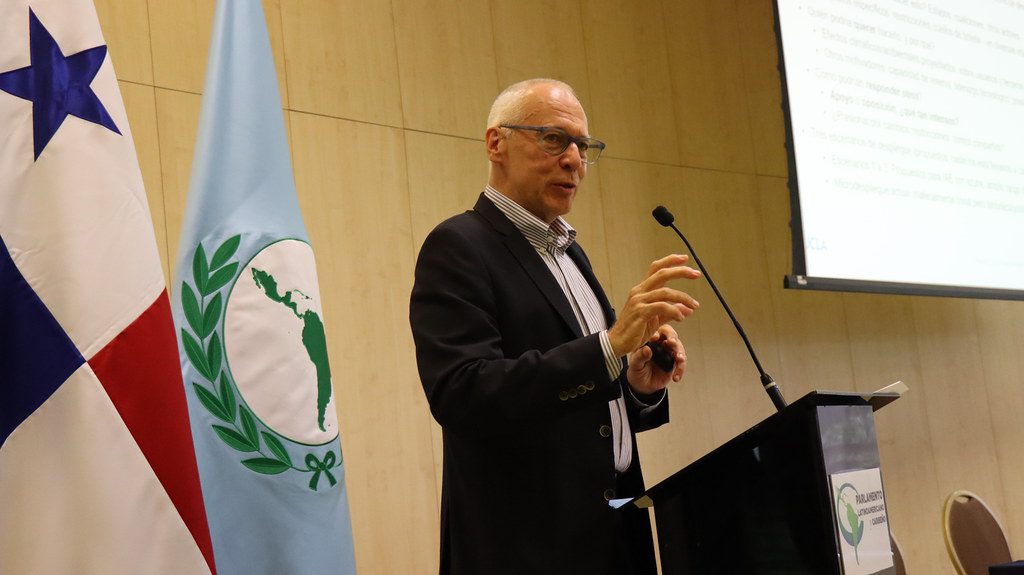
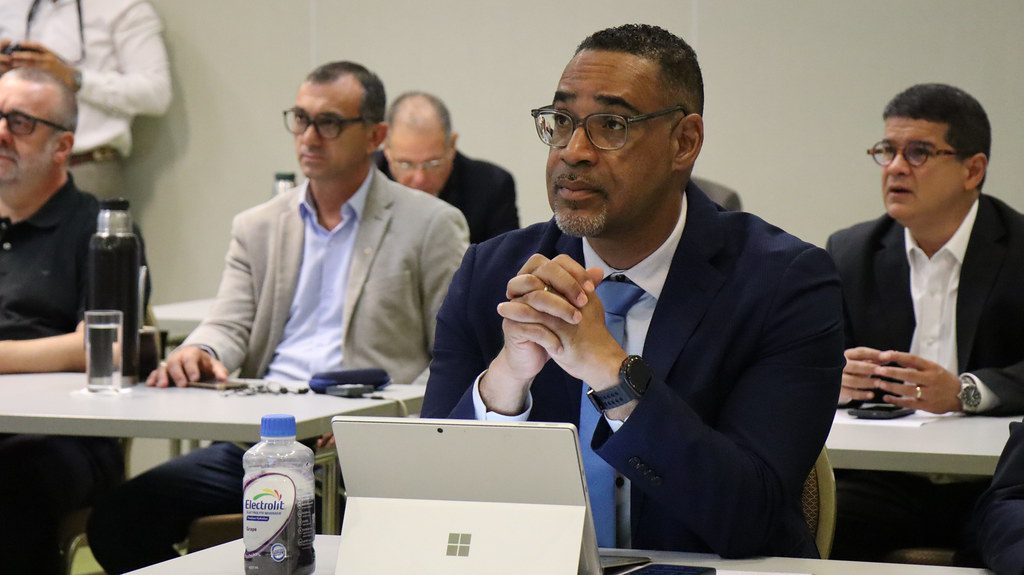
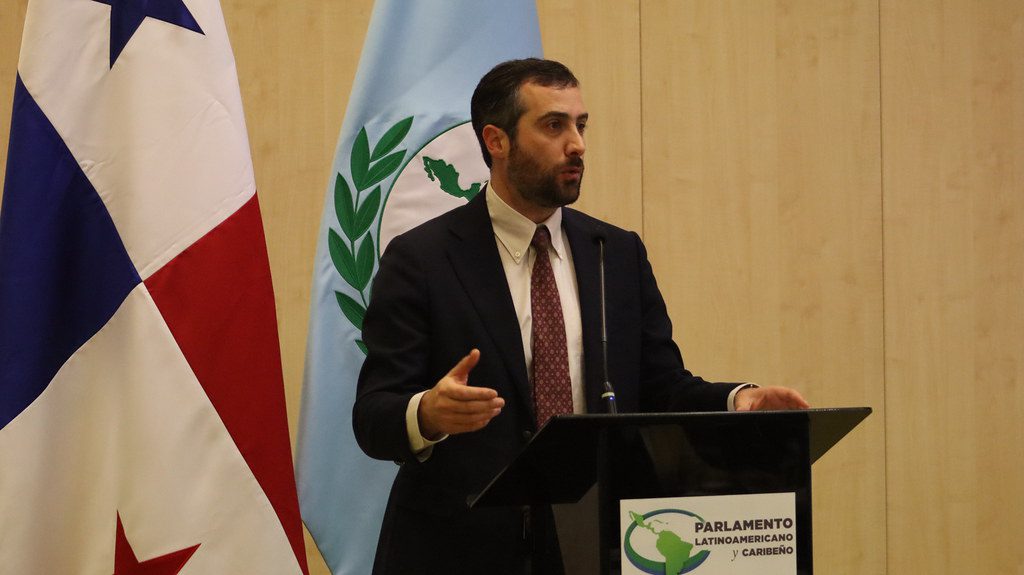
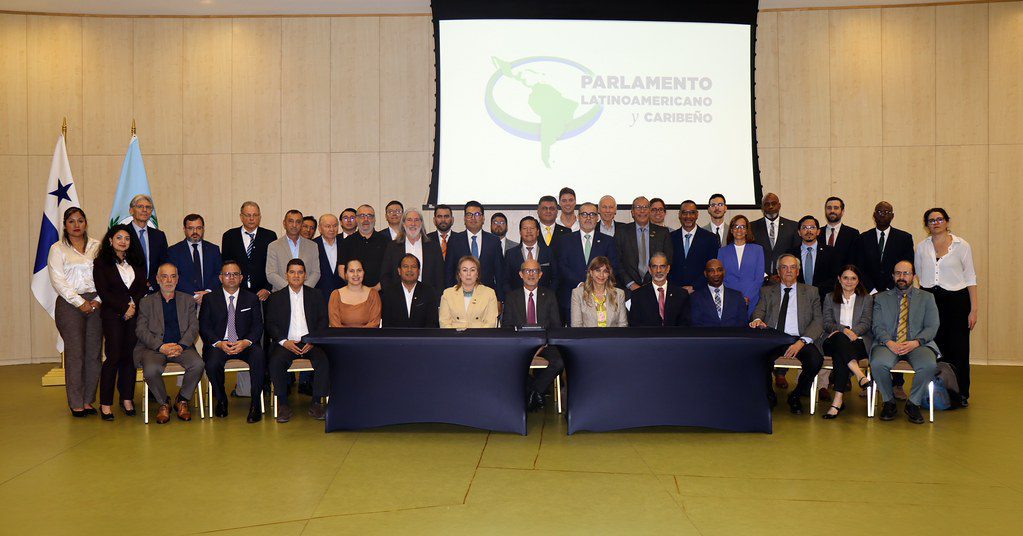
In early June, UCLA’s ESI Project, in partnership with the Degrees Initiative, had the exciting opportunity to address the Parliament of Latin America and the Caribbean (PARLATINO), on the emerging issue of Earth system interventions, notably sunlight reflection or SRM. As an interparliamentary body with broad reach, PARLATINO is a forum for legislators from the region’s 23 countries to discuss topics of mutual concern and collaborate on projects like developing model laws.
In a follow-up to the more than three-hour briefing, a PARLATINO committee adopted a formal declaration recognizing the importance of SRM for the region. PARLATINO, acknowledging the escalating impacts of climate change and expressing notes of caution on the risks and uncertainties of sunlight reflection, indicated that all decisions be based on scientific knowledge and multilateral governance.
The declaration tasked the Environment and Tourism Commission of PARLATINO with following up on the issue, organizing expert forums, and developing a proposed Regional Framework Law on Climate Change Governance with specific provisions on geoengineering. A Framework Law is a model regional instrument that would set shared general principles and governance obligations, which national parliaments could then use as a basis to initiate legislative debate at the domestic level.
Limited science-to-policy channels
The lack of reliable scientific information for policymakers and the limited channels through which science and policy engage are concerns at the heart of discussions of Earth system interventions (ESIs). ESIs are proposed large-scale interventions to stabilize the climate and major Earth systems—like sunlight reflection methods (SRM), glacier stabilization, and others—and they are gaining more attention.
The pressure driving this attention is building, not only from the ongoing (and accelerating) heating up of the planet, but also developments in SRM in particular, with increased public research funding, a well-funded private venture, a quickening stream of reports from national and intergovernmental institutions, and a security narrative that some fear has a runaway logic.
Because many of these interventions would affect every country, governments need to be better prepared to govern on a forward-looking, rather than reactive, basis. Furthermore, in this morass, Global South countries have an opportunity not only to catch up to the latest information and developments, but to shape the landscape of global discussions. A prerequisite for both is to seek to build their own capacity.
Considerations for Law on SRM in Latin America and the Caribbean
Latin American and Caribbean legislators are well positioned to help their countries build scientific and governance capacity on sunlight reflection. Though their powers vary across legal systems, lawmakers can typically establish governments institutions or offices, assign responsibility to specific agencies or personnel, allocate funding, and help shape foreign policy. Though Latin American and Caribbean legislators face constraints across these dimensions, they can still take steps to build their countries’ capacity for science and governance on SRM. They should consider the following in the context of their overall climate change policies and climate risk management.
Not every country may have the capacity or need to address all of the following areas, but coordinated action at the regional level and creating spaces for peer-to-peer learning can provide support for countries with less capacity, underscoring the value of forums like PARLATINO.
Definition and scope:
Misinformation abounds in conversations on sunlight reflection. People learning about it for the first time often ask whether it is currently being used at a large scale (sometimes under the influence of the “chemtrails” conspiracy theory), whether it is the same as cloud seeding, and why it should be considered in the first place. Additionally, broad categories (such as “geoengineering”) often confusingly lump it together with different approaches, such as carbon removal.
By defining sunlight reflection (including stratospheric aerosol injection, marine cloud brightening, and other techniques to manage solar radiation) and distinguishing it from carbon removal, legislators can build their countries’ ability to establish policies that accommodate these very different approaches and their unique profiles of risks and benefits across different emissions scenarios and timescales.
Distinguishing between scientific studies and climate-relevant operational deployment can do the same, by ensuring that policy frameworks are tailored to the impacts of each activity.
Institutionality:
The lack of institutional structure and coherent allocation of responsibilities is a major gap with respect to SRM not just in Latin America and the Caribbean, but around the world. Countries need to find a balance between addressing the lack of institutions dedicated to SRM with avoiding creating more bureaucracy that might needlessly stretch their resources. In essence, they need to figure out how to work with what they have now. The following steps can help to create informed, responsible authorities within governments:
- Identifying which national authority has principal responsibility on this topic, to avoid duplication between agencies and offices.
- Creating formal interagency coordination mechanisms, such as between environmental, scientific, defense, civil aviation, foreign relations, and health agencies and ministries, given the cross-cutting nature of the issue.
- Designating a national focal point for technical or scientific discussions in international bodies and emerging regional mechanisms, both to improve policy coherence and coordination and improve continuity for capacity-building activities.
- Requiring existing national climate assessment processes to include relevant research on the impacts of interventions, to improve policymakers’ awareness of the latest knowledge on domestic impacts.
Supporting research:
A prerequisite for the adoption of good public policy is credible scientific research, which is key for understanding the risks, opportunities, and challenges of sunlight reflection (as well as interventions more broadly). Outdoor experiments, meanwhile, have been points of controversy. National and regional officials will have to decide what role these will play in developing their understanding and capacity. Short of providing funding for or establishing research programs, high leverage opportunities for legislators to improve the environment for relevant research and support their countries’ researchers are:
- Distinguishing between laboratory research, computer modeling, and small- and large-scale outdoor research.
- Defining thresholds for outdoor research that require permission from the government.
- Creating a permitting system for outdoor research activities that do require such permission.
Managing risks of near-term activities:
Where near-term activities are permitted to go forward, a liability and responsibility framework should anticipate scenarios of harm or claims of harm. Such a framework could include:
- Requiring an assessment of risks, including climatic, environmental, and health.
- Requiring a monitoring plan and protocols for halting activities if necessary.
Moving forward
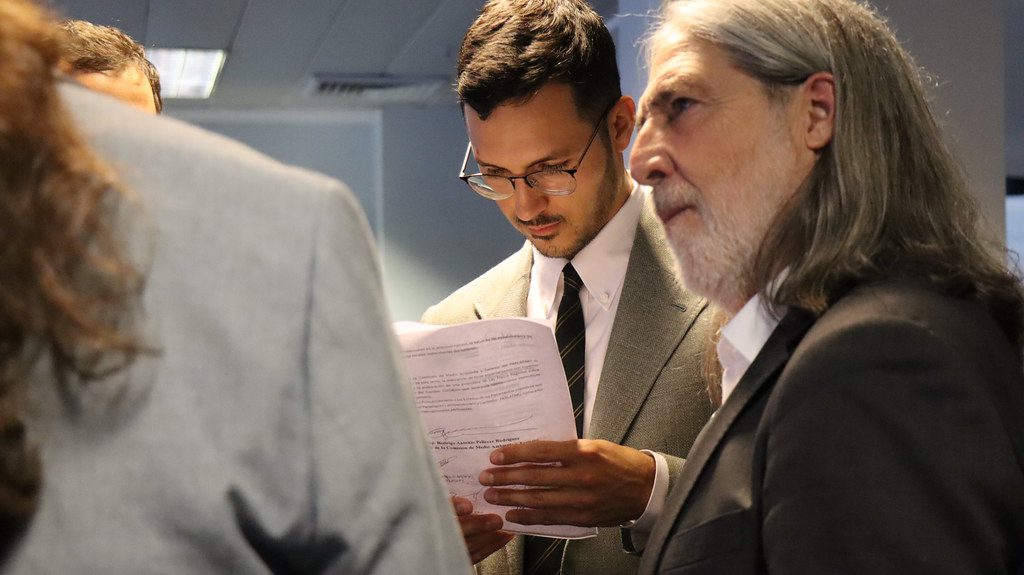
This dialogue was a direct follow-up to our recent meeting in Santiago, Chile, where we held discussions with Latin American policymakers in the Chilean Senate chambers, including participation from PARLATINO. Through creating spaces like the dialogues in Chile and Panama, the ESI Project seeks to empower policymakers to directly confront the governance challenges of Earth system interventions, explore solutions, and, where possible, collaborate on next steps. As a small project addressing vast and important issues, we are grateful to PARLATINO for offering the ESI Project the attention of this influential body of legislators and allowing us to facilitate an essential conversation on an urgent topic that may soon come onto the political agenda.
The large-scale use of sunlight reflection would have global implications. Perhaps for that reason, discussions of SRM have so far focused on the international level. But these bodies are limited in their ability to build governments’ broad capacity across science and policy for ESIs, given that their participants are mostly drawn from countries’ foreign relations ministries and departments. They cannot create governmental institutions in different countries or enact binding regulations in most cases. They are confined by decision-making rules that are blocking progress even on far less controversial topics. And they are being undermined by geopolitical shifts.
Nations are the building blocks of the international order. By building the capacity for national governments directly, in partnership with local and regional partners, perhaps we can create new possibilities for acting on climate change and managing its risks, while taking on the new governance challenges posed by ESIs. Including legislators in ESI discussions would be a start.


About Juan Pablo
Juan Pablo Escudero is a staff attorney at the Emmett Institute on Climate Change and the Environment at UCLA School of Law. His work lies in environmental, land use, and…
READ moreAbout Nico

Nicolás E. Esguerra is Project Director of the Earth System Interventions Law and Policy (ESI) Project at UCLA School of Law's Emmett Institute.…
READ more
Reader Comments