

















































Electricity Affordability Legislative Rundown
Some thoughts on the end of the 2026 California legislative session
It’s officially the end of the California legislative session. While the big end-of-session negotiation over changes to utility wildfire liability fell apart, several notable energy and utility bills made it onto Governor Newsom’s desk. In particular, two bills addressing electricity affordability made it through: SB 1098 (Pérez) and SB 905 (Becker). (Sam Uden at Net-Zero California has an excellent rundown of several other climate and energy bills here.) Notably, several provisions in these bills relate to policies discussed in CLEE’s June report, Powering Down Prices.
SB 1098 (Pérez)
Memorandum and Balancing Accounts (passed): SB 1098 addresses memorandum and balancing accounts for investor owned utilities (IOUs). These are special tracking accounts that allow utilities to recover costs incurred in between rate cases. Sometimes they are appropriate, but these accounts distort some of the inherent cost control incentives that exist in utility ratemaking. (See pages 22-24 of our report to learn more.) SB 1098 seeks to address the proliferation of these accounts in recent years by clearly stating that the general rate case should be the preferred ratemaking process for the CPUC. The bill would also require the CPUC to conduct a review of preexisting tracking accounts in the next general rate case with direction to close those accounts if they are no longer necessary. At the same time, the bill would allow the CPUC discretion to keep memorandum and balancing accounts if they are necessary. It strikes a balance between clearly stating the policy goals of the legislature without being overly prescriptive in how to implement that preference. It will require buy-in and follow-up action from the CPUC and future commissioners, but if the agency follows through on SB 1098’s goal to limit tracking accounts, it will result in more risk shifting to the utilities, which in turn should prompt more cost control measures for operational expenditures. It’s a slow and often hidden process, but it’s the kind of policy change that can make a big difference over time.
SB 905 (Becker)
This was a broad energy and utility vehicle that included a lot of different issues. Some of them dropped out through the process, but a lot of good provisions stayed in.
Alternative Funding for Wildfire Costs (failed): SB 905 had proposed the POWER fund, which would have established a pot of money to be funded by the general fund (or other sources) to pay for wildfire mitigation costs. Finding alternative sources of funding for wildfire mitigation gets those costs out of rates and into a more progressive funding structure. It’s a shame that it fell out, but it is in line with the general sentiment that “there is no money” in the general fund for anything.
Performance-Based Rate Metrics (failed): Another piece of SB 905 that fell out was a proposed process to develop various performance-based ratemaking metrics. Performance-based rates have many advocates; however, they can be tricky if they are not designed well. They also require a lot of information and oversight from the regulator. The abandoned provision from SB 905 could have been helpful in setting a baseline and developing data for future review, so in that sense it is unfortunate it fell away.
Split Return On Equity (passed): The version of SB 905 that did pass included another recommendation from our report about splitting the authorized return on equity (ROE) for certain capital expenditures. This is a somewhat novel approach to ROE in that typically a single ROE is assigned to all capital spending. This authorized return provides the profit on assets that the IOUs build to serve customers. There are several examples in the cost-of-service regulatory model that offer “bonus ROE” for certain projects. Our report argued that if you split the ROE in one direction (up), then you can split it in the other direction (down). The SB 905 bill would direct the CPUC to consider a lower ROE for (1) balancing and memorandum accounts, (2) anything exempted from a reasonableness review (e.g. certain wildfire expenditures or other special accounts required by the legislature), and (3) undergrounding capital costs. The bill’s language gives the CPUC a lot of discretion. This flexibility is good because case law requires an evidentiary record to support any ROE decision; however, it also means that it will require some hearty follow-through from the CPUC to implement the split ROE. If they do split it, it would reduce the cost to ratepayers for certain costs that are particularly low risk for utilities. (If you’re into the ROE argument, take a look at AB 2463 (Petrie-Norris), which would require the CPUC to provide more explanation and transparency in how it determines ROE during cost-of-capital proceedings.)
Alternative Financing for Infrastructure (passed): This provision in SB 905 directs the CPUC to implement a rulemaking to evaluate opportunities for alternative methods of financing capital investments. The bill would require an investigation and report, but no specific action. Nevertheless, this is still a good bill, particularly as we enter an era of increased infrastructure spending, both in California and across the country. Trying to find ways to better finance large infrastructure projects is good policy.
Grid Utilization (passed): The final piece of SB 905 would require utilities to make data available related to distribution grid utilization. Many advocacy groups have been clamoring for increased grid utilization for some time now. It’s not a bad idea. Utility incentives should be more aligned to find cost efficiencies within the existing system, rather than just wanting to build more. This bill would provide more transparency for decisionmakers and the public to see how well the utilities are making use of their existing assets. It could also make it easier for third parties to offer services or products to customers or the utilities that could integrate load growth in more cost effective ways.
It is disappointing that leaders could not find a workable compromise to address wildfire liability reform. The status quo is unsustainable, and it’s costing utility ratepayers a lot of money. Nevertheless, it was an active session for the energy and utility sector with some important bills moving on.

About Travis
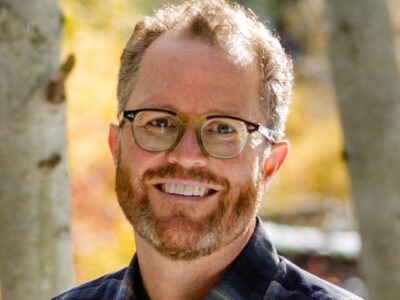
Travis Ritchie is a Climate and Energy Research Fellow at CLEE. He specializes in electric utility rates and regulation. His research focuses on electricity affordability…
READ more
Reader Comments