














































Advice for California’s Next Governor: Energy Transition
Recommendations from CLEE’s policy roadmap for the incoming administration
This is the fourth post in a series outlining climate and environmental policy recommendations for California’s next governor, drawing from a roadmap report that CLEE released last month. Prior posts covered our cross-cutting strategies, ways to break down governance silos, and transportation policy priorities.
California is in the middle of a complex energy transition–due to a combination of ambitious policy and market development, our electric grid is increasingly powered by renewable sources and our vehicle fleet is slowly electrifying, while our buildings and industries still largely consume methane gas. Fossil fuel consumption is declining gradually, production is declining more rapidly, and multiple high-profile refinery closures have made headlines around the state. The goals are clear and may even be in sight, but the pathway to achieve them is not direct.
The mid-transition is the period that energy policy expert Emily Grubert has described as rife with physical and financial risks throughout the grid, fuel supplies, and associated economic sectors and communities. Declining crude production and in-state petroleum demand could accelerate individual refinery closures, resulting in near-term supply shocks and tax revenue shortfalls in host communities. Building electrification without a systematic plan could lead to stranded gas distribution pipelines and an inequitable allocation of the financial burden of maintaining the remaining infrastructure. And while the state has made tremendous progress in shifting away from fossil fuel-powered vehicles and buildings, we are not on track to achieve our near-term or 2045 targets.
Governor-elect Becerra will inherit an energy system and policy apparatus facing a number of transition risks, as well as some opportunities. How can his administration meet the moment? Top-priority strategies from CLEE’s roadmap report include:
- Develop structured, holistic plans for key fossil sectors. Decarbonizing will require the closure of California’s remaining gas power plants, a strategic wind-down of oil refining operations in a handful of regions, and plans for workers who may be displaced by facility closures and communities that may lose jobs and tax revenue. A detailed roadmap for replacing gas plants with renewable energy production and storage; increased mandatory notice prior to refinery closures; a feasible and equitable approach to polluter liability for site remediation; and state-supported community economic transition plans could all play a central role.
- Increase support for battery storage. California leads the nation with over 20,000 MW of battery storage capacity installed, a crucial resource for a grid powered by intermittent renewables. Achieving reliable fossil-free power will require a rapid ramp-up in that capacity, which the Governor can facilitate by supporting increased utility procurement requirements and low-cost financing for innovative companies seeking to develop the battery supply chain in-state.
- Strengthen the state’s carbon dioxide removal strategy. The California Air Resources Board’s 2022 Scoping Plan calls for 75 million tonnes of CO2 removal by 2045 to achieve the state’s carbon neutrality target. The state is not on track to meet this goal, with a slow rollout of the landmark SB 905 regulatory process and litigation pausing the first full-scale carbon capture facility in the state. Carbon removal is multifaceted and controversial, with multiple industrial and nature-based pathways and huge questions around scale and cost. A comprehensive long-term strategy, led by the Governor’s office, could help ensure that state targets, assumptions, regulations, and investments are aligned toward achievable goals.
Other strategies focus on siting and permitting clean energy, supporting offshore wind development, continuing leadership on methane emissions, and catalyzing public-private investment through the state I-Bank. As with many roadmap topics, the energy transition will touch on multiple aspects of state climate and environmental health, economic development, and quality of life. Engaging it head-on will help the incoming administration do its best to protect California and promote prosperity for Californians.
About Ted
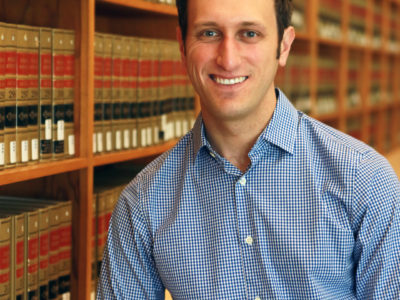
Ted Lamm is CLEE’s Associate Director. In this role, he coordinates CLEE’s Research Fellow program and leads CLEE’s EV Equity Initiative, a multi-year effort to dev…
READ more
Reader Comments