



























































The Compelling Case for Clean Energy Subsidies
There’s a solid economic case for government support
Tax credits and direct subsidies sound like handouts. That’s not true in the case of renewable energy and electric vehicles. No should feel bashful in advocating for these subsidies. They provide very real benefits to society, not just to the shareholders in a few firms. Tax credits and subsidies. like those that were contained in the Inflation Reduction Act, will help us avoid many billions of dollars a year of harm to our environment and health. They will also make America competitive in what are clearly the industries of the future, rather than abandoning the field to China.
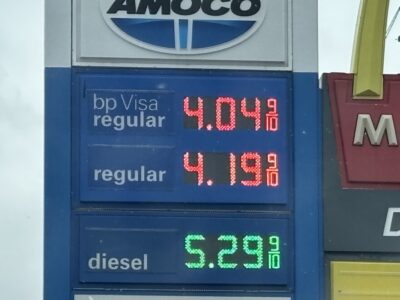
To begin with, clean energy displaces fossil fuels that cause serious harm to the environment and public health. This harm includes climate change, but that’s only the beginning. Coal is particularly harmful. A 2023 study found that “between 1999 and 2020, 460,000 deaths would not have occurred in the absence of emission from the coal power plants.” A government cost-benefit analysis would count that as around four trillion dollars in harm — call it $400 billion per year. Thus, it’s well worth paying for a cleaner technology just to eliminate this one harm. Gas and diesel cars are also notorious sources of air pollution. Natural gas is cleaner, but only relatively, and is a major source of ozone.
Every one of these fuels dumps CO2 into the atmosphere, causing global temperatures to rise. The U.S. is the world’s second largest source of greenhouse gases, and 90% of those greenhouse gases come from our use of fossil fuels. That comes to roughly 4.8 billion tons of carbon emissions a year. With we multiply that by a fairly conservative estimate of the harm done by one ton of carbon dioxide, we get a estimate of $480 billion per year. The most recent government estimate, before Trump proclaimed climate change harmless, would have been almost twice that amount.
Clean energy makes it possible for us to shift away from these harmful technologies, and that’s worth paying for. Americans pay a fortune to treat heart attacks and respiratory diseases; we also pay billions due to extreme weather events and more billions for flood control. There’s genuine value to society in anything that lowers those costs and avoids an upward spiral of harm.
The case for clean energy subsidies is rendered even stronger by the billions in subsidies for fossil fuels. Those subsidies are generally hidden in the form of tax credits and special deductions for the industry. (And of course Trump has piled on with a bunch of special regulatory exemptions for fossil fuel projects and even heavy polluters.) A particularly clear example is provided by leasing fees for public lands. The government leases its land for fossil fuel production at prices way below market, meaning that industry saves a fortune by drilling and coal mining on public land. Since the price of crude oil is set by global markets, the benefits flow almost entirely to shareholders, not consumers. (This also artificially lowers payments to private owners of oil rights, since there is lower demand for their drilling on private land). The current Congress reversed Biden’s efforts to limit this massive giveaway. If we don’t give clean energy equal treatment, we distort the competitive process in favor of energy sources that, as discussed above, place a much higher burden on society.
Because I’ve posted about it recently, I’m not going to say as much about the second major reason for subsidizing clean technologies, which is that they represent the technology of the future. We’re allowing the Chinese to dominate the rapidly expanding global markets for renewable energy, battery storage, and electric vehicles. The market for fossil fuels is much stodgier, so it is easy to see what the future will look like as the fast-growing rivals take more and more of the market. These will be key industrial sectors where the U.S. will be missing in action.
And, picking up on the military metaphor in the last sentence, EV technology is also crucial to national security. We’ve been in the war in Ukraine how crucial drones have become to modern warfare. The technology in a modern drone is pretty much the same technology used in electric vehicles. We can’t afford to neglect the industries needed to compete economically and militarily in coming decades.

About Dan

Dan Farber has written and taught on environmental and constitutional law as well as about contracts, jurisprudence and legislation. Currently at Berkeley Law, he has al…
READ more
Reader Comments