




























































Region: National
What does UUD mean?
A key legal standard in public lands law is being used by the Trump Administration to stop renewable energy, but in the long run the Administration’s position may advance environmentalists objectives.
Last August, the Secretary of the Interior issued an order that required considering the “capacity density” of an energy source in issuing permits for that energy source on federal land. The order was a blatant effort to stop renewables permitting on federal lands, because the “capacity density” measure the agency used simply looks at the …
Continue reading “What does UUD mean?”
CONTINUE READINGEnvironmental Journalism in the Age of Idiocracy
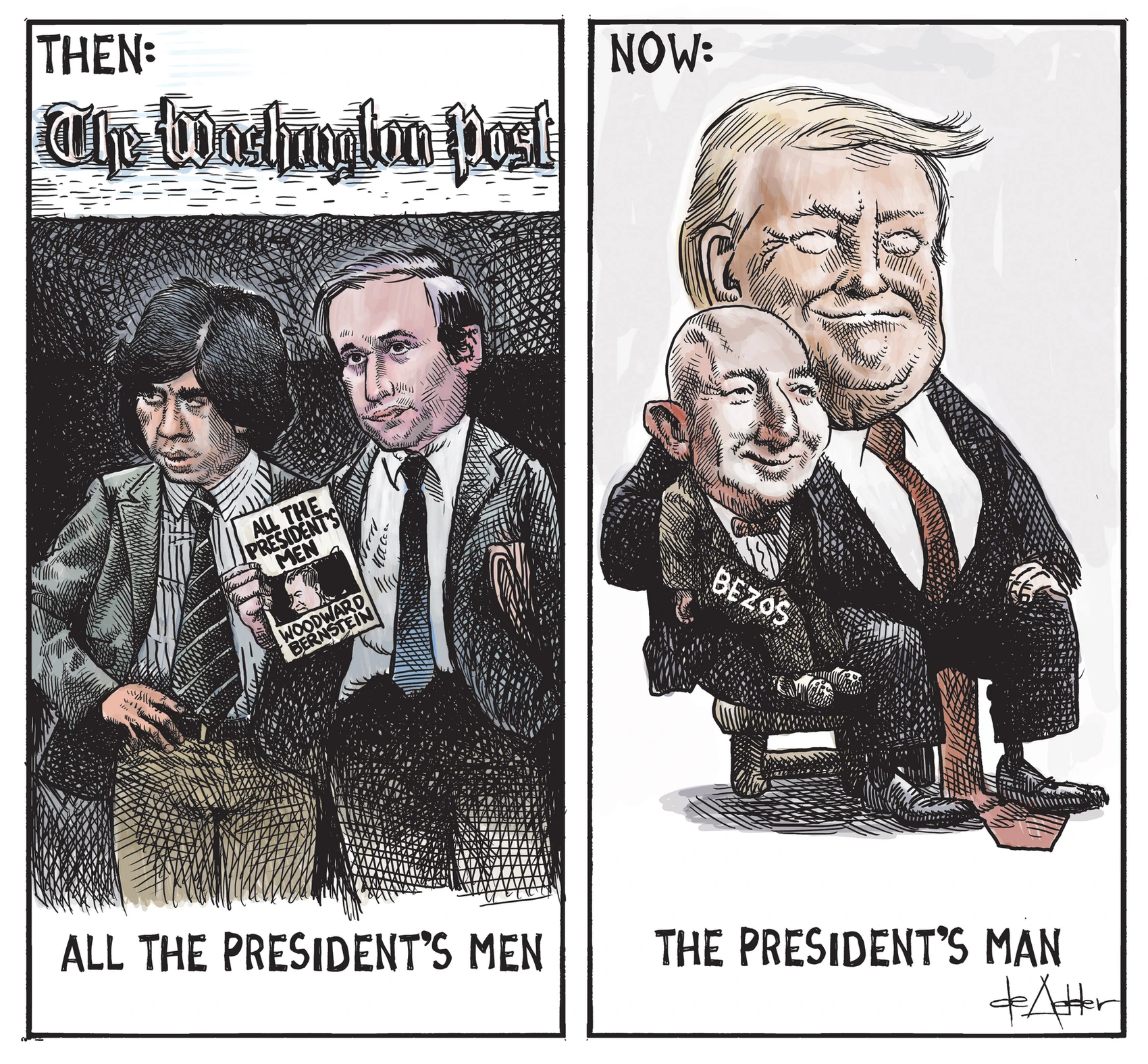
Jeff Bezos’ murder of the Washington Post is a major hit, but there are hundreds of great environmental reporters out there in new media who deserve our support — and subscriptions.
By now we have all heard and read about Jeff Bezos’ decision to destroy The Washington Post. Make no mistake: that is what he decided: hundreds of reporters have gotten fired, including several foreign correspondents in dangerous areas with no means of support and no ability to get home. And spare me any questions concerning …
Continue reading “Environmental Journalism in the Age of Idiocracy”
CONTINUE READINGThe details of SEQRA reform
Looking at the specifics of how New York’s SEQRA reform efforts would work
I recently posted about proposed legislation in New York, advanced by the governor, to reform the state’s environmental review law (the State Environmental Quality Review Act (SEQRA)) to facilitate infill housing – an approach similar to what California did last year. There’s now legislative text (available here) available to allow a close review of what …
Continue reading “The details of SEQRA reform”
CONTINUE READINGHot Take on the Endangerment Repeal

It’s a tweaked version of arguments that the Supreme Court rejected in 2007.
EPA’s argument for repealing the Endangerment Finding is basically a rehash of legal arguments that were rejected by the Supreme Court in 2007. These arguments haven’t improved with age. Notably, EPA doesn’t dare contest the science.
CONTINUE READINGFake species?
Looking at the data on ESA listed species to see if enviro groups strategically identify species to block development.
This tweet, arguing that it’s “an open secret at this point that environmental activists try to invent fake ‘endangered’ species to block infrastructure projects they don’t like” got a lot of traction. But is it correct? It turns out that a paper I did (with Berry Brosi) about 15 years ago provides some insights into …
Continue reading “Fake species?”
CONTINUE READINGThe Accelerating Decline of U.S. Public Health Policy
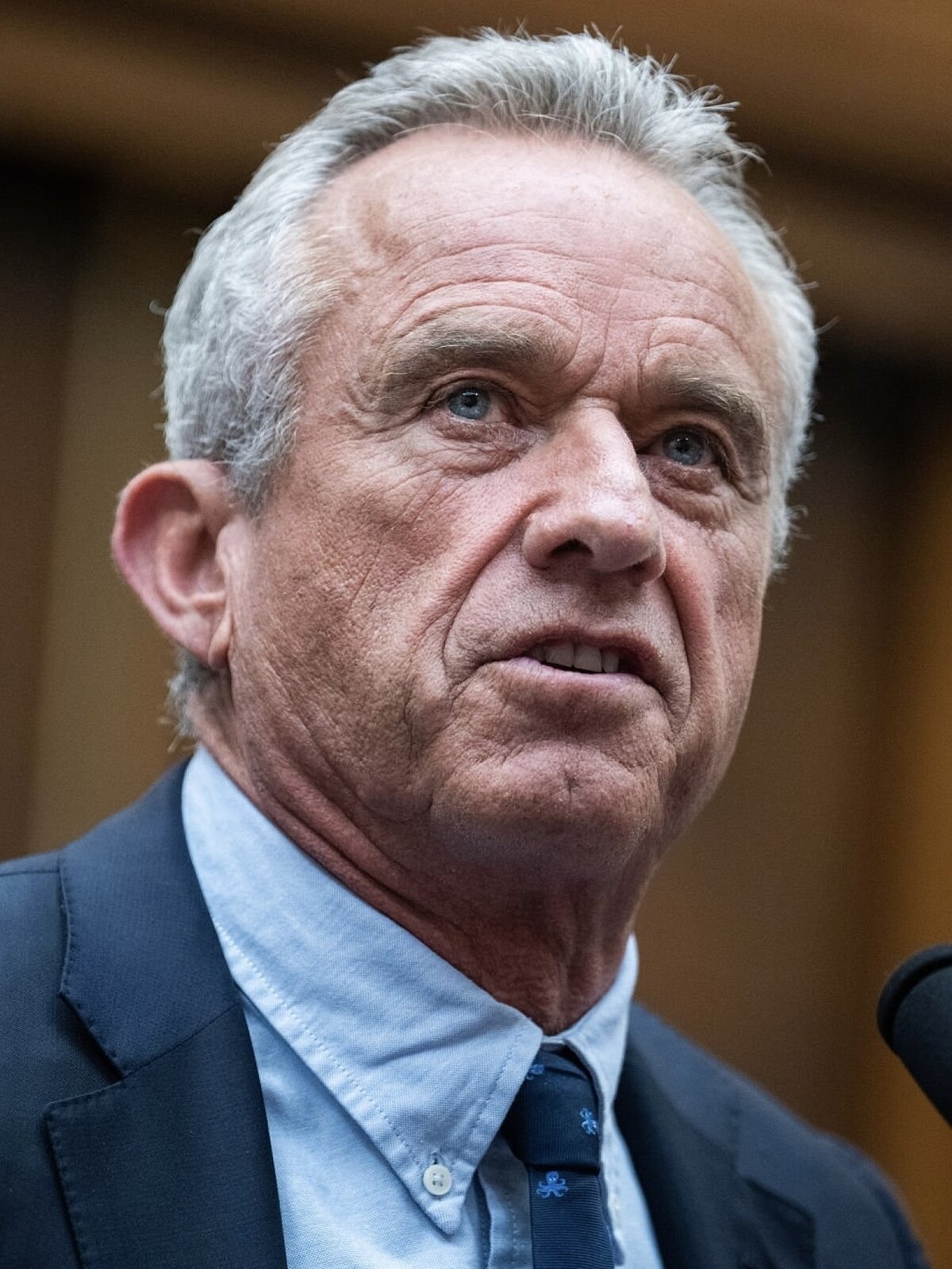
Just when we get over our shock over one development, another comes along.
It’s hard to believe how quickly a science-driven approach to protecting health has been replaced by ideology and quackery. Lack of expertise is now seen as a plus in making decisions, and the Administration is actively seeking to suppress information about problems that it would rather not address. I posted a month ago about the current evidence-free approach to health policy, Things have only gotten since then. It’s been one bad thing after another. All of this in only a month. There are 34 months left in Trump’s presidency, so you can only imagine how dangerous the situation will be by the time he leaves office.
CONTINUE READINGThe Winners and Losers of Superbowl LX

The Seattle Seahawks came out on top at Sunday’s big game, but consumers and the environment joined the New England Patriots in the “losers” column.
Like millions of others around the world, I spent Sunday eating fried foods, drinking sugary beverages, and enjoying the company of my friends while watching the opposite of a nail-biter of a game. As a fan of the Seattle Seahawks and a hater of the New England Patriots, I’ll admit that I was delighted with …
Continue reading “The Winners and Losers of Superbowl LX”
CONTINUE READINGTrump Will Kill Climate Regulations, But How Exactly?

The Drain is a weekly roundup of environmental and climate news from Legal Planet.
The Environmental Protection Agency will officially revoke what’s known as the endangerment finding tomorrow and in so doing try to erase the basis for virtually all that agency’s regulations cutting greenhouse gases. It’s not really a surprise — we’ve been waiting for this announcement for a year. But seeing the agency’s precise justification will help …
Continue reading “Trump Will Kill Climate Regulations, But How Exactly?”
CONTINUE READINGState Blacklists of Companies with Sustainability Policies Take a Constitutional Hit
A federal district court just struck down a Texas law blacklisting companies that oppose fossil fuels.
Four or five years ago, a half-dozen states passed laws that blacklist companies opposing fossil fuels. Texas was the most prominent of those states. These laws have pressured companies, especially big financial companies, to invest in fossil fuels. A federal district judge has struck down the Texas law as a violation of due process and the First Amendment. The court’s ruling is a welcome development and long overdue. Texas has been on a campaign to punish anyone who dares oppose the use of fossil fuels. It’s good to see that campaign hit a constitutional wall.
Taking Care That the Law Be Fitfully Executed

Carrying out the law is the core duty of the President. And it’s being openly violated.
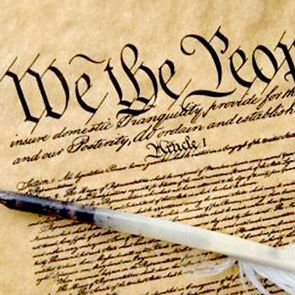
The parameters of presidential power have been debated since soon after George Washington took office. But the Constitution makes at last one thing crystal clear: the President must “take care that the laws be faithfully executed.” This is a task to which the current incumbent, it can be safely said\, has not applied himself.
The “take care” clause is reinforced by the very terminology used to describe the President’s authority, the clause vesting the “executive power” in the President. That’s a clause much beloved of believers in the unitary executive. The word “executive” traces back to exsequii, meaning to carry out or follow (ex meaning “out”, sequii meaning “follow”). Faithful obedience to Congress hasn’t exactly been a hallmark of the current Administration. Whatever it is that Trump is faithfully executing, it’s not the laws of the United States. Unless, a bit darkly, you were to take “execute” in the modern sense of killing off, not in the constitutional sense of carrying out.
CONTINUE READINGJoin Our Mailing List
Climate policy is changing rapidly. Stay in the loop with expert analysis via email Monday - Friday.