
























































First Amendment
In the Cross Hairs
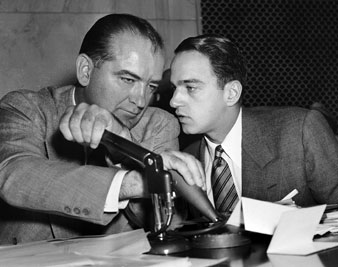
The Right has taken umbrage at some of the important work of environmental law professors and centers.
The fossil fuel industry and its conservative allies seem to have taken notice of the important work done by environmental law centers. Their response is to try to repress this valuable work. This is a backhanded acknowledgement that law schools are making a difference.This campaign has targeted some of the law schools with the most prominent environmental law programs. Climate scientists have long been the target of harassment and public attack. It appears that people who work on climate policy are now also in the crosshairs. What we’re seeing lacks the drama of other attacks on free speech and academic freedom. But it is capable of being no less harmful. McCarthyism writ small is still McCarthyism.
CONTINUE READINGState Blacklists of Companies with Sustainability Policies Take a Constitutional Hit
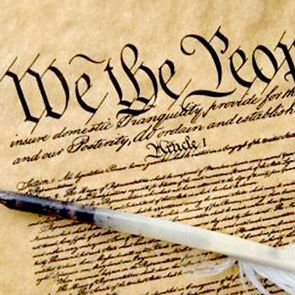
A federal district court just struck down a Texas law blacklisting companies that oppose fossil fuels.
Four or five years ago, a half-dozen states passed laws that blacklist companies opposing fossil fuels. Texas was the most prominent of those states. These laws have pressured companies, especially big financial companies, to invest in fossil fuels. A federal district judge has struck down the Texas law as a violation of due process and the First Amendment. The court’s ruling is a welcome development and long overdue. Texas has been on a campaign to punish anyone who dares oppose the use of fossil fuels. It’s good to see that campaign hit a constitutional wall.
Environmental Groups and the New McCarthyism

The Administration’s search for a vast leftwing conspiracy could ensnare some environmental groups.
The White House’s reference to a “vast network” rings a historical bell. A speaker seventy years ago decried “a conspiracy on a scale so immense as to dwarf any previous such venture in the history of man.” That speaker was Joe McCarthy. Environmental groups weren’t active during his time, but does anyone doubt that they would have been on his hit list?
CONTINUE READINGThe Compact for Censorship

The so-called compact is a thin front for massive incursion into free speech and academic freedom.
A key First Amendment principle prohibits the government from discriminating on the basis of viewpoint. This Compact contains a string of viewpoint-based rules. That’s a threat to any view the government doesn’t like, which definitely includes a belief in climate change or the benefits of renewable energy. Because violation of the agreement triggers draconian sanctions, and the Administration is the judge of what constitutes a violation, the chilling effect will be tremendous.
CONTINUE READINGViolations of Free Speech at EPA

EPA employees were within their rights with the dissent letter they wrote.
I know it must be a shock to the Trump Administration that even lowly civil servants — I’m sure they would put the emphasis on “servants” — have rights that Important People like them are obliged to respect. But we still live in a democracy, and as the Supreme Court once said, government employees don’t leave their First Amendment rights at the door.
CONTINUE READINGWhat Next for the Climate Tort Cases?

Cases against the oil companies are back to state court. It’s time to map out the next steps.
With the Supreme Court’s refusal to take up the issue, the lawsuits against the oil industry are heading back to state court. That’s where the plaintiffs wanted those cases from the beginning, but it’s by no means the last of the issues they will confront. The oil companies will fight a scorched earth campaign, spending …
Continue reading “What Next for the Climate Tort Cases?”
CONTINUE READINGLobster Wars

An industry lawsuit against Monterey Aquarium is a blatant assault on free speech.
The Maine lobster industry is suing the Monterey Aquarium for advising consumers to avoid Maine lobsters. This is “cancel culture” on steroids. The Aquarium has taken a stand the industry doesn’t like, so the industry is trying to silence it and its other critics. “Silencing” here is quite literal: the industry is seeking an injunction …
Continue reading “Lobster Wars”
CONTINUE READINGWhere’s the Beef?
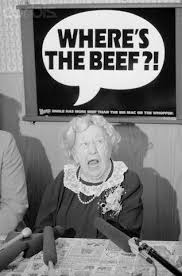
Mississippi’s “Veggie Burgers” Ban is Almost Certainly Unconstitutional
Mississippi recently passed a law that has the effect of banning terms like “veggie burger.” It’s easy to imagine other states passing similar laws. From an environmental view, that’s problematic, because beef in particular is connected with much higher greenhouse gas emissions than plant products. It’s not just the methane from cow-burps, it’s also all …
Continue reading “Where’s the Beef?”
CONTINUE READINGClimate Gag Rules and the First Amendment

Are climate gag rules constitutional? Sometimes yes, sometimes no.
There have been recent reports about state agencies that forbid employees from discussing climate change. Since this is obviously a restriction on speech, it’s natural to wonder what the First Amendment has to say on the subject. The answer depends in large part on the kind of employee speech at issue. Let’s being with a ban …
Continue reading “Climate Gag Rules and the First Amendment”
CONTINUE READINGLies, Damned Lies, and Climate Denial
One key question is whether these statements amounted to factual accusations that Mann had engaged in scientific misconduct.
A D.C. trial judge recently refused to dismiss climate scientist Michael Mann’s libel lawsuits against the National Review and the Competitiveness Institute. There are some serious constitutional barriers against such libel suits, which are designed to provide ample breathing room for free speech. Is this one of the rare cases that can jump the hurdles?
CONTINUE READINGJoin Our Mailing List
Climate policy is changing rapidly. Stay in the loop with expert analysis via email Monday - Friday.