


























































natural gas
When and How to Oppose Fossil Fuels

The answer is clear: “It depends.”
There’s been a lot of talk about whether climate policy should focus on promoting clean energy or should push hard to limit fossil fuels. To some extent, these are two side of the same coin. Yet, the politics could be very different. The debate has been too simplistic. What stance to take about opposing fossil fuels depends on who you are and where you sit, which fossil fuel is involved, and what kind of regulation is at issue. The nuances matter here, and the stakes are huge.
CONTINUE READING“National Security” is Becoming a Punch Line

Whenever he wants to roll back environmental protections, Trump cooks up a new national security justification.
A recent NY Times article recounts how often President Trump has invoked national security. It earnestly dissects his latest and most absurd claim: that the Arc deTrump he wanted to build will be filled with snipers, ammunition, and drones. It turns out that the snipers would be in an excellent position to shoot out the crosses in Arlington National Cemetery but not to protect anything of strategic importance. The environment has been one of Trump’s most fertile grounds for pretextual national security claims.
CONTINUE READINGPondering the Effects of Biden’s Climate Policies
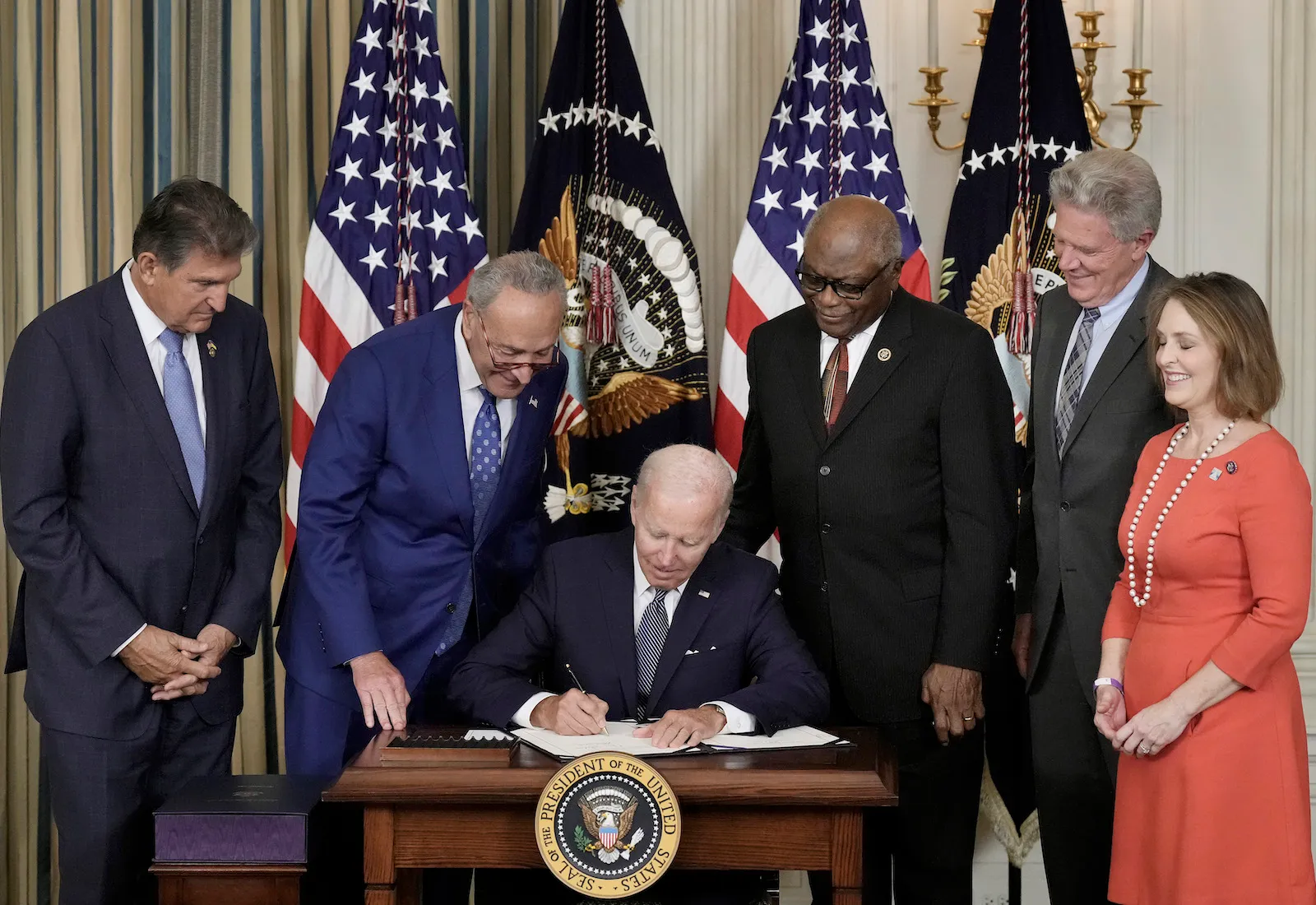
A new report has some unexpected implications.
A new report from an MIT researcher says that the “glass is half full” in terms of prospects for renewables in the U.S. This was interpreted by some to mean that Biden’s climate policies were proving successful despite repeal of key parts of the Inflation Reduction Act. That’s a bit of a misreading. It also misses some key takeaways from the report. Those include skepticism about tax credits for wind and solar, an emphasis on removing obstacles to new projects, and a call for supporting the development of “firm” power sources like geotherma
CONTINUE READING86ing Natural Gas in New Buildings

A new Second Circuit opinions empowers bans on fossil fuels in new buildings.
Three years ago, the Ninth Circuit struck down a Berkeley ordinance banning natural gas hookups for new buildings. The court said that the ordinance was preempted by a federal law regulating appliance efficiency. The Second Circuit has now reached the opposite conclusion about an NYC ordinance that basically bans fossil fuels in new buildings. The Second Circuit opinion zoomed in on the language of the federal law, which seems more in line with Supreme Court’s current approach to statutory interpretation.
CONTINUE READINGThe War and the Energy Transition

The Iran War it is hitting energy markets hard. Will that affect the energy transition?
The Iran War has been a big shock to the global energy system. It’s natural to wonder what the long terms will be. What it will lead to an orgy of oil and gas drilling, or will it speed up the energy transition? There are enormous uncertainties, and making confident predictions would be a clear mistake. In this post, I’ll try to unpack some of the issues and offer a semi-educated gas about the answers.
Trump Tried to Kill Renewables. He Failed.

Despite assaults by Trump and his Congress, renewables are still growing.
Trump has done everything within his power to bless the US with more air pollution and carbon emissions from fossil fuels. Congress did its part, rolling back billions in spending and set accelerated phaseouts for tax credits. Yet renewable energy hasn’t died. It hasn’t even slowed down all that much.
Here are the numbers. Solar alone accounted for almost three-fourths of new generation capacity in Trump’s first ten months, and wind added another 13%, for 87% total. And this year should also be strong.
CONTINUE READINGCalifornia Must Go Big to Save Big

A new Emmett Institute report shows how California can shift existing infrastructure spending from gas to electric to make homes and energy more affordable.
By Guest Contributor Craig Segall. California can still build big things – and in a new report today, my Emmett Institute co-authors, Denise Grab and Brennon Mendez, and I call for policymakers to think big on our energy system too. The headline: Tens of billions of dollars, annually, are available to make our homes cleaner …
Continue reading “California Must Go Big to Save Big”
CONTINUE READINGThe Emperor’s New Endangerment Theory (Wrap-Up)
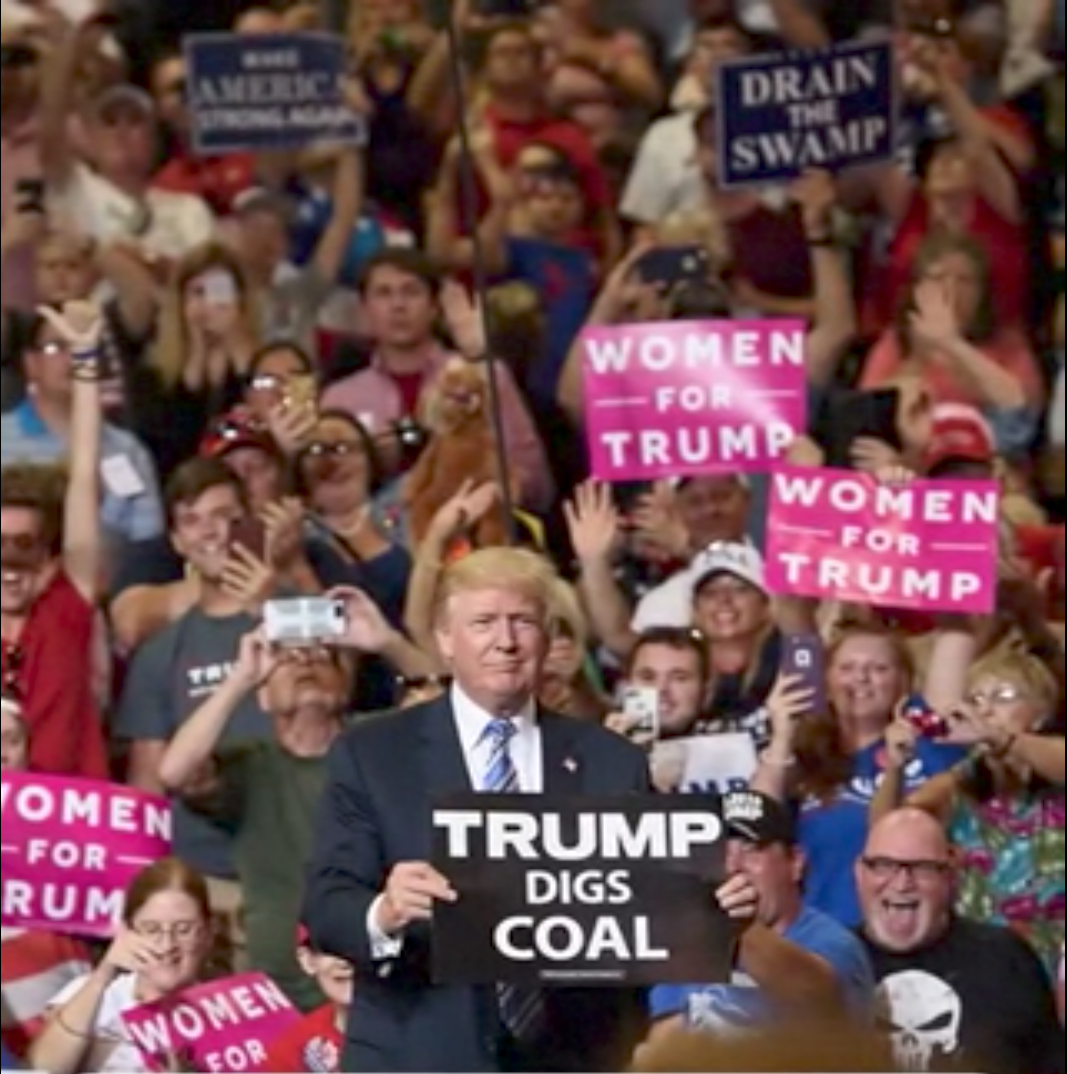
Trump’s EPA says carbon emissions from U.S. power plants are too insignificant to regulate.
U.S. power plants emit 1.5 billion tons of carbon dioxide a year, a little less than the entire country of Russia. The Trump Administration is proposing to end all regulation of carbon emissions by power plants, on the theory that these emissions should be considered insignificant. They have some complicated legal arguments , but the arguments break down the more closely you look at them.
CONTINUE READINGThe Emperor’s New Endangerment Theory (Part II)
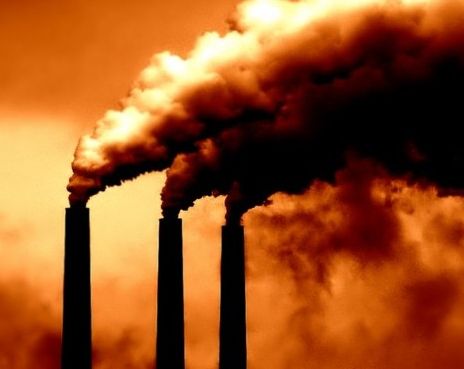
To justify a decision not to regulate CO2 from power plants, EPA had to twist statutory language beyond all recognition.
According to EPA, carbon emissions from the U.S. power sector are too insignificant to warrant regulation. This is a bizarre conclusion: U.S. power sector’s emissions are around 6.5 billion tons, just below Russia’s total emissions from all sectors. To reach this conclusion, EPA has proposed a novel reading of the Clean Air Act. In EPA’s view, before it could regulate those emissions, it would first have to make a formal finding that they “cause or significantly contribute” to climate change, and (2) that this has to be judged on the basis of the sector’s percentage of total global carbon emissions. The statute doesn’t say either of those things.
CONTINUE READINGThere are Piles of Coal in America’s Christmas Stocking

Coal is piling up, unused, at powerplants across the country
Bad children, supposedly, will get only lumps of coal in their stockings. That could be taken as a metaphor for the anti-environmental programs coming down the line, but I have in mind something a bit less metaphorical. According to a recent report, coal-fired power plants have immense piles of coal – 138 million tons, equal …
Continue reading “There are Piles of Coal in America’s Christmas Stocking”
CONTINUE READINGJoin Our Mailing List
Climate policy is changing rapidly. Stay in the loop with expert analysis via email Monday - Friday.

The Drain is a roundup of climate and environmental news from Legal Planet delivered to your Inbox once a week.