

























































Supreme Court
What Critics of the Unitary Executive Missed

This conservative theory has damaged democracy in unexpected ways.
You would think that some of the conservatives on the Supreme Court would start to see that their ideas about how to run the government are flawed. Sadly, there’s no evidence that they’ve seen the light. It’s true that they seem to be willing to make an ad hoc exception for the Federal Reserve, showing the truth of the saying that everyone’s scared of the bond market. But other than that, they seem happy to allow a single person’s whims to control the government. We’re going to need to figure out some new approaches if we want to have a government that implements in the law in a rational, even-handed way.
CONTINUE READINGA Procedural Snarl in the Oil Patch

Can oil companies use World War II contracts to vault from state to federal court in cases about present-day coastal damage?
As a matter of common sense, however, it’s hard to see why oil production activities that would not otherwise be considered “federal” should change their statute because the producers also happen to own refineries — especially since in some instances it appears that all the oil from one of their fields might be going to a different refinery anyway. But textualist judges aren’t necessarily attended to common sense.
CONTINUE READINGThe Tariff Case & Environmental Law
The Court’s ruling could open doors legally for some future environmental actions.
In passing a new statute, is Congress endorsing judicial rulings under the old one? Do restrictions on the regulatory powers of administrative agencies apply to foreign affairs or Presidential actions? Can courts review a President’s emergency actions? The oral argument in the Trump tariff case will provide clues into the Justice’s thinking on these key issues. The ultimate decision will have implications on other topics like environmental law. Here’s a roadmap to the issues.
CONTINUE READINGEmergency Powers Aren’t What They Used to Be

In the post-WW2 era, courts bent over backwards to accomodate emergency actions. Not true today, as Trump is finding out.
In mid-century America, emergency powers were truly potent. But those days are gone. In his two terms as President, Trump has declared 21 national emergencies, including eight since January 20. This glut of “emergencies” can only further discredit the whole concept. He and his advisors seem to see those as creating nearly magical legal powers, allowing them to deport people without hearings, run roughshod over environmental safeguards, and impose tariffs willy-nilly. They are probably in line for a disappointment. Judges are no longer in awe of emergency powers.
CONTINUE READINGThe Assault on NEPA: A Threat Assessment
National Environmental Policy Act
NEPA is under multiple attacks. Which are the most serious?
NEPA, the law governing environmental impact statements, is under concerted assault from Congress, the White House, and the Supreme Court. As we will see, the Supreme Court’s recent decision in the Seven County Infrastructure Case is probably the biggest problem. Notably, the debate over NEPA has taken place without much hard data about its effectiveness or costs, so everyone seems free to make their own assumptions.
CONTINUE READINGThe Unitary Executive Theory As Government-Smasher
The Supreme Court’s Imperial Presidency drive isn’t formalism: it is calculated to destroy the state.
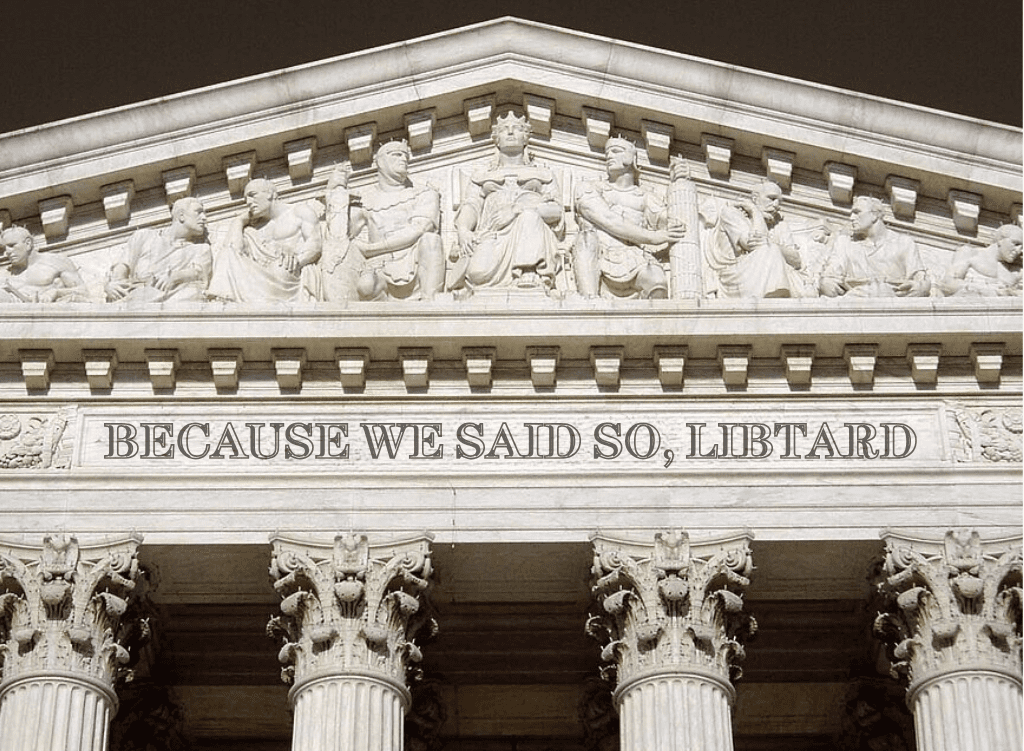
It is a misnomer to discuss the current Supreme Court’s “jurisprudence” on anything, as if it has an approach to any legal question other than, “because we said so, libtard.” But in the wake of the Court’s lawless and arbitrary use of the shadow docket to destroy statutes and precedents for the purpose of giving …
Continue reading “The Unitary Executive Theory As Government-Smasher”
CONTINUE READINGWhen Did Property Rights Drop Off the Conservative Agenda?
Property used to be a central conservative concern. Not so much these days.
One of the pillars of conservative thought used to be protection of property rights. But along with belief in free markets, it now seems to have lost its place of pride. The word “property” doesn’t even appear in the 2024 Republican platform. And I can’t remember Trump ever speaking about property rights.
CONTINUE READINGPrecedent, the Trump Administration, and Endangered Species

A new Trump Administration initiative misinterprets the overruling of Chevron
The Trump Administration’s effort to strip away protections under the Endangered Species Act that had previously been upheld by the Supreme Court. The Administration seems to think they’re entitled to ignore that earlier decision because it was decided under the Chevron test and Chevron has since been overruled. They’re wrong. If it wishes to change the existing interpretation, the agency must give a reasoned argument for doing so that discusses the relevant policy issues, including reliance and the impact of its decision on endangered species.
CONTINUE READINGNEPA in the Supreme Court: The Seven Counties Oral Argument
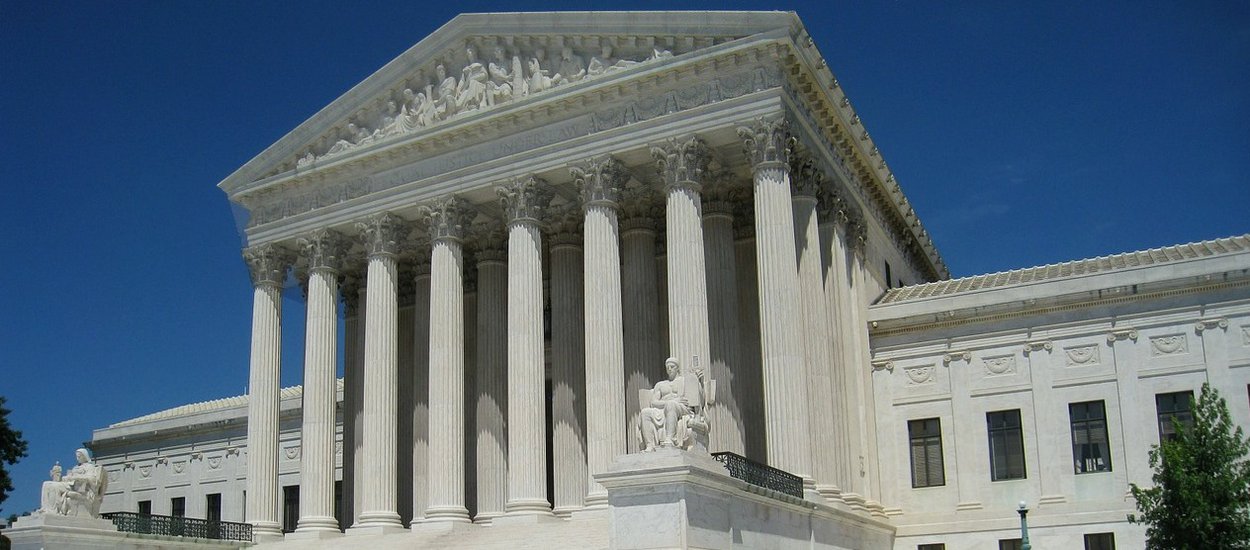
Some arguments surfaced in the discussion that the Court would do well to ignore.
Several arguments popped up in the Supreme Court’s discussion of a major NEPA case that appealed to at least some of the Justices. We think that they would do well to rethink them. Each of the arguments distracts attention from what ought to be the key question: what impacts should the agency take into account in making its decision? We hope, when it comes time to draft opinions, the Justices will think through the arguments a little more fully and head in a different direction.
CONTINUE READINGNEPA in the Supreme Court — On the Eve of Oral Argument
Some thoughts about how the Court should define some limits on indirect effects.
Our paper on the proper scope of NEPA places heavy emphasis on foreseeability, but in an expanded version of the paper we consider some unusual situations where additional factors come into play. This additional analysis makes clear important limits on NEPA scope that we think address at least some of the concerns that have (appropriately) been raised about ever-expanding NEPA review and the risk that it will hamper efforts to develop needed infrastructure.
CONTINUE READINGJoin Our Mailing List
Climate policy is changing rapidly. Stay in the loop with expert analysis via email Monday - Friday.

The Drain is a roundup of climate and environmental news from Legal Planet delivered to your Inbox once a week.