

























































Trump Administration
Hey Kids, It’s National Energy Dominance Month!
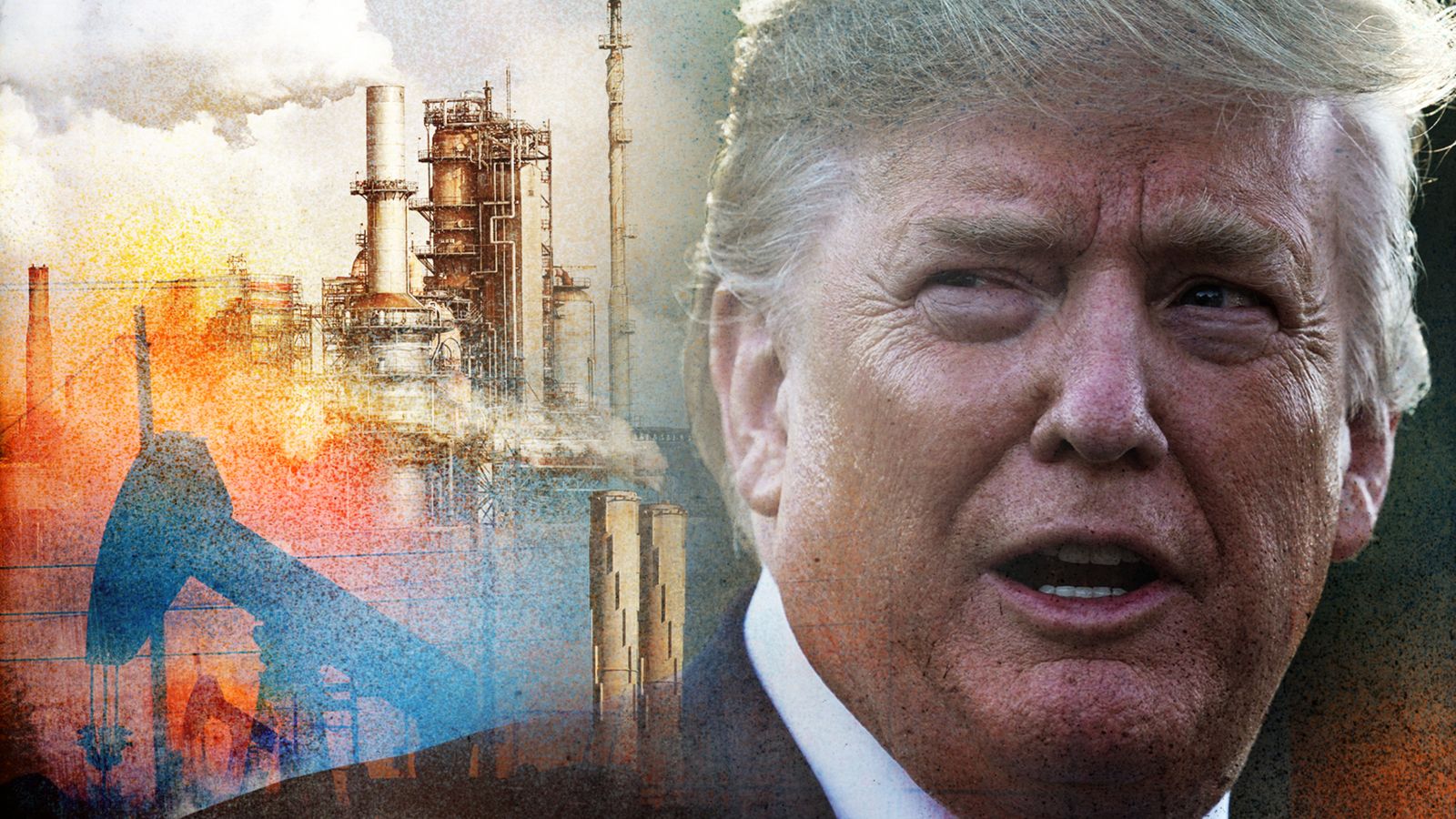
This October, we officially celebrate the coal and oil industries. Says President Trump.
People sometimes accuse Trump of lacking any consistent policy beliefs, but that’s certainly not true in the areas of energy and environment. He has one clear goal, maximizing fossil fuels. Everything revolves around that. And now we have a whole month officially set aside to celebrate his masterplan.
CONTINUE READINGImproving permitting reform
Suggestions to make the permitting reform bill work better and avoid unintended results
I’ve written a bunch about the Senate’s permitting reform bill. My basic takeaway is that I want this bill to pass, but that there are some serious flaws in the bill, particularly in the permit certainty provisions, that must be addressed. And in general, there are areas where greater clarity about the scope of the …
Continue reading “Improving permitting reform”
CONTINUE READINGBlowing in the Wind

The Trump Administration once again proves shortsighted and spiteful.
Just as sponsors are making a push to get a bipartisan permit reform bill through the lame duck session of Congress, the Trump Administration has apparently decided to sabotage the process. Democrats have worried that it does no good to streamline permitting for clean energy projects if the government simply yanks the permits later. That’s exactly what the Administration is planning to do, yet again, in a case where it has repeatedly lost in court.
CONTINUE READINGFDA’s Worrisome Proposal on Toxins in Food Additives

Part of it is a move in the right direction. But one provision raises serious questions.
According to the Guardian news site, a proposed new FDA regulation will “expand a controversial loophole to allow some of the world’s most toxic chemicals to be added directly to food without a safety review.” The proposed regulation does two other, seemingly reasonable, things along with the one that raises real concerns. The worrisome …
Continue reading “FDA’s Worrisome Proposal on Toxins in Food Additives”
CONTINUE READINGUnpacking the Senate Permitting Reform Bill: NEPA
NEPA provisions are substantial in their changes, but (mostly) leave the core of the Act in place
I’ve already written some about the Senate permtting reform bill, including the provisions on NEPA remedies. In the next few posts I’m going to take deep dives on Titles I through IV of the bill, which are the primary changes to environmental law. First, I’ll cover the changes to NEPA in Title I besides NEPA …
Continue reading “Unpacking the Senate Permitting Reform Bill: NEPA”
CONTINUE READINGDeregulatory Theater of the Absurd

The new CAFE standards are a master class in pretending you’re implementing a law while totally sabotaging it.
The Department of Transportation (DOT) recently issued CAFE standards — fuel efficiency standards for new cars. Rolling back more rigorous standards from Biden, DOT applied considerable ingenuity to ensuring that fuel efficiency will stagnate for the foreseeable future. Like an Escher drawing, you have to step back from all the intricate details to appreciate just how weird the overall design is.
CONTINUE READINGGorsuch is (Partly) Right

Justice Gorsuch is wrong about the cure, but delegation has gotten out of hand.
Justice Gorsuch has made it a personal crusade to revive the nondelegation doctrine, in part because of concerns about the rising tide of presidential power. The nondelegation doctrine tries to limit the ability of Congress to delegate authority to the executive branch. That’s an unworkable solution, but Gorsuch is right that Congress has put far too much trust in the good faith and sound judgment of the President and his subordinates. That’s especially true of national security and emergency powers.
CONTINUE READINGWho Cares About Affordability and Gas Prices? Not DOT
The Trump administration’s new CAFE standards actually make cars LESS fuel efficient, defy Congressional intent, and increase air and climate pollution.
The Trump Administration today issued new fuel economy standards that require average fuel economy that will be LOWER by 2031 than what Congress mandated for 2020. While consumers are paying an average of $4.49 a gallon of gas, the Department of Transportation is setting standards that require only 34.9 miles per gallon (MPG) by 2031 …
Continue reading “Who Cares About Affordability and Gas Prices? Not DOT”
CONTINUE READING“National Security” is Becoming a Punch Line

Whenever he wants to roll back environmental protections, Trump cooks up a new national security justification.
A recent NY Times article recounts how often President Trump has invoked national security. It earnestly dissects his latest and most absurd claim: that the Arc deTrump he wanted to build will be filled with snipers, ammunition, and drones. It turns out that the snipers would be in an excellent position to shoot out the crosses in Arlington National Cemetery but not to protect anything of strategic importance. The environment has been one of Trump’s most fertile grounds for pretextual national security claims.
CONTINUE READINGWhat Explains Trump’s Energy Policy?

There’s no plausible economic explanation. It’s all about politics.
Trump’s energy policy rests on promotion of U.S. fossil fuel production and use. The instruments include orders forcing coal-fired generators to keep operating, relaxed air pollution standards for power plants, and repeal of as many energy efficiency standards as possible. Trump’s overall economic policy centers on mercantilism, the belief that countries get rich by exporting more than they import. That fits pieces of his energy policy but not others. There’s also some rhetoric about free choice by consumers, but Trump clearly is not a believer in free markets as a matter of principle.
CONTINUE READINGJoin Our Mailing List
Climate policy is changing rapidly. Stay in the loop with expert analysis via email Monday - Friday.

The Drain is a roundup of climate and environmental news from Legal Planet delivered to your Inbox once a week.