




























































Democracy
Is China a Climate Hero? It’s complicated
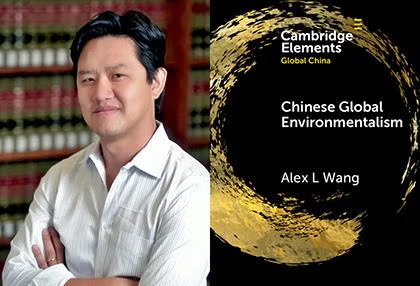
UCLA’s Alex Wang explains China’s climate strategies and contradictions in his new book, Chinese Global Environmentalism.
Though China was once viewed as a climate villain, the country now dominates the global supply chains of solar panels, batteries, and electric vehicles. Just this month, Chinese manufacturer BYD overtook Tesla as the world’s biggest maker of EVs. It’s the latest example of how China’s focus on clean technology is setting the pace for …
Continue reading “Is China a Climate Hero? It’s complicated”
CONTINUE READINGEnvironmental Journalism in the Age of Idiocracy

Jeff Bezos’ murder of the Washington Post is a major hit, but there are hundreds of great environmental reporters out there in new media who deserve our support — and subscriptions.
By now we have all heard and read about Jeff Bezos’ decision to destroy The Washington Post. Make no mistake: that is what he decided: hundreds of reporters have gotten fired, including several foreign correspondents in dangerous areas with no means of support and no ability to get home. And spare me any questions concerning …
Continue reading “Environmental Journalism in the Age of Idiocracy”
CONTINUE READINGState Blacklists of Companies with Sustainability Policies Take a Constitutional Hit
A federal district court just struck down a Texas law blacklisting companies that oppose fossil fuels.
Four or five years ago, a half-dozen states passed laws that blacklist companies opposing fossil fuels. Texas was the most prominent of those states. These laws have pressured companies, especially big financial companies, to invest in fossil fuels. A federal district judge has struck down the Texas law as a violation of due process and the First Amendment. The court’s ruling is a welcome development and long overdue. Texas has been on a campaign to punish anyone who dares oppose the use of fossil fuels. It’s good to see that campaign hit a constitutional wall.
Taking Care That the Law Be Fitfully Executed

Carrying out the law is the core duty of the President. And it’s being openly violated.
The parameters of presidential power have been debated since soon after George Washington took office. But the Constitution makes at last one thing crystal clear: the President must “take care that the laws be faithfully executed.” This is a task to which the current incumbent, it can be safely said\, has not applied himself.
The “take care” clause is reinforced by the very terminology used to describe the President’s authority, the clause vesting the “executive power” in the President. That’s a clause much beloved of believers in the unitary executive. The word “executive” traces back to exsequii, meaning to carry out or follow (ex meaning “out”, sequii meaning “follow”). Faithful obedience to Congress hasn’t exactly been a hallmark of the current Administration. Whatever it is that Trump is faithfully executing, it’s not the laws of the United States. Unless, a bit darkly, you were to take “execute” in the modern sense of killing off, not in the constitutional sense of carrying out.
CONTINUE READINGA Lot Fewer Climate Reporters at the Washington Post

The Drain is a weekly roundup of environmental and climate news from Legal Planet.
I cancelled my subscription to the Washington Post earlier this week. Not to protest billionaire owner Jeff Bezos or anything. Just because I felt like I wasn’t getting all that much for my $3 a week, and it was time to downsize my media subscriptions. I had signed up for the WaPo a couple years …
Continue reading “A Lot Fewer Climate Reporters at the Washington Post”
CONTINUE READINGAbolishing ICE has Environmental Connections

The Drain is a weekly roundup of environmental and climate news from Legal Planet.
Does your heart hurt from watching agents of the U.S. government execute a law-abiding citizen in the street while he is helping others try to stay safe during an authoritarian takeover of an American city? If you work on environmental and climate issues, you probably have felt this rage over what’s happening but also thought …
Continue reading “Abolishing ICE has Environmental Connections”
CONTINUE READINGWhat Critics of the Unitary Executive Missed

This conservative theory has damaged democracy in unexpected ways.
You would think that some of the conservatives on the Supreme Court would start to see that their ideas about how to run the government are flawed. Sadly, there’s no evidence that they’ve seen the light. It’s true that they seem to be willing to make an ad hoc exception for the Federal Reserve, showing the truth of the saying that everyone’s scared of the bond market. But other than that, they seem happy to allow a single person’s whims to control the government. We’re going to need to figure out some new approaches if we want to have a government that implements in the law in a rational, even-handed way.
CONTINUE READINGNEPA and Democracy
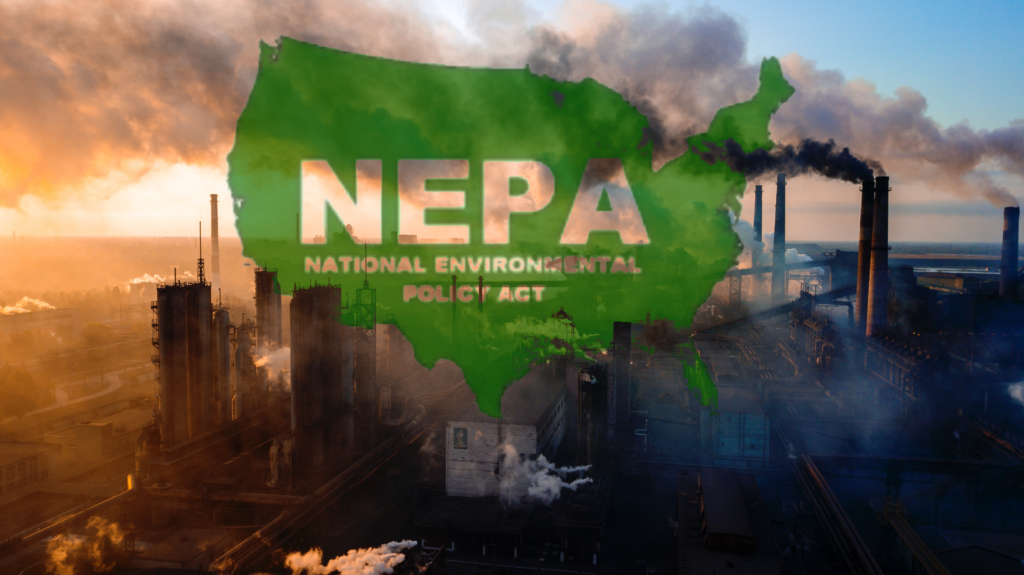
The Trump Administration is at war with transparency and public input.
The Administration is out to limit public oversight of government actions that, taken alone or as a group, will have major environmental impacts – notably, oil production, coal mining, nuclear reactors, and pipelines. Congress will also have less visibility into these important decisions. People are often impatient about procedures that slow decision making, sometimes properly so. But the solution is not a secretive decision-making process. If it’s true that democracy dies in darkness, it’s also true that ugly things rawl out of the woodwork when the lights are off.
CONTINUE READINGSCOTUSblog Falls Into the MAGA Orbit

It’s not there yet, but danger signs are appearing. Invest in real journalism to stop the bleeding.
Like most law nerds, I often check out SCOTUSblog when I want to see what the Corrupt Six are doing nowadays. But I had not caught one major change that we should all watch out for: it has become a part of the right-wing media ecosystem. A few months ago, it was purchased by The …
Continue reading “SCOTUSblog Falls Into the MAGA Orbit”
CONTINUE READINGScience and Democracy

The scientific process is crucial for a well-functioning democracy.
Beyond its utility, science also models some important features of democracy. It aspires to a marketplace of ideas in which everyone with the needed background knowledge can participate, and in which conclusions are based on debate and data rather than power. As a recent D.C. Circuit case illustrates, the law calls on government agencies to make decisions in the same, considering all the scientific evidence and arguments, then providing a reasoned explanation for its decision.
CONTINUE READINGJoin Our Mailing List
Climate policy is changing rapidly. Stay in the loop with expert analysis via email Monday - Friday.