




























































Energy
Is Venezuela a “War For Oil”?

It’s an overused cliche, but there is one way in which oil might figure in the recent illegal war: go to Africa to see it
One of the more annoying phrases in the political chant lexicon is “No War For Oil!!” Oil is the mainstay of the world, and the American, economy: blocking supplies of it could be a perfectly legitimate casus belli. In addition, many times when protestors attack a war as being “for oil” they are actually wrong: …
Continue reading “Is Venezuela a “War For Oil”?”
CONTINUE READINGSome Good News To Close Out This Year

Despite the Trump Administration’s attempts to bring the world into the dark ages, lots of light is blazing
I’m a pretty pessimistic guy. Finding the dark cloud behind the silver lining is something of a specialty for me. But maybe at the end of an atrocious year for environmental law and policy in the United States, we should look for the good news, and thanks to the good people at Canary Media, there …
Continue reading “Some Good News To Close Out This Year”
CONTINUE READINGThat Was the Year That Was

2025 had a lot of bad environmental news, but also a few rays of hope.
2025 has been a dark time for Americanswho care about the environment. Rather than being a repeat of his first term, which had been bad enough environmentally, Trump’s second term has been a tsunami of bad news. Besides some outright rollbacks, Trump has done his best to purge the government of programs and people implementing environmental law. Much of that has been illegal but effective anyway. The demolition of the East Wing will be remembered as a defining moment, the perfect metaphor for an Administration that has religiously embraced the motto, “move fast and break things.”
CONTINUE READINGNEPA and Democracy
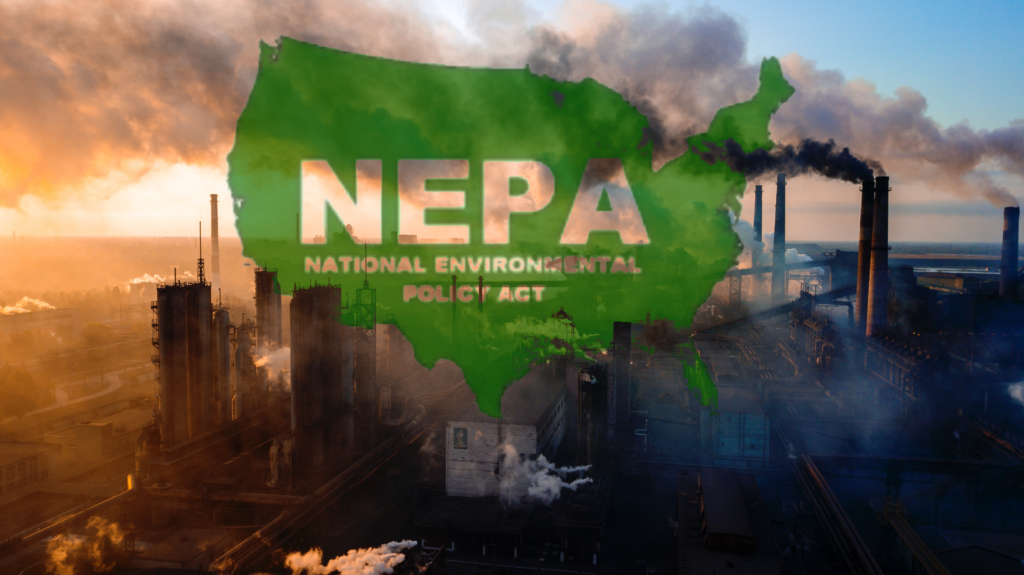
The Trump Administration is at war with transparency and public input.
The Administration is out to limit public oversight of government actions that, taken alone or as a group, will have major environmental impacts – notably, oil production, coal mining, nuclear reactors, and pipelines. Congress will also have less visibility into these important decisions. People are often impatient about procedures that slow decision making, sometimes properly so. But the solution is not a secretive decision-making process. If it’s true that democracy dies in darkness, it’s also true that ugly things rawl out of the woodwork when the lights are off.
CONTINUE READINGPoisoning the well
Trump Administration “pause” on offshore wind projects undermines prospect of permitting deal
Yesterday, the Trump Administration announced that it was “pausing” construction for the five major offshore wind projects on the East Coast, based on “national security” grounds – because of the possibility that wind turbines can interfere with radar operations. This announcement is, to say the least, not helpful for current permitting reform discussions. It emphasizes …
Continue reading “Poisoning the well”
CONTINUE READINGNEPA Reform and Transmission
Reducing NEPA compliance alone won’t solve our transmission problems, and it might be a bad deal for the climate
The recent passage of the SPEED Act highlights one angle in current permitting reform debates: A focus on NEPA, which as a procedural statute might be more feasible to reform than other substantive statutes. Advocates for the SPEED Act have argued that it will help with a range of infrastructure projects, including transmission. But a …
Continue reading “NEPA Reform and Transmission”
CONTINUE READINGIt’s Not the Generation

Ivanpah Solar Energy Generating Project, April 29, 2013, Wikimedia Commons
Abandoning low cost renewable energy generation is not the solution to electricity affordability
The Wall Street Journal Editorial Board should not be your first stop for unbiased opinion on the state of energy policy in California. Nevertheless, I could not stop myself from reading Wednesday’s Op-Ed, California’s Stranded Solar Assets, about the ongoing saga of the Ivanpah solar thermal project, a 386 MW power plant near the California/Nevada …
Continue reading “It’s Not the Generation”
CONTINUE READINGPermit Certainty
Revised SPEED Act tries to give certainty to permit holders, and probably fails.
The SPEED Act will be up for a vote in the House of Representatives later this week, and the vote will likely be close. The Act is an effort to do permitting reform for NEPA compliance, in theory to accelerate reviews and provide more certainty about what those reviews cover. I’ve already provided an assessment …
Continue reading “Permit Certainty”
CONTINUE READINGFederalism, AI, and the Environment
Trump’s efforts to overturn state laws are part of his effort to consolidate power and suppress opposition.
State authority isn’t unlimited, but current legal doctrines give it broad scope. So, apparently, does national politics, given that Congress recently rejected a proposal to preempt state AI laws and has never seriously considered preempting state climate laws.
As we all know, Congress has found it extraordinarily difficult to enact legislation on major issues. The executive branch, under the Supreme Court’s “major questions doctrine,” lacks the power to fill the gap. That leaves only the states to save us from paralysis when major new issues arise. That may not be ideal, but it’s better than nothing.
The Answers are Blowing in the Wind
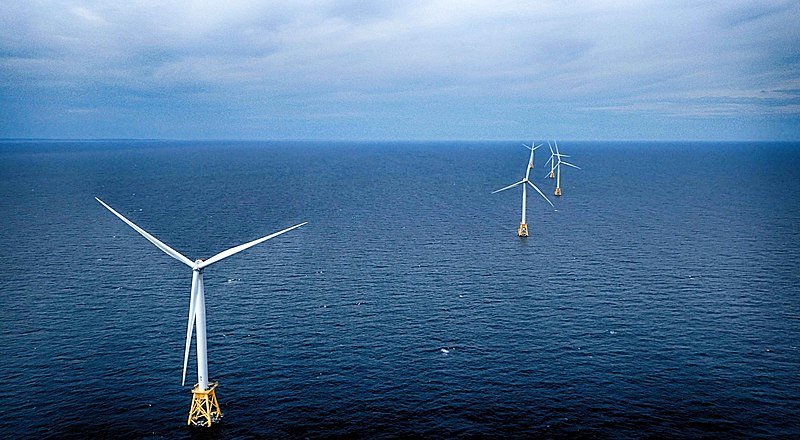
A district court overturns the moratorium on offshore wind, deciding two key legal issues along the way.
The Trump Administration advanced two far-reaching arguments in this case. One is that, when the President directs how an agency should exercise its statutory authority, normal limits on agency action don’t apply. The other is that, even if an agency action is illegal, it must remain in effect against everyone in the world except the plaintiffs who challenged it in a specific case. We can expect the government to keep pressing these points, up to and including Supreme Court review. But the district court in the offshore wind case, along with other lower courts, correctly rejected these arguments.
CONTINUE READINGJoin Our Mailing List
Climate policy is changing rapidly. Stay in the loop with expert analysis via email Monday - Friday.