

























































Public Lands
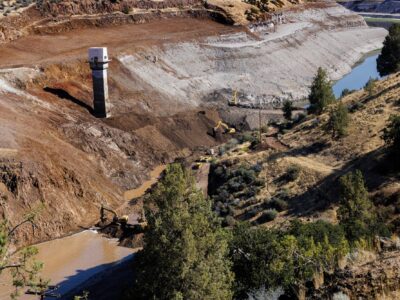
Success! Removing the Klamath Dams
A “Good News” Environmental Story (For a Change)
Most of the environmental law and policy matters discussed on Legal Planet–especially over the past few months–have dealt with natural resource crises, environmental rollbacks, hostile political actors and actions in Washington, D.C., etc. So let me take this opportunity to share an upbeat and inspirational environmental story in these otherwise troubled environmental times. In 2022, …
Continue reading “Success! Removing the Klamath Dams”
CONTINUE READINGAnd The Grift Goes On – This Time on Public Lands

Trump’s alleged plan for affordable housing on federal property is one more brick in a wall of corruption.
Today in the Department of FFS. The Wall Street Journal breathlessly reports, Trump Wants to Build Homes on Federal Land. Here’s What That Would Look Like. And then, not content with a series of graphics about where this housing could be, it also put out a big op-ed from Interior Secretary Doug Burgum and HUD …
Continue reading “And The Grift Goes On – This Time on Public Lands”
CONTINUE READINGAll the President’s Men
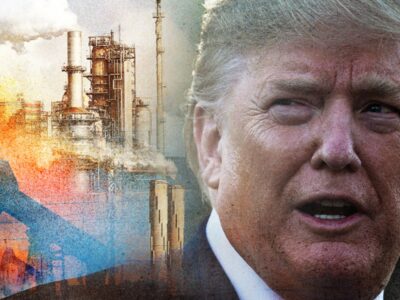
The people occupying environment and energy positions will be anti-regulatory and pro-fossil fuel.
There will be a lot of dramatic fireworks on Day One of Trump’s second term, literally and figuratively. Yet his ability to achieve his agenda will depend on the people he’s chosen to run the government. His energy and environment picks will follow the party line of expanding fossil fuels. Yet they may not be as extremist as their predecessors in the first Trump Administration or as some of Trump’s advisors.
CONTINUE READINGA Trumped-Up Energy Emergency
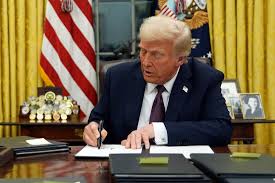
We have weathered past threats to energy security through democratic processes, not by executive fiat.
The Executive Order has fabricated an energy emergency and is doubly wrongheaded. First, as the statistics bear out, there is neither a domestic energy emergency nor an energy crisis. The U.S. has effectively secured energy independence. More significantly, Trump’s politically driven, fossil fuel-dependent energy portfolio is neither diversified nor economically sound.
CONTINUE READINGTrump’s War Against NEPA
One of Trump’s Executive Orders Heralds a Revolution in NEPA Practice
What’s going on here is pretty obvious, It’s not “improving environmental rules.” No, the title of the subsection is “Unleashing Energy Dominance through Efficient Permitting.” Anything that gets in the way of fossil fuel development – which is what Trump means by energy dominance – is going to get steamrolled. Including the environment.
CONTINUE READINGHonoring Michael Zischke (1954-2025)
A Force in the CEQA World
Michael Zischke was a talented and award-winning land use and environmental lawyer, Mike was widely recognized for his extensive expertise in California Environmental Quality Act (CEQA) litigation and compliance.
CONTINUE READINGA Way Forward?
Reducing the Number of Decisions Could Accelerate Fire Management
This is the third of a series of three posts on how to do more to reduce fire risks on federal lands. The first post is here, the second post is here. In addressing the increasing risks of wildfire, we certainly need to scale up the resources we apply to the problem, doing more prescribed …
Continue reading “A Way Forward?”
CONTINUE READINGFire and Permitting Reform
Addressing the difficult parts, regulation and litigation
This is the second of three posts on proposed legislation to address the fire crisis on federal lands (the first post is here). Last post, I talked about why this legislation is essential, and the strengths of the bill that the House passed last Congress. In this post, I’ll talk about the parts of the …
Continue reading “Fire and Permitting Reform”
CONTINUE READINGThe Urgent Need to Address Fire Risk
We need legislative action to accelerate fire risk reduction in general
The Manchin-Barrasso energy permitting bill that I’ve posted about is not the only permitting reform bill that died with the last Congress. The House had passed the “Fix Our Forests Act,” legislation sponsored by Rep. Bruce Westerman, a Republican from Arkansas, with a focus on trying to reduce fire risks on federal (and other) lands. …
Continue reading “The Urgent Need to Address Fire Risk”
CONTINUE READINGThe Fires in Los Angeles
Wildfire policy and the tragic fires in Southern California?
National attention is (rightly) focused on the terrible fire situation in Los Angeles. At the moment, the top priority is supporting first responders who are trying to control the fires, prevent more damage, and help the people who have lost homes and loved ones. There is (of course) a bunch of chatter on social media …
Continue reading “The Fires in Los Angeles”
CONTINUE READINGJoin Our Mailing List
Climate policy is changing rapidly. Stay in the loop with expert analysis via email Monday - Friday.