


























































States
Big Oil Could Pay for Climate-Fueled Insurance Hikes

The Drain is a weekly roundup of environmental and climate news from Legal Planet.
There are several ways to try to make polluters pay. California is considering a new one — empower the state Attorney General to sue oil and gas companies to recover costs on behalf of Californians specifically related to the housing insurance market. Survivors, taxpayers and policyholders — whose rates are skyrocketing as a result of …
Continue reading “Big Oil Could Pay for Climate-Fueled Insurance Hikes”
CONTINUE READINGThe Future of the Colorado

There’s not enough water to go around, but there’s no agreement about what to do.
The Colorado River provides water to 40 million people and about 5.5 million acres of irrigated farmland. There’s only so much water to go around, so how to divide up the water has been hotly disputed for over a century. The previous agreement has come unstuck, but finding a replacement has proved devilishly difficult. I suspect that the Feds would rather avoid this political hot-potato through a state agreement. So far, however, state negotiations haven’t been successful. Maybe the impending threat of a federal mandate will light a fire under the negotiations. Otherwise, we are probably guaranteed years of litigation while the river runs dry.
CONTINUE READINGDemocratic Governors and the A-word

The Drain is a weekly roundup of environmental and climate news from Legal Planet.
The governors and legislative leaders of several blue states on the East Coast are obsessed with the A-word: affordability. So much so that several of them are looking to pull money away from state programs that boost renewable energy and energy efficiency, as a shortcut to try to lower electricity costs. In Maryland, Rhode Island, …
Continue reading “Democratic Governors and the A-word”
CONTINUE READINGAffordability Is Everywhere

How affordability concerns are informing recent developments in electricity, clean energy, and housing policy.
Affordability concerns are increasingly top-of-mind for advocates, academics, and public officials with regard to electricity generation and pricing, the transition away from fossil fuel extraction, and affordable housing. Public support for improving the grid, transitioning to a clean energy economy, and expanding the supply of housing depends on whether policymakers can ensure that the costs …
Continue reading “Affordability Is Everywhere”
CONTINUE READINGDoes Federal Law Still Preempt State Standards Relating to Fuel Efficiency?

The answer may depend on what being “in effect” means.
If a tree falls in the forest but no one hears it, does it still make a sound? If a law hasn’t been formally repealed but can be violated with complete impunity, is it still in effect? This matters because federal law preempts state fuel efficiency standards if, but only if, a federal standard is “in effect.” Congress just eliminated any penalty for violating the federqal standards. Which means at best they have only a kind of ghostly existence, but no substance to speak of.
CONTINUE READINGPolicies on the Bus Go Round and Round

The Drain is a weekly roundup of environmental and climate news from Legal Planet.
A year ago, the transportation manager of Northshore School District, outside of Seattle, wrote to EPA Administrator Lee Zeldin pleading with him to release frozen funding she was owed for new school buses. “We need your assistance to complete these projects and lift the financial burdens school districts are facing due to the delay in …
Continue reading “Policies on the Bus Go Round and Round”
CONTINUE READINGDissecting EPA’s Endangerment Repeal: Series Wrap-Up:
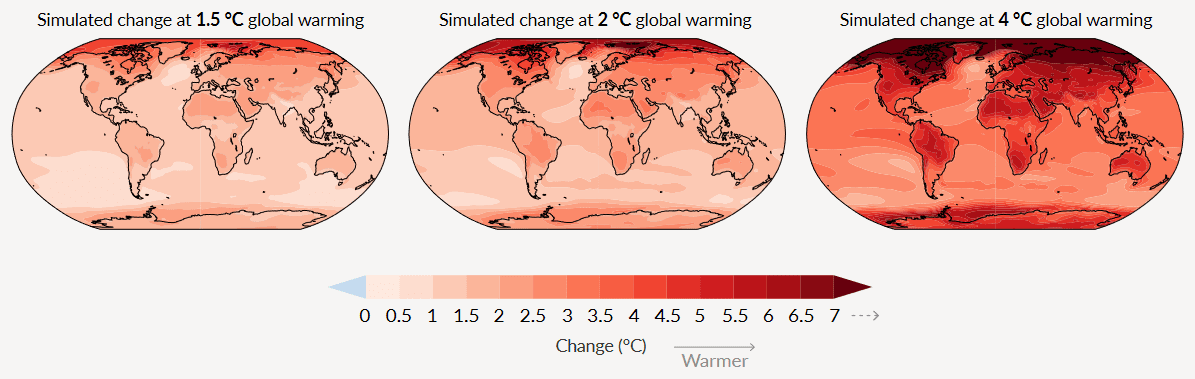
Here’s what you need to know to understand the upcoming legal battles.
Yesterday was the last of five Legal Planet posts on EPA’s repeal of the Endangerment Finding, which it based on legal arguments that it has no power to regulate vehicle emissions of greenhouse gases. The series began with a quick overview of the issues. The remaining posts focus on the reasons that EPA was right to issue the Endangerment Finding in the first place in 2009, the legal precedents supporting the Endangerment Finding. and the impact of the repeal on future climate actions. The bottom line is that EPA was right to issue the Endangerment Finding and wrong to repeal it.
CONTINUE READINGWhat Happens to State Regulation if the Endangerment Findings are Gone?

Answer: State authority wouldn’t suffer from the change and might expand in some ways.
If the Trump EPA successfully repeals the endangerment findings for vehicles and stationary sources, states will be the only resort for climate regulation. A key question is how the repeals would impact state power to regulate carbon emissions. The bottom line answers are: (1) the impact on state power regulate tailpipe emissions seems unclear but could be positive, (2) there would be no effect on state power to regulate stationary sources like power plants, and (3) plaintiffs suing oil companies would probably benefit. The detailed analysis is below.
CONTINUE READINGState Blacklists of Companies with Sustainability Policies Take a Constitutional Hit
A federal district court just struck down a Texas law blacklisting companies that oppose fossil fuels.
Four or five years ago, a half-dozen states passed laws that blacklist companies opposing fossil fuels. Texas was the most prominent of those states. These laws have pressured companies, especially big financial companies, to invest in fossil fuels. A federal district judge has struck down the Texas law as a violation of due process and the First Amendment. The court’s ruling is a welcome development and long overdue. Texas has been on a campaign to punish anyone who dares oppose the use of fossil fuels. It’s good to see that campaign hit a constitutional wall.
Another White House Assault on Federalism

Trump’s Executive Order about rebuilding in LA is a huge federal power grab.
esterday, Trump issued an executive order that attempts to eliminate the need for building permits in the LA burn area. The argument is that the permitting process this slows down the rebuilding that FEMA grants are supposed to assist. he idea seems to be that whenever Congress choses to subsidize an activity, it authorizes agencies to eliminate all state regulations that might be barriers. Supreme Court opinions are full of admonitions against just this kind of assault on state authority, especially in fields like building permits that are a traditional domain of state and local government. And no, this isn’t an area where the President can rely on the Supreme Court’s conservatives. As much as they seem to like presidential authority, the conservative Justices have also shown a strong attachment to federalism.
Join Our Mailing List
Climate policy is changing rapidly. Stay in the loop with expert analysis via email Monday - Friday.

The Drain is a roundup of climate and environmental news from Legal Planet delivered to your Inbox once a week.