
























































administrative law
Five Lessons from the Tariff Case
What can the case teach us about litigating environmental cases against Trump?
Learning Resources v. Trump, the recent tariff ruling, doesn’t say anything direct about environmental cases. But there are a series of useful lessons for environmental litigators. One obvious one is that the conservatives aren’t all “in the tank” for Trump (though Alito and maybe Thomas seem have gone pretty MAGA). Trump’s nasty insults of the conservatives who ruled against him probably won’t bring them back onto the Trump train. His effusive praise for the three conservatives who voted for the tariffs may even increase frictions within the supermajority. Here are five more lessons.
CONTINUE READINGThe Tariff Decision and the Major Questions Doctrine
The scope of the doctrine is even more confused now than before.
The tariff decision is good news in terms of checking arbitrary presidential actions, but the opinions fell short in one important area. An important argument against the tariffs was based on the Major Questions Doctrine (or MQD). That doctrine applies whan a government action has “vast political and economic significance.” If the government claims that Congress gave it the power to take such an action, it must point to clear statutory language. The doctrine is controversial in part because no one is quite clear on its basis or when it applies. The tariff decision only made that worse. The Justices took many different positions on the doctrine, deepening the confusion.
CONTINUE READINGThe Affirmative Case for Finding Endangerment

Despite hairsplitting by the current EPA, finding endangerment is a no-brainer.
or EPA to decide that vehicle greenhouse gas (GHG) emissions aren’t harmful is iike NASA deciding that the earth isn’t round after all. Over the next year or two, lawyers will be picking over EPA’s detailed legal arguments. Let’s not get mired in the weeds. It’s crazy that this issue is even being raised.
In 2007, the Supreme Court told EPA to do two things: (1) consider whether GHGs endanger human health and welfare, and (2) if the answer is yes, regulate vehicle emissions of GHGs. That’s exactly what EPA did. Nothing has changed in the meantime.
The Decline and Fall of the “Regulatory Czar”

Now, the office doesn’t even have a home page, and its boss is lawyer who faces possible disbarment.
OIRA, the White House Office of Information and Regulatory Affairs, was known as “the most powerful agency you’ve never heard of. That was only three years ago. Under Trump, however, OIRA seems to have become a minor subdivision of the Office of Management and Budget run by Russell Vought. The main purpose of the office was to oversee the use of cost-benefit analysis by regulatory agencies. The Trump Administration has all but abandoned this analytical tool by refusing to quantify regulatory benefits, so it’s now cost-benefit analysis. As a result, OIRA seems to be adrift. One sign of this declining importance is that it’s hard to even find the name of the person running the office.
CONTINUE READINGWhat Critics of the Unitary Executive Missed

This conservative theory has damaged democracy in unexpected ways.
You would think that some of the conservatives on the Supreme Court would start to see that their ideas about how to run the government are flawed. Sadly, there’s no evidence that they’ve seen the light. It’s true that they seem to be willing to make an ad hoc exception for the Federal Reserve, showing the truth of the saying that everyone’s scared of the bond market. But other than that, they seem happy to allow a single person’s whims to control the government. We’re going to need to figure out some new approaches if we want to have a government that implements in the law in a rational, even-handed way.
CONTINUE READINGNEPA and Democracy
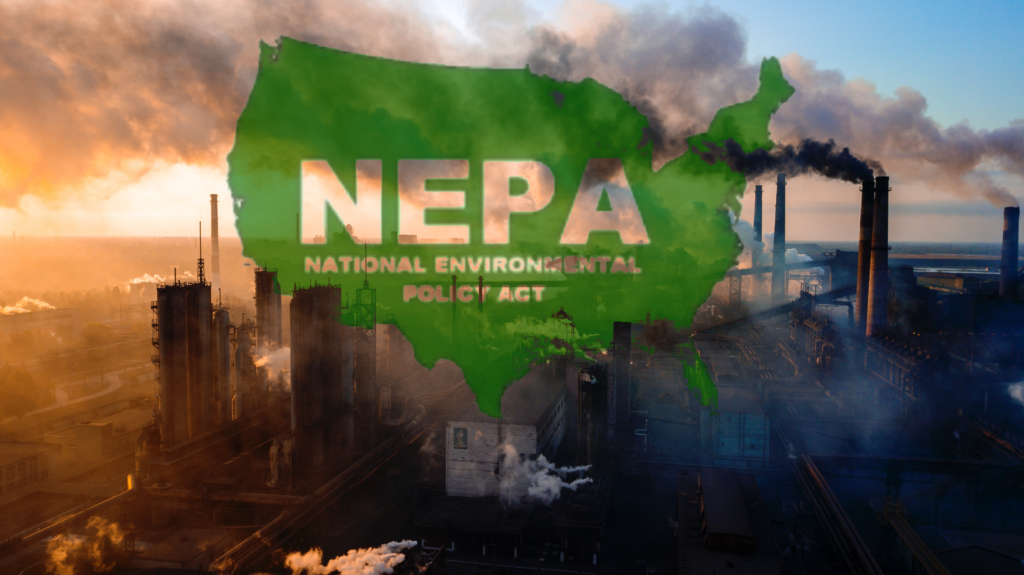
The Trump Administration is at war with transparency and public input.
The Administration is out to limit public oversight of government actions that, taken alone or as a group, will have major environmental impacts – notably, oil production, coal mining, nuclear reactors, and pipelines. Congress will also have less visibility into these important decisions. People are often impatient about procedures that slow decision making, sometimes properly so. But the solution is not a secretive decision-making process. If it’s true that democracy dies in darkness, it’s also true that ugly things rawl out of the woodwork when the lights are off.
CONTINUE READINGWhat’s So Special About NEPA?
Guest contributors Dinah Bear and Niel Lawrence argue that the National Environmental Policy Act process provides unique and wide-reaching benefits.
Attacks on our federal environmental charter, the National Environmental Policy Act, or NEPA, have escalated from seeking the statute’s truncation to its outright abolition. Increasingly bandied about is the claim that while all well and good when passed in 1969, NEPA is now superfluous because we have a whole series of other laws protecting specific resource and places. This ill-founded contention misses what is unique about NEPA and why we benefit from it, today as much as ever.
NEPA is our one, full-spectrum, nationwide mechanism for getting agencies to use their discretion better. Other, resource-specific,federal environmental laws are prohibitory, setting minimum protective standards as a floor under agency discretion. They provide a basic “thou shalt not” for individual resources and values. NEPA’s focus is on the positive, the field of possibilities, not what agencies have to avoid but rather on how to do best what they can do—over and above those often bare-bones minimums. As applied, if well and conscientiously implemented, NEPA equips and nudges agencies toward decisions that are smart, well-informed, and responsive. In so doing, it confers three critical benefits on the public.
Science and Democracy

The scientific process is crucial for a well-functioning democracy.
Beyond its utility, science also models some important features of democracy. It aspires to a marketplace of ideas in which everyone with the needed background knowledge can participate, and in which conclusions are based on debate and data rather than power. As a recent D.C. Circuit case illustrates, the law calls on government agencies to make decisions in the same, considering all the scientific evidence and arguments, then providing a reasoned explanation for its decision.
CONTINUE READINGTrump’s Baffling Free Pass for Coke Oven Pollution
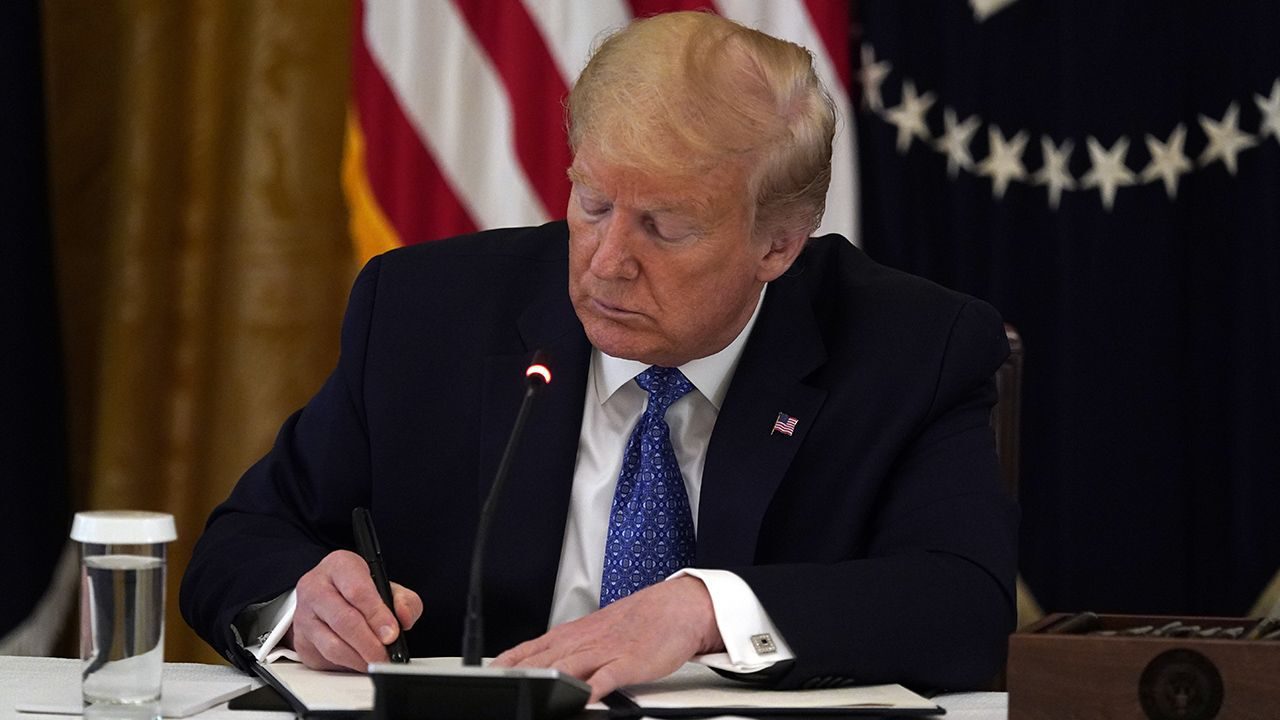
Even for the Trump Administration, this seems really weird.
Trump just gave coke ovens a free pass for their toxic air pollution. What makes this so weird is not Trump’s reversal of a public policy protecting public health or of an action taken under Biden. Both of those are routine these days. Nor is it weird that Trump did so without the slightest factual basis. That’s also par for the course these days. What is weird is doing this after Trump’s own EPA director, who has no evident scruples about favoring industry, said no. There is no indication Trump was even aware of this fact. And it is even weirder, in that industry didn’t have a compliance problem in the first place and would save only pocket change from the postponement.
CONTINUE READINGTurning Conservative Legal Theories Against Trump

Is the risk of legitimizing bad ideas worth it? Maybe so, under the circumstances.
Conservatives have been obsessed with the idea of a runaway federal government crushing everything in its path. They’ve been successful in promoting ideas to rein in Leviathan, at a time when by our lights the government actually was behaving very reasonably. But now we really do have a rampaging federal government. Conservative ideas could be very useful tools right now, and we shouldn’t hesitate to use them.
CONTINUE READINGJoin Our Mailing List
Climate policy is changing rapidly. Stay in the loop with expert analysis via email Monday - Friday.

The Drain is a roundup of climate and environmental news from Legal Planet delivered to your Inbox once a week.