



























































A Procedural Snarl in the Oil Patch
Can oil companies use World War II contracts to vault from state to federal court in cases about present-day coastal damage?
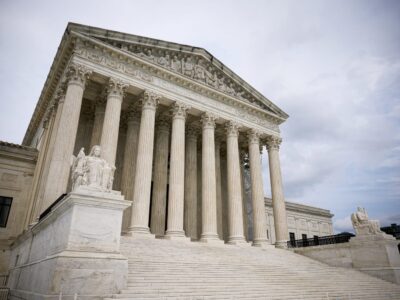
Today, the Supreme Court will hear oral argument In Chevron v. Plaquemines Parish. The case involves an obscure corner of federal court jurisdiction, long-forgotten World War II oil refining contract, and an odd loophole in a Louisiana environmental law. Still, the case itself involves an important issue: whether oil companies can be held accountable for destroying the Louisiana coast. In their efforts to dodge accountability, the oil companies are trying to move the cases from state court to federal court, where they hope that conservative judges will cut them a break. Anything to avoid taking responsibility for possible wrongdoing.
Let’s start with the historical background. During World War II, the government contracted with Gulf Coast refineries to buy aviation gas. Major oil companies owned refineries and also produced oil in Louisiana. During the war, the government allocated oil to refineries, so oil from a company’s oil field might go to its own refineries or to someone else’s. There were also other oil producers who sold to the refineries but didn’t have one of their own. The relationship between the government refinery contracts and oil production is central to the current case.
Fast-forward to the 1980s, when Louisiana law passed a law requiring oil producers to get permits to limit their environmental impact. The law had a grandfather clause that exempted lawful existing production activities from the permit requirement. Fast-forward again to the present, when the state and several parishes (as counties are called there) filed suit, claiming that oil operations were wreaking havoc on coastal areas. These activities were allegedly done without permits or in violation of permits.
The oil producers responded that some of those activities dated back to World War II and were lawful because they were done in accord with wartime regulations. Hence, the producers were entitled to keep going with the same activities under the grandfather clause.
The oil producers then tried to move their lawsuits to federal court on the theory that they had been acting under federal authority when pumping oil during the War.. That argument failed because oil production itself wasn’t done under federal contract. (As an amicus, the federal government is trying to revive that argument, although the defendants themselves seem to have waived it.) However, some of the companies engaged in production also owned refineries, which did have contracts with the government. They tried to move the cases again to federal government, arguing that their oil production was related to the contracts. The effect would be to give oil majors litigation protection that’s not available to smaller producers.
A federal statute allows a lawsuit to be moved to federal court when two conditions are met:
- The defendant is a federal officer or is “acting under the authority” of a federal officer, and
- The lawsuit is “for or relating to any act under color of such office.”
When a lawsuit involves a federal officer, we don’t have to worry about what the officer was doing until we get to the “for or relating to” requirement. But when the lawsuit involves a private party acting under federal authority, the defendant’s action comes up both times, which makes things confusing.
The purpose of this law is to protect the federal government and its agents from being subject to a state legal process that might be biased against them. For what it’s worth, it’s impossible to imagine that anyone would be biased against the companies for contributing to the war effort eighty years ago. And Louisiana is famously friendly to oil companies. Still, what the statute said matters more than its purpose.
The Supreme Court will have to decide two questions. First, does the “acting under” clause require that actions taken under the federal authority be the basis of the suit? Or is it enough that some of the defendant;’s actions were taken under federal authority even if the lawsuit involves different actions? And second, how broad is the “relating to” clause?
The arguments on these issues get tangled up in a web of semantic distinctions and prior rulings. As a matter of common sense, however, it’s hard to see why oil production activities that would not otherwise be considered “federal” should change their status because the producers also happen to own refineries — especially when oil produced from some of their fields didn’t go to their own refineries. A ruling in favor of the oil companies may give many federal contractors an opening to move a wide range of lawsuits to federal court every though the lawsuits involve activity only indirectly related to the federal contract.
Common sense is important, but it only gets you so far in the law, especially in terms of jurisdictional issues. “Textualist” judges concentrate minutely on dictionaries and grammar guides when applying statutes, making it easy for them to lose sight of the practicalities. Today’s oral argument should provide some clues about where the Court is going.

About Dan

Dan Farber has written and taught on environmental and constitutional law as well as about contracts, jurisprudence and legislation. Currently at Berkeley Law, he has al…
READ more
Reader Comments