
























































Roundup at the Supreme Court
Bayer and its allies in the Trump Administration got their day in court.
Today, the Supreme Court heard arguments in Monsanto v. Durnell. As discussed in a previous blog post, the broader context of the case is significant even though the question before the Court was a narrow one: “Whether the Federal Insecticide, Fungicide, and Rodenticide Act preempts a label-based failure-to-warn claim where EPA has not required the warning?”
John Durnell used Roundup for more than twenty years (he was “the spray guy” for the local neighborhood association) and was diagnosed with non-Hodgkins lymphoma in 2018. In 2019, Durnell sued Monsanto and received $1.25 million in damages from a Missouri jury on the grounds that Monsanto had failed to warn him against the dangers of Roundup. The failure-to-warn claim stemmed largely from a 2015 conclusion from the World Health Organization’s International Agency for Research on Cancer (IARC) that glyphosate is “probably carcinogenic to humans” – in contrast to EPA’s continued claim that glyphosate is not carcinogenic.
According to Bayer, the Missouri court’s finding on failure-to-warn is preempted by the Federal Insecticide, Fungicide, and Rodenticide Act (FIFRA), which expressly preempts state law warnings that are “in addition to or different from” those required by EPA as part of the registration granted under FIFRA.
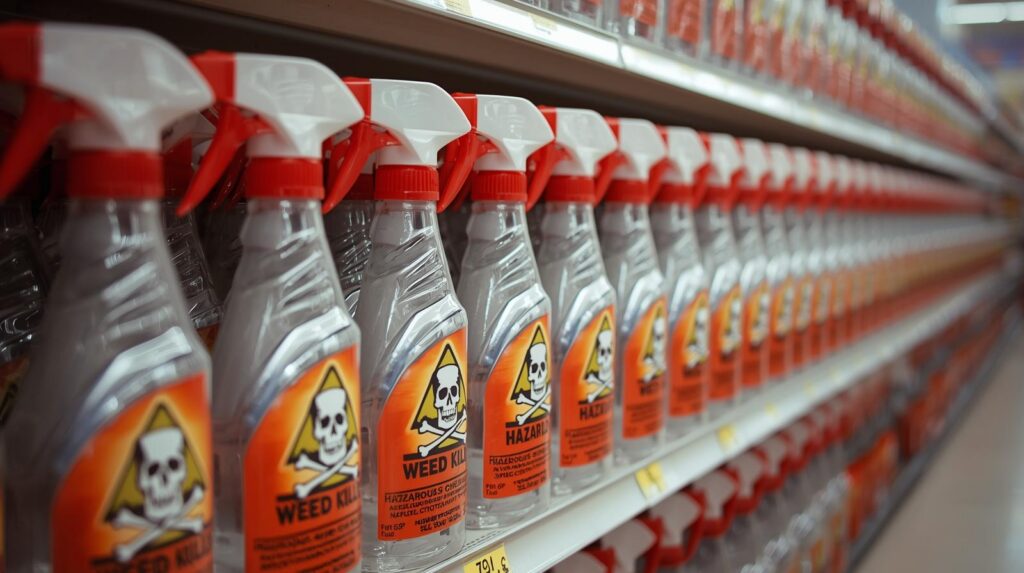
Roundup, which is the most popular weed killer in the world, has been the subject of many thousands of lawsuits over its links to cancer, leading to more than $11 billion in settlements with Monsanto, which the German multinational chemical company Bayer purchased in 2018. Bayer’s litigation exposure has grown to such levels, in fact, that the company has threatened to stop producing the chemical altogether. This case thus represents one part of a multi-pronged effort by Bayer, together with its allies in Congress and the Trump administration, to contain that exposure.
As discussed in my previous post, the United States weighed in on behalf of Bayer, despite the fact that the Biden administration had previously refused to do so in another case. Bayer has also been pushing for new legislation in Congress that would provide liability protection. And just this past February, President Trump issued an executive order invoking the Defense Production Act to mandate the ongoing production of glyphosate and to provide immunity to Bayer and other glyphosate producers for any “damages or penalties” resulting from “any act or failure to act” in accordance with “any rule, regulation, or order” issued to implement the new Executive Order, even if such rule, regulation, or order is later found by a court or “other competent authority” to be invalid. In the context of wartime and other similar emergencies, one can understand why such expansive liability protection might be necessary. But as a way to placate and protect a German multinational chemical company, this is extreme. While the liability protections here are forward looking (that is, they do not resolve Bayer’s existing liabilities from past glyphosate exposures, which is what the Supreme Court is now considering), the new protections give Bayer virtually complete liability protection going forward. Bayer can now make and sell as much glyphosate as it wants to without having to worry about any additional new claims stemming from those sales. And if it wins in the Supreme Court, it can also knock out a substantial amount of its existing tort liabilities.
As expected, the Justices hewed close to the narrow question before the Court during oral argument. While the business press has suggested that some of the Justices were skeptical of Bayer’s arguments (see here and here), the overall tenor of the argument suggested to me that the Court is clearly leaning in Bayer’s favor.
The most vigorous questioning came from Justice Jackson, who pressed Bayer on why an herbicide would not “become misbranded” if new scientific evidence comes to light suggesting that the original registration is no longer adequate. Given the 15 years between registration and EPA review of new science (a statutorily required deadline that EPA has already missed by more than a decade in the case of Roundup), why shouldn’t states be able to move ahead with failure-to-warn claims in order to protect the public? Chief Justice Roberts voiced a similar concern and suggested that perhaps it was not such a problem if states imposed warning requirements based on new science while they waited for EPA to complete its various reviews.
Bayer argued in response that the availability of new science suggesting new potential harms could never be misbranding under the statute and should be handled instead through the registrant’s duty to update EPA with new information (subject to civil and criminal penalties) and/or cancellation proceedings (though none of the litigants seemed to know that a state cannot initiate cancelling proceedings under FIFRA!). Put another way, Bayer essentially argued that a properly registered product that is marketed and labeled as “registered” can never be misbranded. Therefore, any state effort to impose a warning or labeling requirement that is “in addition to or different from” the label provided for in EPA’s registration cannot be a cure for misbranding (since there is no misbranding) and is therefore preempted.
As Justice Gorsuch pointed out, however, states could ban or regulate the use of the pesticide based on the new science – even if they cannot require new warnings. But that seems to be a function of the way the preemption language is written to narrowly apply to labeling in the interest of uniformity rather than the relationship between greater and lesser powers.
In his final point on rebuttal, Bayer’s lawyer (Paul Clement) argued that even though the International Agency for Research on Cancer (IARC) made their finding that glyphosate is probably carcinogenic to humans more than 10 years ago, no national regulatory agency had ever made such a finding since that time. His not-so-subtle suggestion here was that IARC’s 2015 finding was a fringe position and that the more serious national regulatory agencies that had taken a good hard look at glyphosate had all concluded that it was safe. For EPA, of course, there is a long history here that needs to be kept in view, going all the way back to the original registration of Roundup in the 1970s, which was based on fraudulent laboratory work conducted on behalf of Monsanto. This history also includes the fact that one of the most widely cited scientific papers finding that glyphosate was safe was ghost written by Monsanto and was only very recently retracted (twenty-five years after publication). And it includes the conclusion from EPA’s own internal review of EPA’s pesticide office under the first Trump administration that the Agency did not follow its own hazard assessment procedures in reviewing the glyphosate registration and ignored evidence from both epidemiological and animal studies suggesting a link between glyphosate and cancer, all of which led to a 2002 decision by the Ninth Circuit to vacate EPA’s conclusion that glyphosate is “not likely to cause cancer.”
There is much more to say here, too, about Monsanto’s undue influence on regulatory agencies in Europe and elsewhere. The point is that we should not blithely assume that EPA and other national regulatory agencies are simply discharging their statutory obligations in the public interest when the evidence clearly suggests systematic corporate and agency malfeasance. This is yet another reason why the ongoing work of scientists and public health advocates is so important in generating the information needed to hold agencies, and the corporations they are supposed to regulate, accountable. To that end, it seems fitting to close this post with a short quote from the recent “Seattle Statement on Glyphosate and Public Health” issued by some of the world’s leading researchers on glyphosate safety:
“Glyphosate and glyphosate-based herbicides (GBHs) harm human health and can cause cancer. The comprehensive evidence supports this conclusion, with the strongest epidemiological evidence linking exposure to increased risk of non-Hodgkin lymphoma, a cancer of the lymphatic system.”
Time will tell how the justices decide, and I will be sure to blog about the decision when it comes out this summer.


About William

William Boyd is Professor of Law at UCLA School of Law and Professor at the Institute of the Environment and Sustainability. He is the founding Director of the Labora…
READ more
Reader Comments