


























































Should we be data center YIMBYs?
Nobody likes data centers. Still, banning them in blue states alone may be a bad idea.
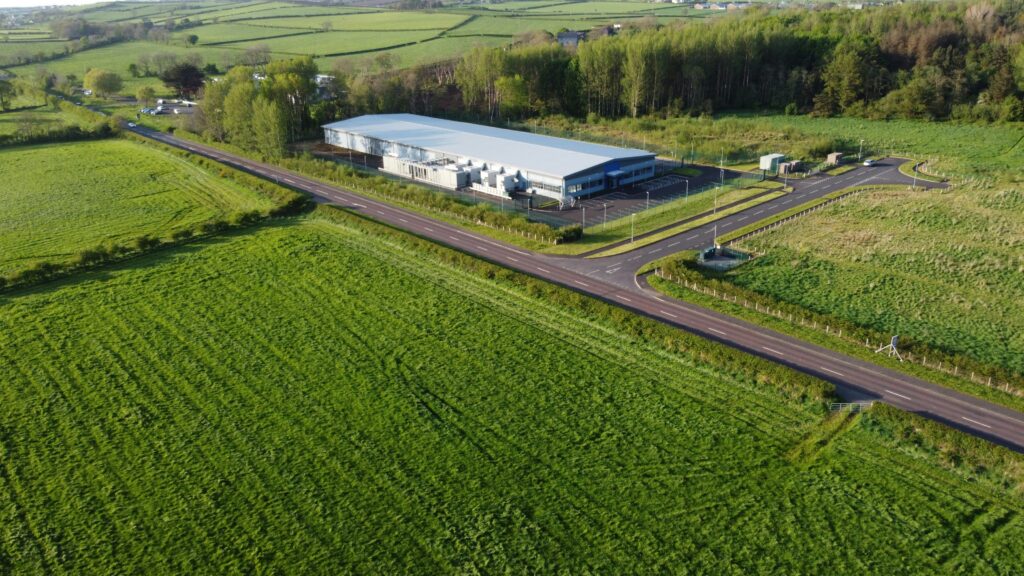
Monterey Park is not often called the New York of California, but the city resembles New York—the state, that is—in one big way: Both have passed moratoria on data center development. When Monterey Park passed its ban in 2025, it was the first municipality in California to do so. Nationwide, however, hundreds of localities have passed bans or moratoria on data centers. New York secured another first by becoming the inaugural state to impose a statewide moratorium on data center development. Politically, these are clever moves: Americans, regardless of their party affiliation, really dislike data centers.
Yet I’m not sure how optimistic I am about this piecemeal, geographically heterogeneous approach to data center regulation. Fourteen states have introduced legislation to bar or temporarily halt data center construction, most of which are blue states. In states where Republicans control state government, these bills seem to fail more often than not. When bills are introduced, their sponsors also tend to be Democrats. Even though there may be bipartisan support from voters to restrict data center development, the issue remains a partisan one for elected representatives.
If restrictions on data center construction continue to be issued at the state level, we could see data center developers simply choose to relocate to less restrictive, Republican-controlled states. Tennessee, for example, has been more than happy to host xAI’s massive server complexes, and to turn a blind eye to the pollution those facilities are imposing on Memphis’ working-class communities. Also in the South, Louisiana has adopted a rule suspending some consumer protections to streamline utility projects for data centers in a bid to attract industry to the state, a boon for developers that may well harm regular ratepayers.
Blue states should not want that to happen for a couple of reasons. First, red states (with Texas as a notable exception) remain generally more reliant on fossil fuels for their energy generation. They are also less likely to have green energy procurement goals. This is especially true for the states that have been most welcoming to data center construction. Alabama, Tennessee, and Louisiana, for example, have some of the lowest renewable energy penetration in the country. By driving data centers out of “cleaner” states, blue states risk exacerbating nationwide carbon emissions as energy demand will be filled in fossil fuel-dependent states. Next, enforcement of air pollution standards and other environmental regulations tends to be weaker in red states. By shifting data centers there, local communities will have to bear comparatively worse environmental pollution, and blue states may still suffer from cross-state air pollution.
And while many of these moratoria are justified on the basis of protecting ratepayers, the interconnected nature of our grid means that a single state can’t necessarily control what rates its residents will be charged. Take the PJM grid: its region-wide capacity market partially determines prices for all customers within its footprint. Unless each PJM state commits to halting data center construction, a moratorium in one state won’t meaningfully reduce the aggregate capacity that must be paid for. If data centers continue being built in neighboring states, residents could still see their rates increase.
On the positive side, there are real economic benefits associated with data center investment. We should be wary of turning away the construction jobs and locally spent dollars these projects could generate. If harnessed properly, the data center boom could create numerous well-paying jobs, as the IRA funds did in many red states. Unions in New York have already expressed dismay over the moratorium. A blanket ban leaves an opportunity to deliver jobs and income to constituents on the table.
Ultimately, this is a coordination problem. If only a few states (or even only a few municipalities) implement bans on data centers, these facilities will just be built in the next state over. What we need is coordination between states to prevent a race to the bottom. States could collaborate on setting standards around how data centers’ energy should be supplied, and how the costs of supplying that energy should be borne. In the meantime, blue states may wish to work with data center developers to try and have facilities built in their state according to strict environmental and fiscal standards, rather than have them migrate a few hundred miles and avoid regulation altogether. The fact that not a single person seems to like data centers gives politicians enormous leverage to extract concessions from developers looking to build facilities as fast as possible. Why not require them to build the types of data centers that could be palatable to Americans, rather than push the issue to a neighboring state?
Reader Comments
4 Replies to “Should we be data center YIMBYs?”
Comments are closed.


About Elias

Elias van Emmerick(he/him) is the 2025-2027 Emmett Frankel Fellow in Environmental Law and Policy at UCLA School of Law, where his work will focus on energy law and polic…
READ more
The penultimate paragraph appears to be missing the beginning of the first sentence.
Regardless, whatever the merits are of data centers as a tool of local economic development (of which I’m admittedly skeptical), I’m unpersuaded by what I understand the thesis of this post, that we should encourage data center development in order to avoid disproportionate impacts in red state “buffer communities” and to avoid missing data centers’ economic upside.
In brief, the post does not seriously contend with the fact that data centers will impact the very reasons that are cited for building them in, e.g., California. I will only address clean energy in California but I believe my point is more generalizable.
California does have a cleaner than national average energy portfolio. But, the state is also facing serious challenges in balancing its policies favoring clean energy with lowering energy costs for consumers. As the state continues to encourage and require electrification of various economic sectors, the needed electricity generation, distribution, and storage infrastructure will exceed current capacity.
Adding the significant power demands of data centers (100s of kilowatts to gigawatts) will put further pressure on the grid, driving prices up, potentially increasing the frequency of demand reduction events (voluntary ones like flex alerts or mandatory ones like scheduled outages), and likely encourage the import and in-state generation of electricity from nonrenewable sources such as natural gas “peaker plants.”
I agree that national coordination would be preferable to allowing states to either restrict data centers development or enter a race to the bottom to attract their development, but I don’t think California (or any jurisdiction regulating or prohibiting data center development) should encourage their development in the absence of a comprehensive plan to avoid or mitigate their significant negative impacts.
Cheers.
No data centers in CA.
Complex topics. I’ll try to be brief.
Just ban new giant AI data centers one state at a time, and see what happens. California could do that without a huge impact because our electric rates are too high. If more states follow, others might join, regardless of politics.
LLM AI, like what ChatGPT uses, needs giant data centers that take far more electric power than other kinds of AI. But it’s failing to reduce costs. And companies using it are already cutting back or stopping. We are in a kind of data center bubble, which will pop soon.
Even in clean, green California, giant data centers are NOT good neighbors. They suck up a lot of water to cool computers, and turn megawatts and gigawatts into a lot of literal hot air. Backup generators are noisy, polluting, and run far more than promised for many reasons. And if you power giant data centers with solar and wind, that’s less for reducing climate-polluting natural gas power. Which is still about 36% of California’s grid.
I live where no one will ever build a data center nearby. So I’m not a DC NIMBY.
Never before in US history, has “any single company” demanded GIGAWATTS (often 5!) for it’s “factory plant” ! This is grid level catastrophic stuff. The Grid is managed by FERC. Not states. and FERC wants data centers. They are threatening the breakup of PJM b/c they can’t connect new plants fast enough.
This is unprecedented stuff going on, a sign of the times. and the policy thinking is NOT up to speed. i believe xAI has a data center in Tennessee run by Caterpillar turbines that pollute far in excess of utility gas turbines. No consequences yet.
Energy and water. The US has proven that it is willing to abuse water supplies in favor of energy for fracking. Ludicrous amounts of water: at least 4 barrels of wastewater are disposed for every barrel of oil fracked. The permian alone, disposes enough water to cover Rhode Island nearly a foot deep.
The disposal of this toxic water ( a lifeblood for life on earth) adds $6/bbl to the cost of the oil at least.
This is the federal climate deciding on this new industrial wunderkind, AI DATA CENTERS. It’s a very bleak outlook.
Just the permian basin SPENDS $11bn transporting water to and from the sites, projected to double in 5 years.