























































Who Killed the COP31 UN Climate Talks?
The Drain is a roundup of environmental and climate news from Legal Planet.
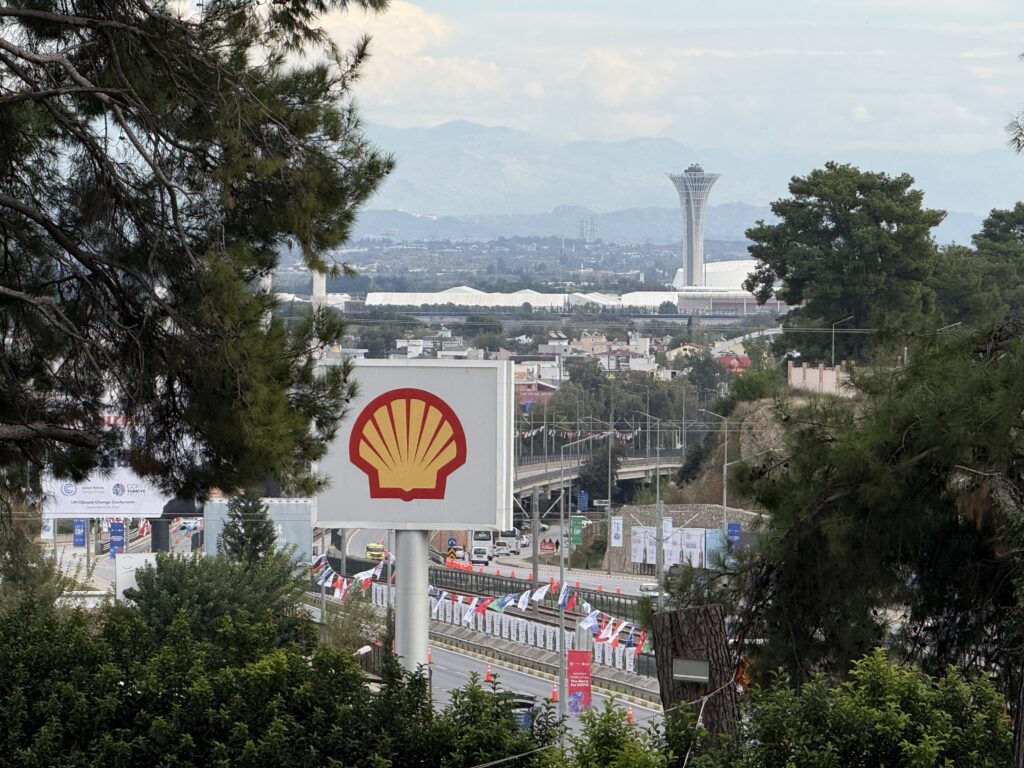
This year’s edition of the annual United Nations climate talks known as COP31 — the thirty-first Conference of the Parties — ended in spectacular failure on Sunday. There was no final agreement on the way forward in the fight against climate change, and a growing global divide was on full display — the divide between nations that are interested in charting a path away from fossil fuels and those governments that want to continue full-speed-ahead toward a dramatically warmer world thanks to prolonged dependence on their production of oil, gas, and coal.
During two weeks of jockeying on a cover decision, Russia, Saudi Arabia and other nations insisted that the final decision not mention fossil fuels, even though they did include mentions of carbon capture technology. “A climate deal that leaves out fossil fuels is like a plan to quit smoking that never mentions cigarettes,” climate scientist Katharine Hayhoe said. Ultimately, the European Union, Panama, and small Pacific states couldn’t accept such a final COP31 text. It didn’t help that negotiations were led by not one but two nations, Australia and Türkiye that shared the COP presidency, allowing for confusion and mismanagement. As one delegation member mentioned to me, the U.S. created a vacuum when the Trump administration withdrew from the Paris Agreement, meaning that parties like Saudi Arabia are louder and stronger than they would otherwise be if the U.S. were engaged.
Remember that just three years ago at COP28 in Dubai all countries did agree to “transition away from fossil fuels in a just, orderly and equitable manner,” as outgoing UN Secretary General António Guterres noted, expressing disappointment with this week’s outcome.
That these talks collapsed is significant but not necessarily a surprise. I was on the ground with a small UCLA team in Antalya, Türkiye for the first week of the 14-day conference. (Read my first report here.) The mood was mixed from the start. There’s inevitable, electrifying excitement in the air when tens of thousands of international attendees pour into a single conference center to address climate change. But that excitement was tempered by the fear and loathing that comes with trying to move through a resort town via pollution-spewing taxis or jamming into trains like cattle while passing Orwellian billboards of the host country’s autocratic leader declaring that “a fairer world is possible.”

Sadly, a conference with the motto “Where dialogue becomes action” emblazoned on billboards all over the city ended in none — at least when it comes to the formal negotiations.
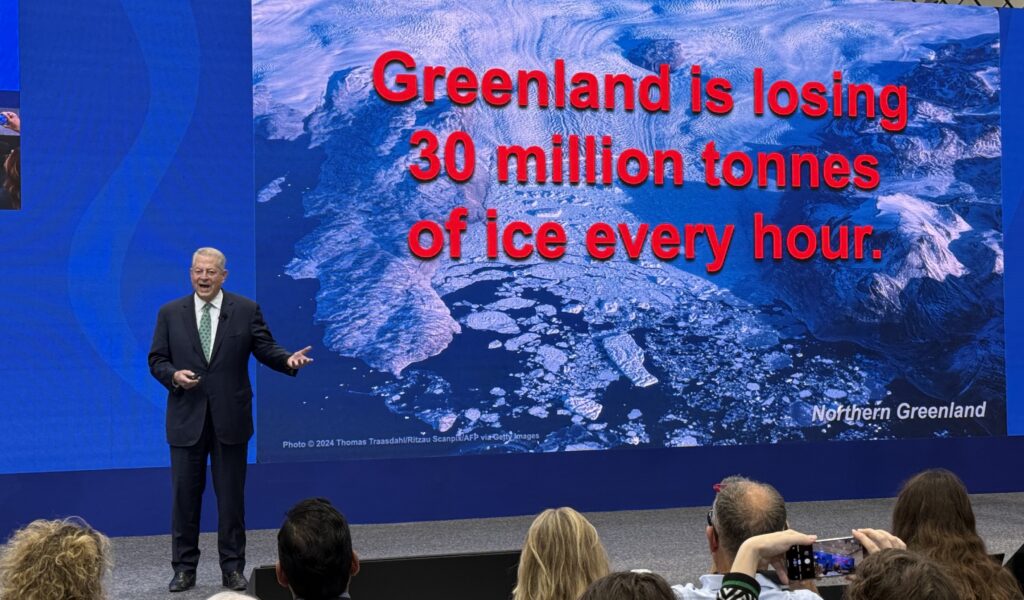
As my Emmett Institute colleague Cara Horowitz has expressed eloquently, there are really two separate COPs: the diplomatic conference where negotiators haggle over formal language and the informal trade show of side events for civil society where academics, NGOs and elected representatives gather in noisy, crowded makeshift pavilions. We were there for the latter, having conversations about ways to speed up methane mitigation and there were a number of successes on that front. Another important development is the advance of remote sensing technology and data analysis that now allows for impressive real-time tracking of greenhouse gas emissions, something that Al Gore and Climate Trace unveiled at a side event. To criticize COP as entirely ineffectual misses half the point, because there is a meaningful benefit to the exchange of ideas that happens at these side events. Only 20 percent of the 92,000 (!) registered participants were there for those formal negotiations. A lot of conversations had nothing to do with the UN process. But there’s an obvious limit to what can be accomplished by the formal, diplomatic global process of the COP climate negotiations, as much of the media coverage helped make clear.
NPR’s Rachel Waldholz had one of the most concise reports on the failure of nations to agree on fossil fuels and on money for loss and damage, all explained in 4 minutes.
Heatmap’s Alexander Kaufman had the most devastating headline: “COP86’d”.
Royce Kurmelovs, reporting for Drilled, had some of the most incisive live coverage from Antalya. He notes that Denmark, Spain, Portugal, Luxembourg, and Ireland joined a small but growing list of countries, including France, Germany, Finland, the Netherlands, and the Pacific countries, that committed to moving away from oil, gas, and coal. That is the outgrowth of a non-UN conference in Santa Marta, Colombia where 80 nations had more productive conversations about a fossil fuel phaseout. But as Kurmelovs pointed out, analysis by the Fossil Fuel Treaty initiative found many of those plans still do not go far enough.
Speaking of which, Panama’s environment minister Juan Carlos Navarro became a new and inspiring voice of reason when he declared early in Week Two that the world is “being held hostage by the petroleum mafia” and seems unable to break free. “We are in love with our kidnappers,” Navarro said at a press conference to announce 30 countries were now signed up to forge a new fossil fuel treaty, separate to the UN process. Panama played a key role in threatening to block the adoption of any final agreement that did not establish a clear path to transition away from fossil fuels, as Inside Climate News reported.
California had an interesting side role. At least six members of the California congressional delegation attended as well as several members of the Newsom administration and a handful of state senators and assembly members. Gov. Gavin Newsom made several appearances at COP31 and in an interview with Mark Hertsgaard, the outgoing governor explicitly endorsed the Santa Marta “coalition of the willing’s” global phaseout of the fossil fuels” — an interesting position for a 2028 presidential candidate to stake out.
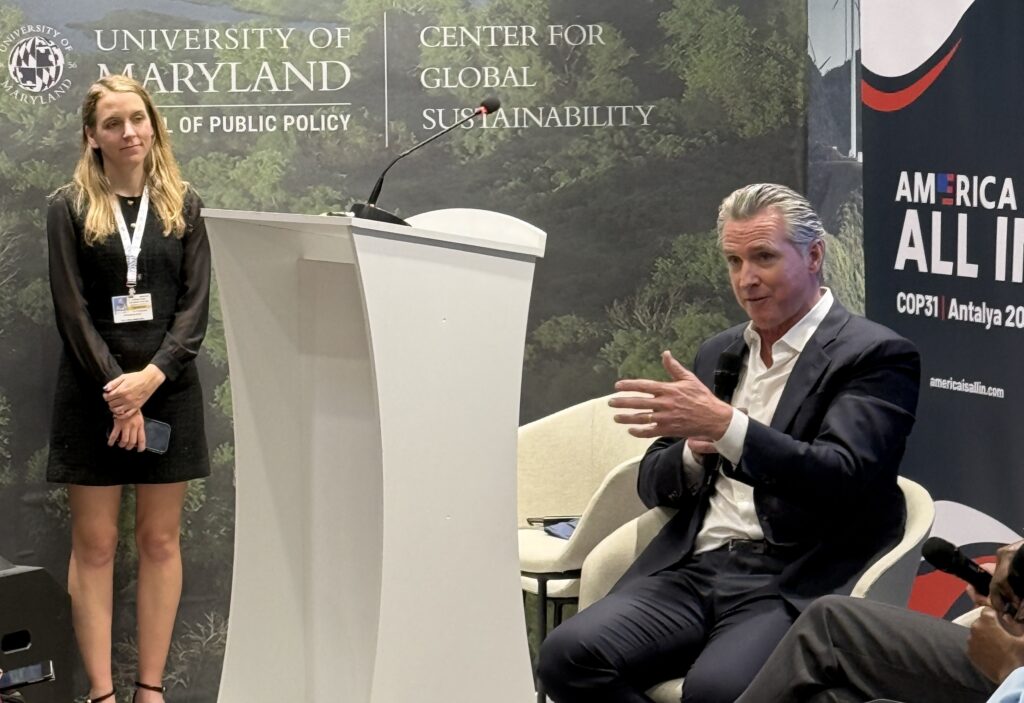
In fact, many U.S. states were represented: 18 members of Congress were on the ground in Antalya to meet with climate leaders and to take part in events at the “America is All In” pavilion. That included representatives from Arizona, Virginia, New York, Georgia, and Florida who were discussing how the affordability agenda that won Democrats 258 seats in the House related to climate goals.
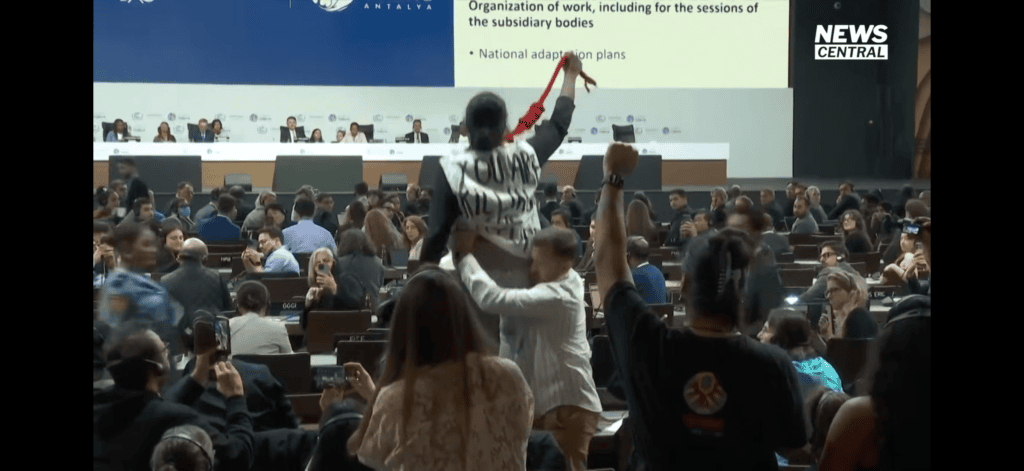
Swedish activist Greta Thunberg put her finger on the problem when she lambasted the negotiations early in Week One from outside the venue, accusing them of being overrun by fossil fuel lobbyists and saying Earth is “not dying, it is being killed and we know by who.” At the end of Week Two, a protester who’s since earned the moniker of “noose guy,” interrupted the COP31 closing plenary by standing up on a chair while wearing a blood-red noose around his neck and a T-shirt that read “You are killing the future.” He was escorted out while yelling the same phrase.
The drama is fitting. This might have been the thirty-first Conference of the Parties, but it was the first conference to take place in the era of climate overshoot, now that the UN has made clear that we’re missing the 1.5 degree Celsius target of the Paris Agreement. This year’s conference was also a lost opportunity to increase global funding for nations on the frontlines of climate change, countries like Nepal after the recent deadly glacier flood.
I think COP31 did not “collapse” as some of the headlines have declared — it was strangled. Does that mean that COP31 was useless? Some news outlets have chosen not to send their journalists to cover COP because they don’t see it generating major news. Is covering the UN climate talks a waste of ink? I don’t think so, if for no other reason than we get to know what went wrong. It puts a bright hot spotlight on the murder that the world just witnessed rather than allow the strangling of international climate action to happen out of sight, out of mind. It can only help to have journalists from all over the world writing stories about these protests and about how oil-producing nations blocked all mention of fossil fuels from a climate agreement, capturing the drama of what is increasingly a global divide.
If you think about this moment in world history as a play, how else could one fully capture the divisions over the climate crisis without the world all gathering in one place to fight about it? In literature, the use of a single setting gives you unity of place for dramatic effect. It works here too. All that said, the COP process isn’t working and we’re running out of time to make it work. This year’s failure will make it all but guaranteed that the United Nations confront COP reform measures so that a small but powerful coalition of the unwilling does not keep killing the future.
Welcome to The Drain, a roundup of environmental and climate news from Legal Planet. Our song this week is “No Future,” by Julia Quick, one of 620-songs on my Climate Playlist (on Spotify and Apple Music).
BAAJA IN DA HOUSE
Some Senate Democrats and most Senate Republicans last week passed the sweeping BAAJA permitting reform legislation to overhaul federal permitting rules in an effort to make it easier to build all sorts of clean and dirty energy projects in the U.S. The vote was 62 to 33, with only 15 Dems supporting in the end.
Trump has said he’d sign a permitting bill if it reaches his desk (one big reason why many environmentalists are aghast). But BAAJA must now pass the Republican-controlled House — which is no done deal. Lawmakers will face a tight timeline to fund the government and consider a variety of other bills before the new Congress takes office in early January.
If you care about affordability, then you must care about passing BAAJA, Ezra Klein argues at New York Times Opinion. “A Democratic Party that was saying what voters wanted to hear, but has no intention of doing what voters asked them to do, will not hold power for long,” he says. Nothing stands in the way of environmental progress more than environmentalists, climate investor Chris Sacca said at an Axios event yesterday. Even the bill’s critics applaud the power line provision (which would let federal regulators approve a line if a state refuses or doesn’t act within a year, and requires neighboring grid regions to plan lines together(, Inside Climate News reports.
Sen. Ed Markey gave a 30-minute speech opposing the bill. Naomi Klein made the argument that voting for BAAJA is out of step with the recent election. And the Center for Western Priorities explaining the damage that’s likely to come for iconic American landscapes. Al Gore also spoke out about the bill from COP31 in Turkey: “The fact that President Trump endorsed it enthusiastically is a clue, the fact that the American Petroleum Institute is giving out free tacos in Washington to support it is also a clue. I hope they reconsider because I think it would be a very, very serious mistake.”
Bill McKibben writes that there should now be pressure on all Democrats to figure out “how they’re going to rebalance things here, to give Americans new ways to stand up to concentrated power. Things like “polluter pays” bills that target the fossil fuel industry are going to be more important than ever; advocacy at public utility commissions and state agencies will be ever more crucial.”
Legal experts told Emily Sanders at Gathering Lines it’s not — that the change would erase accountability from the process and close the courthouse doors to communities while allowing corporations to plow ahead with their plans.
About 100 legal scholars signed a letter to U.S. senators highlighting the most harmful provisions of BAAJA. They include my UCLA Law colleague Alejandro Camacho, who helped organize the effort and draft the letter, and my colleague Jim Salzman, who has been a leading academic voice on abundance issues, frequently cited by Ezra Klein and others.
MEDIA
The people who bring you Heatmap News and the Shiftkey podcast have a new podcast called Load Bearing that is all about data centers. Hosted by former FERC Commissioner Allison Clements, it’s a 9-episode special series.
Grand Theft Auto VI, which came out this month, includes fully realized depictions of every kind of extreme weather that is becoming more common because of climate change. The fictional world you race around in is based on climate-threatened Florida.
Dr. Lucy Jones, the media-savvy climate communicator and Caltech seismologist who has served for decades as a go-to source of trusted information during major earthquakes, just launched the Center for Disaster Resilience. She says the goal of the Caltech center is to enhance collaboration between scientists and the policymakers responsible for the prevention of and response to natural disasters.
Adam McKay has a new essay in Current Affairs about climate overshoot. Is the window for action getting narrower and narrower? Without question, he writes. “I’d compare the level of difficulty to decorating a wedding cake in a sandstorm. And the stakes of failure can best be described as: everything. We’ve gone from a window full of promise, innovation, and the smell of West Village fresh bagels to a high overhead, small window you’d see at the end of Act I of a prison escape film.”
POLLUTION
The largest data centers in the U.S. are responsible for an estimated 25.7 million metric tons of carbon dioxide emissions annually — almost as much as entire countries like Bolivia or Denmark — according to new research from Harvard in Nature Sustainability. These 400+ data centers used almost 2 percent of U.S. electricity, more than New York City and Los Angeles combined, the NYT reports.
New modeling from Resources for the Future shows that finalized and proposed regulatory rollbacks from the Trump administration will cause 95,000 premature deaths between 2032 and 2050. The collective cost of hospital visits, chronic diseases, and lost work and school days adds up, especially in the US Midwest and East. “These health impacts add to the already substantial forgone climate-related benefits of the finalized regulations by about $780 billion,” RFF says.


About Evan

Evan George is Director of Communications for the UCLA Emmett Institute, a leading environmental law center. He also writes The Drain, a weekly roundup of environmental a…
READ more
Reader Comments