
























































Shhh: The 2026 Midterms Were a Climate Election
The Drain is a roundup of environmental and climate news from Legal Planet.

The topic of climate change was mostly missing from the midterm campaign trail and yet the election results could go down as the biggest climate election in U.S. history. Both things can be true.
Yes, mentions of climate change in 2026 were sparse on the campaign trail and they disappeared from press releases issued by Democrats in the House and Senate, according to one analysis. But climate policy was on the ballot.
Climate Cabinet Action, a nonprofit advocacy group, supported 120 candidates — “pro-clean energy candidates” — this election cycle. As of Wednesday morning, their success rate was about 90 percent with 86 wins, 9 losses and 24 races that were still too close to call. In a webinar call on Wednesday, Executive Director Caroline Spears acknowledged that most of these candidates did not explicitly run on climate but said that climate solutions, clean energy and affordability are the same, noting that “clean transportation helps lower costs” whether you sell it as a climate solution.
Some of their candidates were not hush on climate. Candidates like Mark Pinsley who won election to Pennsylvania’s Senate District 16. Pinsley talked a lot about clean energy goals, a cleaner environment, and making polluters pay. The district he won covers Rust Belt counties, including parts of Allentown. Why does his victory matter? Because the Pennsylvania Senate has been “where climate bills went to die,” Climate Cabinet’s senior political director Jared DeLoof said on Wednesday’s call. Pinsley’s win also helped secure a Democratic trifecta in Pennsylvania for the first time in 30 years.
Trifectas (aka control of both chambers of the state legislature as well as the governor’s mansion) have been the prize for Climate Cabinet. They are a particular bright spot because there’s a lot of climate policy that these levels of government can do when there’s no Washington-style gridlock. After Tuesday’s election, there are at least 30 Democratic governors and 22 Democratic trifectas. In total, the midterm election created new Democratic trifectas in 5 states that Climate Cabinet says represent the 9th largest polluter in the U.S. when combined: Pennsylvania, Michigan, Wisconsin, Minnesota, and Arizona (Nevada also elected a trifecta).
“This is an incredible opportunity for us,” said Jay Inslee, the former governor of Washington state who has long campaigned on climate change and the environment. “Candidates did not talk about climate a lot… I think that was the right thing to do to focus on costs. But now I do believe we outta add that it’s a ‘twofer’,” he said on Wednesday’s webinar call, meaning that environmental benefits go hand-in-hand with affordability policies. Inslee thinks all those taking the oath of office in January should feel free to stop being hush hush. “It’s time for unbridled ambition.”
Welcome to The Drain, a roundup of environmental and climate news from Legal Planet. Our song this week is “Begging for Change” by Pulp and War Child Records.
Other big losers in this week’s election: Trump and Trumpism, data centers, Big Oil campaign donors, and Elon Musk.
Voters across the U.S. passed 38 ballot measures (!) to restrict data center construction in their communities. Only one place in America approved a measure supportive of the facilities… North Dakota, according to Stateline’s Alex Brown.
Congressional races (and some gubernatorial races) heavily featuring data center attacks are going in Democrats’ favor, Jael Holzman writes at Heatmap News: Keisha Lance Bottoms in Georgia; Amy Acton in Ohio; Scranton Mayor Paige Cognetti and firefighter Bob Brooks in Pennsylvania; Cape May Mayor Zack Mullock in New Jersey; Democrat Shannon Taylor in Virginia; and Gina Hinojosa who took the governor’s mansion in Texas.
The U.S. oil and gas industry spent at least $182 million trying to elect Republicans in last night’s midterm elections, Emily Atkin writes at HEATED. “It didn’t buy them very much.”
Georgia Democrats Peter Hubbard and Shelia Edwards swept the state’s two Public Service Commission races, giving their party a 3-2 majority on the PSC for the first time in decades, WABE reports.
Colorado voters rejected a “constitutional right to natural gas” being added to the state constitution, which may win for the title of most bizarre ballot measure attempt.
Michigan voters approved Proposal 2, a ballot measure to rein in investor-owned utility spending on political campaigns.
Texans elect Democrat Jon Rosenthal to the state Railroad Commission, disrupting the all-Republican board, reports NBC.
Voters in Eugene, Oregon voted to create a Eugene Clean Energy Fund, which would require some large retailers and banks to pay a new annual licensing fee, equal to 2% of their gross profits in the city, to be spent on clean energy projects.
There’s a lot to say about what the new Democratic majority in Congress should do with their power. For now, Alexander Kaufman spoke with some folks who suggested that they should focus on a couple small things: a battery production tax credit and expansion of the Department of Health and Human Service’s Low Income Home Energy Assistance Program.
The midterms were a breaking point for MAHA, the New Republic writes. The election will “show whether Republicans can really manage to keep both the petrochemical execs and the people worried about microplastics—or must cede some of this bizarre coalition to Democrats.”
MEDIA

Evan Halper, who recently covered climate and environment for the Washington Post (and before that for the LA Times), just joined The New York Times’ climate desk with a focus on holding decisionmakers accountable. The position is based in Washington, covering the policy response to a rapidly warming planet, and the politics that shape it. It continues a sad downsizing for the Post. Halper writes on LinkedIn “I will continue to read The Washington Post every day, and you should, too. Don’t judge the newsroom by an owner who has lost his way.”
“No one loves you more than Exxon,” reads Woody Harrelson in an amazing, worth-sharing parody video for Yellow Dot Studios that seeks to connect El Nino chaos with fossil fuel polluters.
Tracy Wolfe has a great profile of Rollie Williams, the climate-focused comedian who hosts “Climate Town.” Episodes of the show “are heavily researched, carefully vetted long-form videos that take a satirical approach to climate issues, much as ‘Last Week Tonight with John Oliver’ delivers acerbic commentary on current events,” Wolfe writes for Columbia Climate School.
Mongabay’s most successful videos are about weird animals. But the publication has also made real inroads with posting behind-the-scenes Reels of its reports. A Nieman Labs feature by Sarah Scire looks at Monabay’s success promoting investigations and collaborations even when viewers don’t gravitate toward climate stories.
The New York Times added 420,000 new digital subscribers in the third quarter of 2026, “keeping it on track to achieve its goal of hitting 15 million subscriptions by the end of 2027,” according to Nieman Labs. Wow.
CALIFORNIA
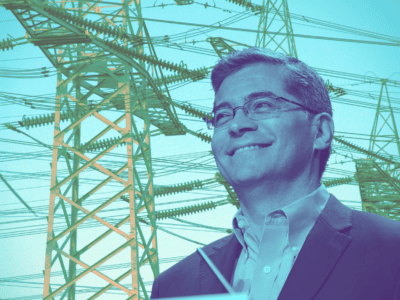
Welcome to the “Becerra Era.” Governor-elect Xavier Becerra will be thrust into the fray on some of the most challenging environmental and energy issues facing the state — including rising energy costs. I wrote about his “power hour” proposal for free midday electricity.
UC Berkeley’s CLEE published a paper with climate and environmental policy recommendations for Governor Becerra.
The Bay Area Air District voted on Nov. 4 to implement first-in-nation zero-emission water heating standards, which means that beginning in 2028, when an existing gas water heater needs replacing, households will need to transition to electric heat pump water heater technology rather than installing another gas unit. There are exemptions for qualifying low-income households and challenging installations.
Ocean temps in Monterey Bay are the warmest observed in more than 30 years — clear evidence of El Niño’s arrival on the Central Coast, according to the Monterey Bay Aquarium Research Institute. KQED’s Ezra David Romero has an explainer on what’s contributing.
An update from the Assembly’s Utilities and Energy Committee and Insurance Committee, which have convened executives and experts to discuss the cost of wildfires. Abridged reports that Assembly members are seeking to answer 3 questions: 1) How much wildfire risk do utility companies pose? 2) Utilities warn of higher rates. Is there another way? 3) Would limiting lawsuits help?
The first $20 million in incentive funding from the Aliso Canyon settlement was just released (11 years later!) to help home and building owners impacted by the 2015 methane gas blowout. “The program will make $40 million available to help people install heat pumps that cool and heat homes, electric stoves, water heaters and other appliances,” Dorany Pineda reports for AP.
EVs
Major automakers urged US lawmakers to ban Chinese vehicle imports after midterm elections, as Beijing’s car companies rapidly expand in international markets, Semafor reports.
Ford’s new EV truck, starting at under $30,000, is ready for its closeup. Owners of Ford’s Fathom can power their homes without buying a costly bidirectional charger. Jeff St. John looks at whether other automakers follow for Canary Media.
Craig Segal wrote a letter to the editor responding to the LA Times’ series on California’s clean bus and truck incentive program. “New technology always has risks, but the clean-truck program was worth it,” he writes.
The New York Times’ David Gelles wrote a story about how a beloved Disneyland ride is going electric. “Sometime next year, the gasoline powered engines will be phased out and Autopia will join the age of E.V.s.” Disney arrived at this decision after local activists demanded action and reporting from Sammy Roth, when he was a climate columnist at the LA Times. Ultimately, the California Air Resources Board issued a notice of violation against the company in 2024, stating that it had not obtained the proper emissions certification for the Autopia cars. Roth has continued to report on the saga.

About Evan

Evan George is Director of Communications for the UCLA Emmett Institute, a leading environmental law center. He also writes The Drain, a weekly roundup of environmental a…
READ more
Reader Comments